Unpacking “Time Pass” in the South Asian Diaspora
The South Asian slang term “timepass” has many definitions. It can describe the unconstructed and casual moments spent killing time. It can also refer to the experiences, relationships, or activities that are moderately entertaining but lacking in deeper substance. “That movie is timepass,” I’ve said to friends when I thought a film wasn’t particularly meaningful.
While the experience that timepass describes may be universal, naming the phenomenon is distinctly South Asian. The phrase travels with ease within the diaspora without requiring much explanation, acting as a cultural shorthand. A recent group show at Half Gallery in lower Manhattan curated by Rajiv Menon, explored this theme through the work of contemporary South Asian diasporic artists. Titled “Time Pass,” across the exhibition, a wide variety of works encompassed individuals’ disparate and deeply felt experiences with this phenomena.


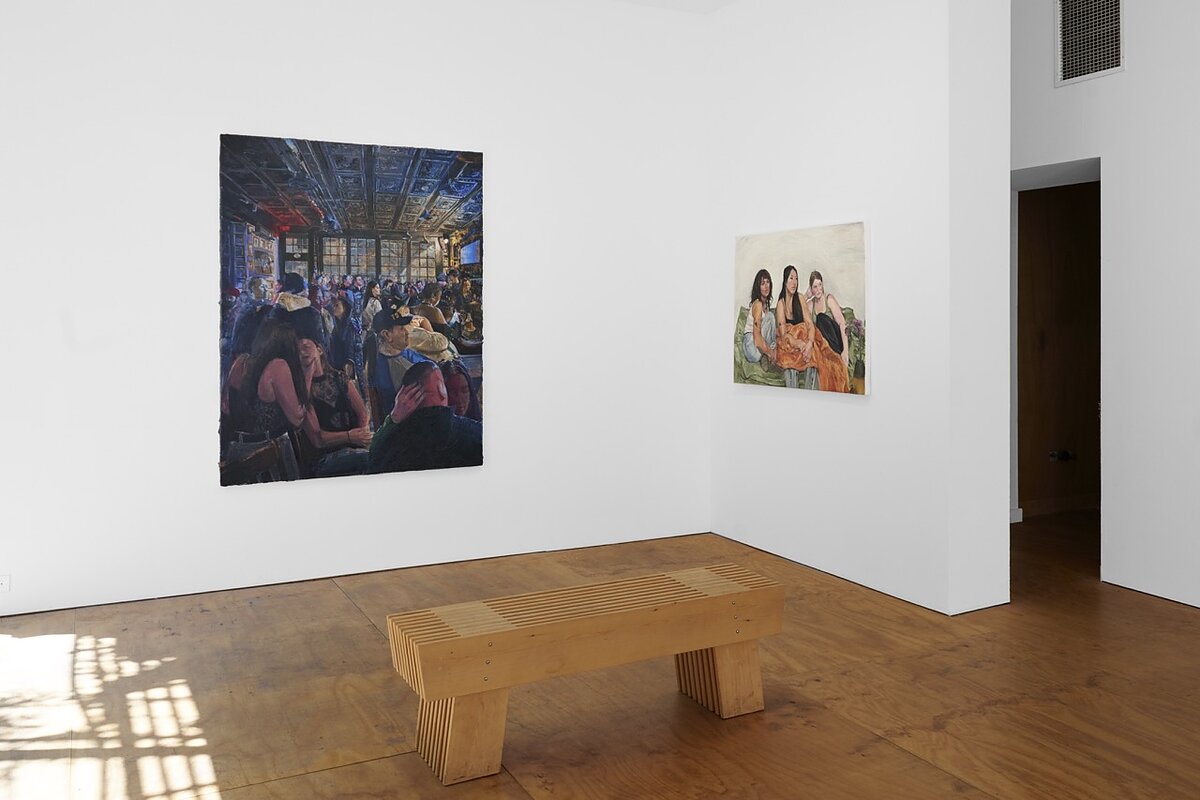
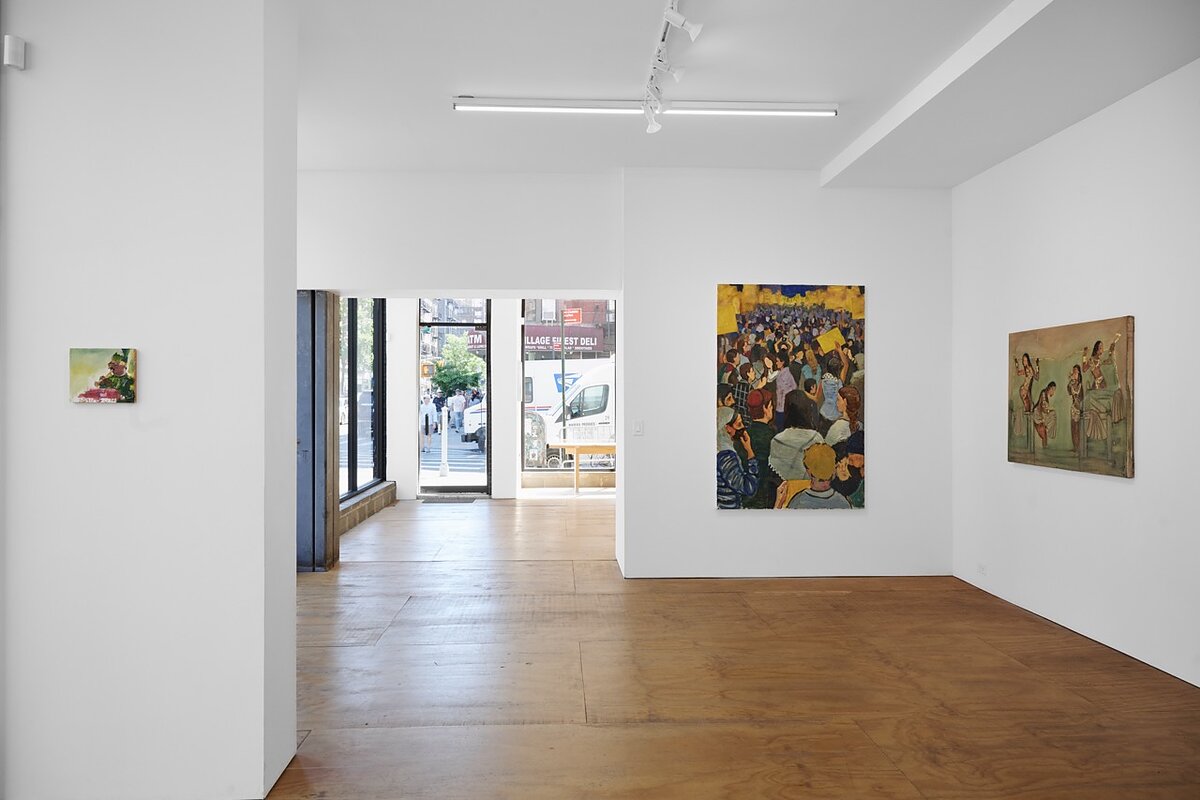
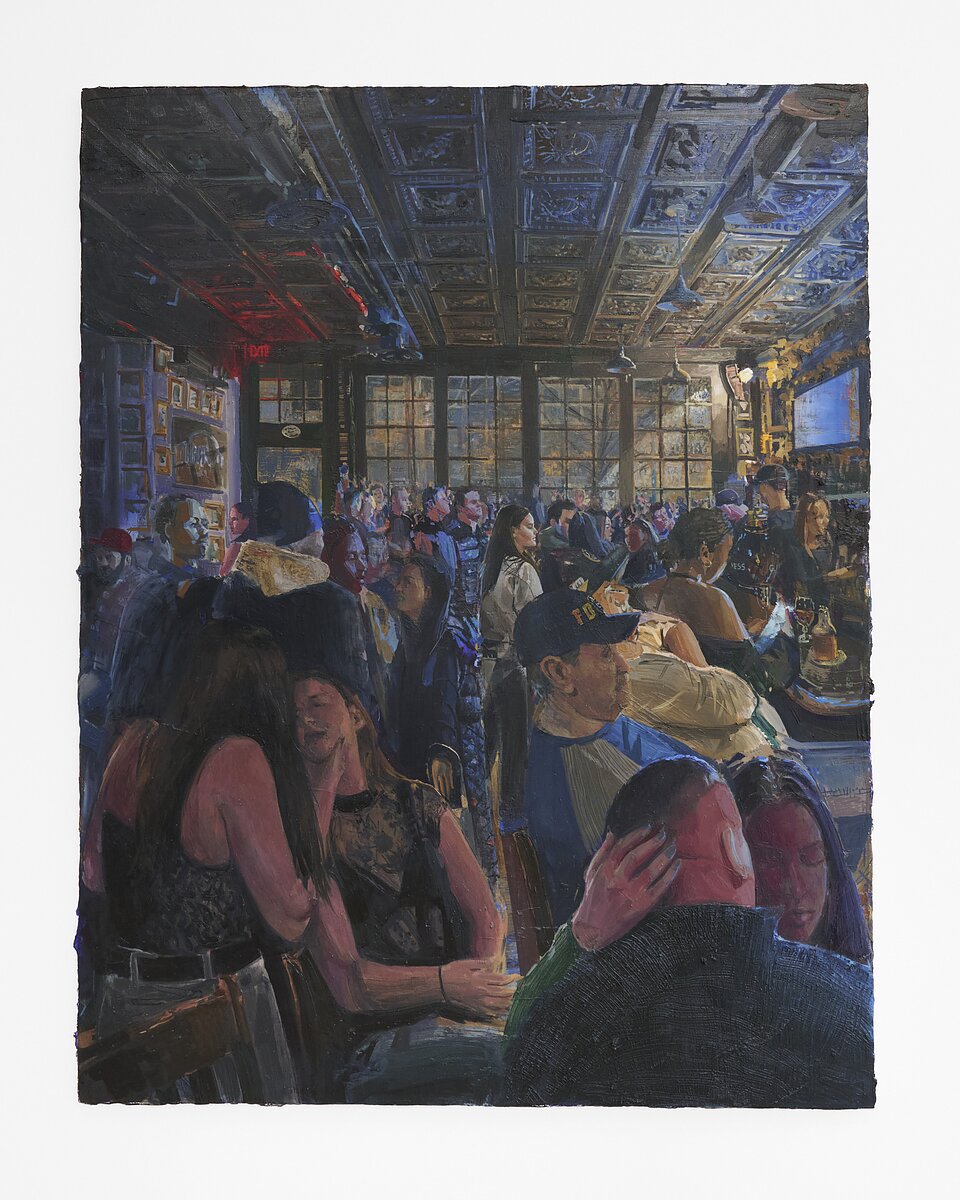
The figures in the foreground are the most defined, with faces, clothing, and hand-cradled drinks depicted in clear detail. Peering towards the back of the crowd, the edges become less sharp and the colors bleed. The painting isn’t just depicting a casual night out—it is pointing to a generational and cultural tension within the diaspora of how socializing, especially in a setting like a bar, can be deemed frivolous. Timepass, as depicted by Vasan, is a treat at the end of the day—after the more important task of work. The figures bleeding into the atmosphere gesture toward the peripheral and seemingly unproductive nature of these moments while also suggesting that they nevertheless deserve recognition.
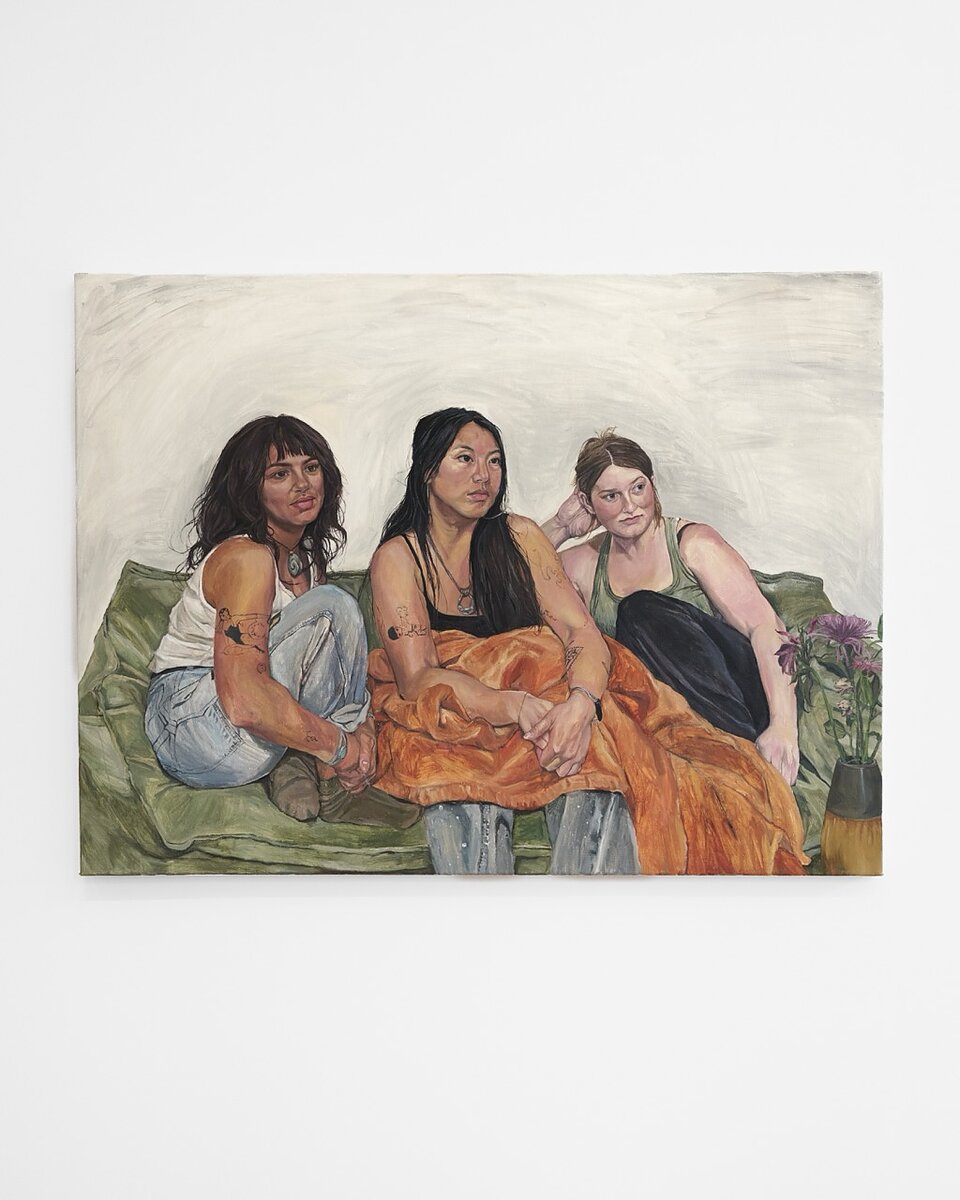
Many of the works in the exhibition explore this communal aspect of timepass. In Nibha Akireddy’s A Love Letter to Three Girls on a Movie Tuesday (2026), three women are seated on a couch all looking in one direction. It is a scene so recognizable that we can almost see the television off canvas. Akireddy also adds darker brush strokes outlining each figure separately, creating an off-grey silhouette against the cream background as though insisting on their individual interiority even within a shared moment.
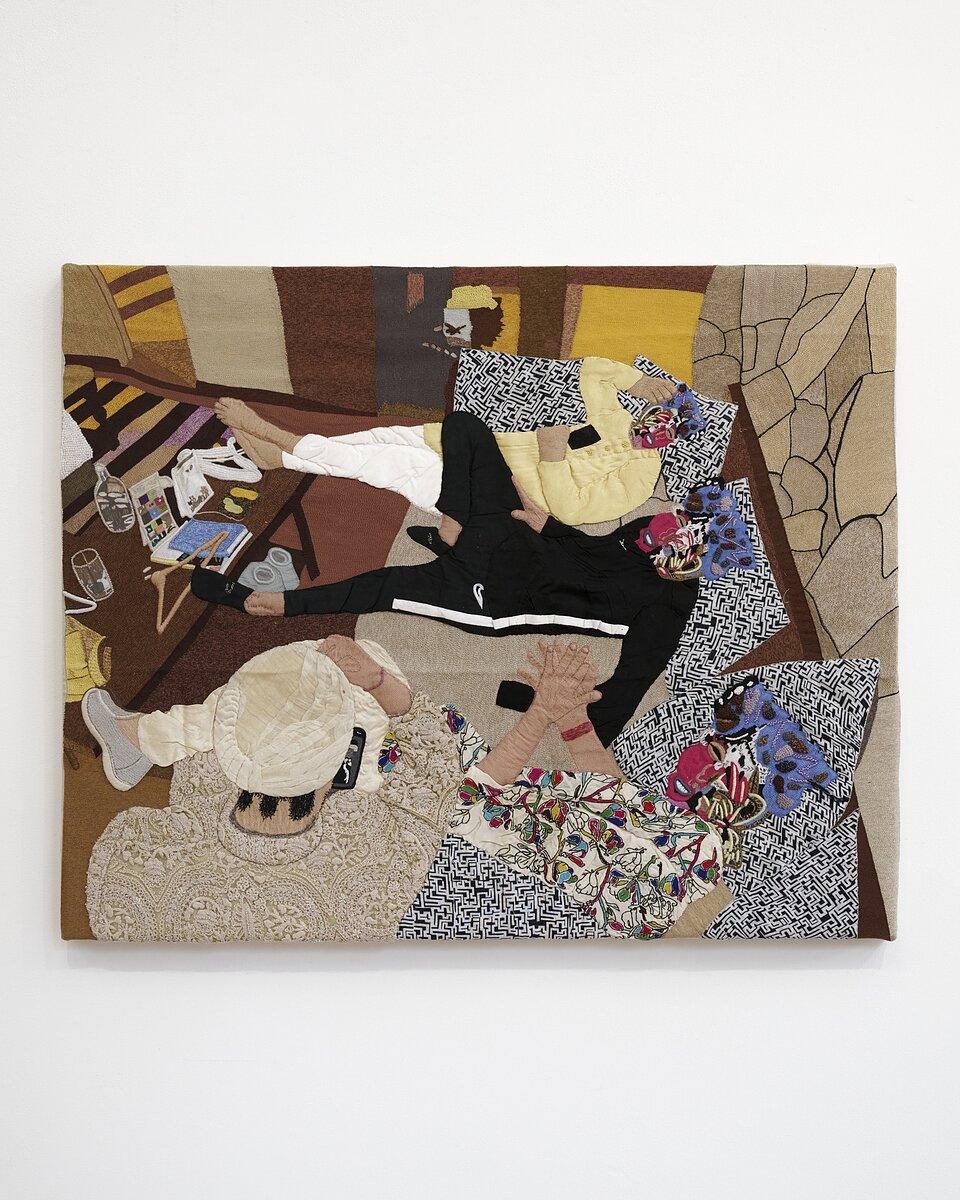
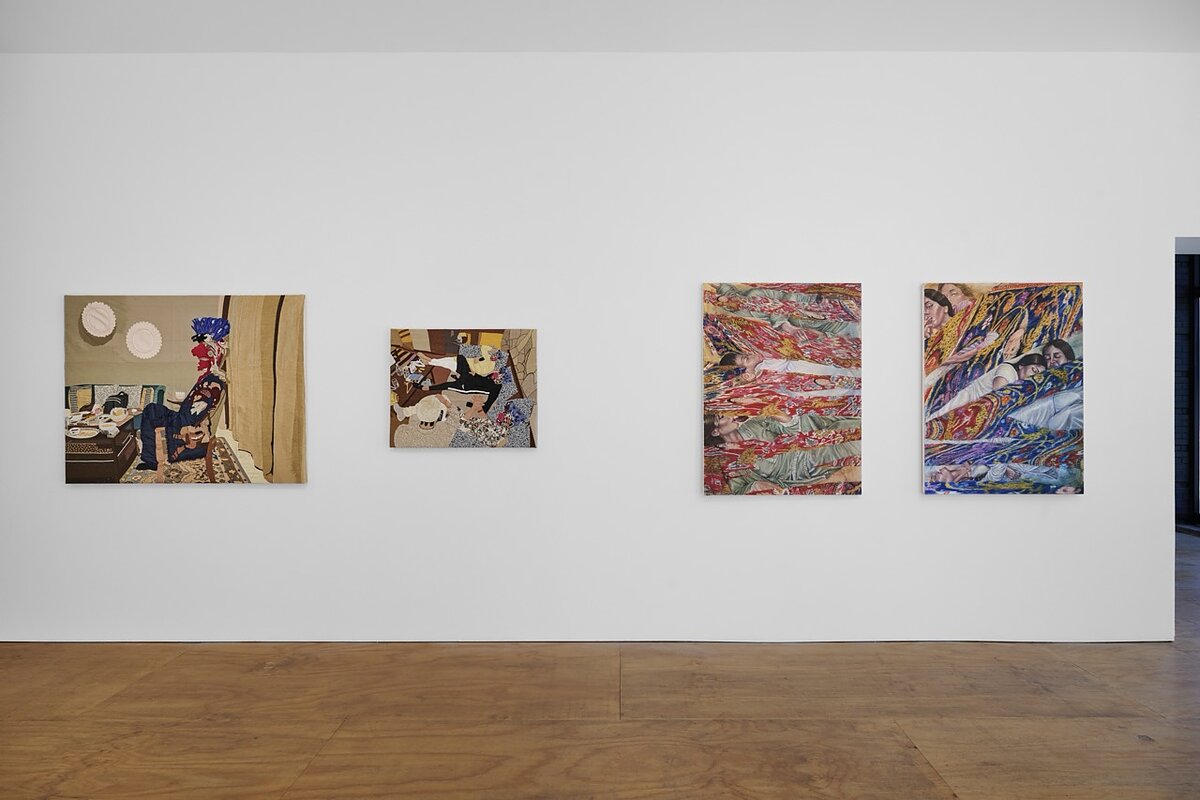
Viraj Khanna’s hand embroidered piece Scrolling on Instagram Post Wedding (2026) offers a different kind of communal timepass—the ambient exhaustion after a cultural or social obligation is fulfilled. The overhead perspective looks down on what appears to be four men sprawled out or sitting on a couch. Three of them are in kurta, and one is in a black Nike tracksuit, as though having changed into something more comfortable. There are objects scattered around them: a blue notebook, phones, and decorative pillows. The angle of the piece flattens the figures so they seem almost like boneless fixtures of the floor. The geometric patterns of the fabric stitched onto three of the faces and the pillows beneath them make it seem as though the figures are sinking into the setting instead of being distinct from their surroundings, echoing Akireddy’s work. The effort of the hand embroidery in such an intricate piece nicely juxtaposes a scene that depicts an apparently lazy, post-wedding hang—an unwinding version of timepass that is intimately familiar to South Asians who know how enjoyable yet taxing the functions can be.
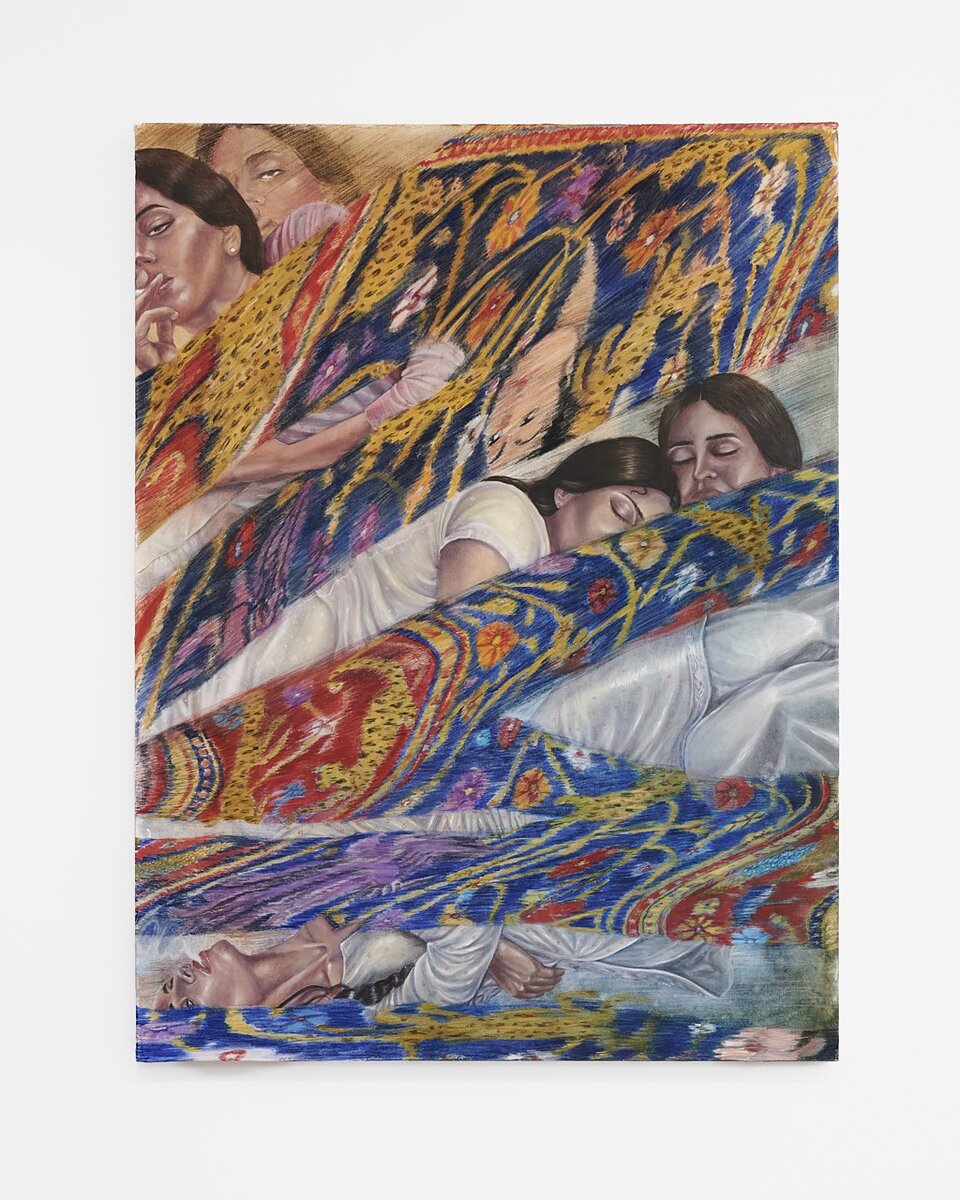
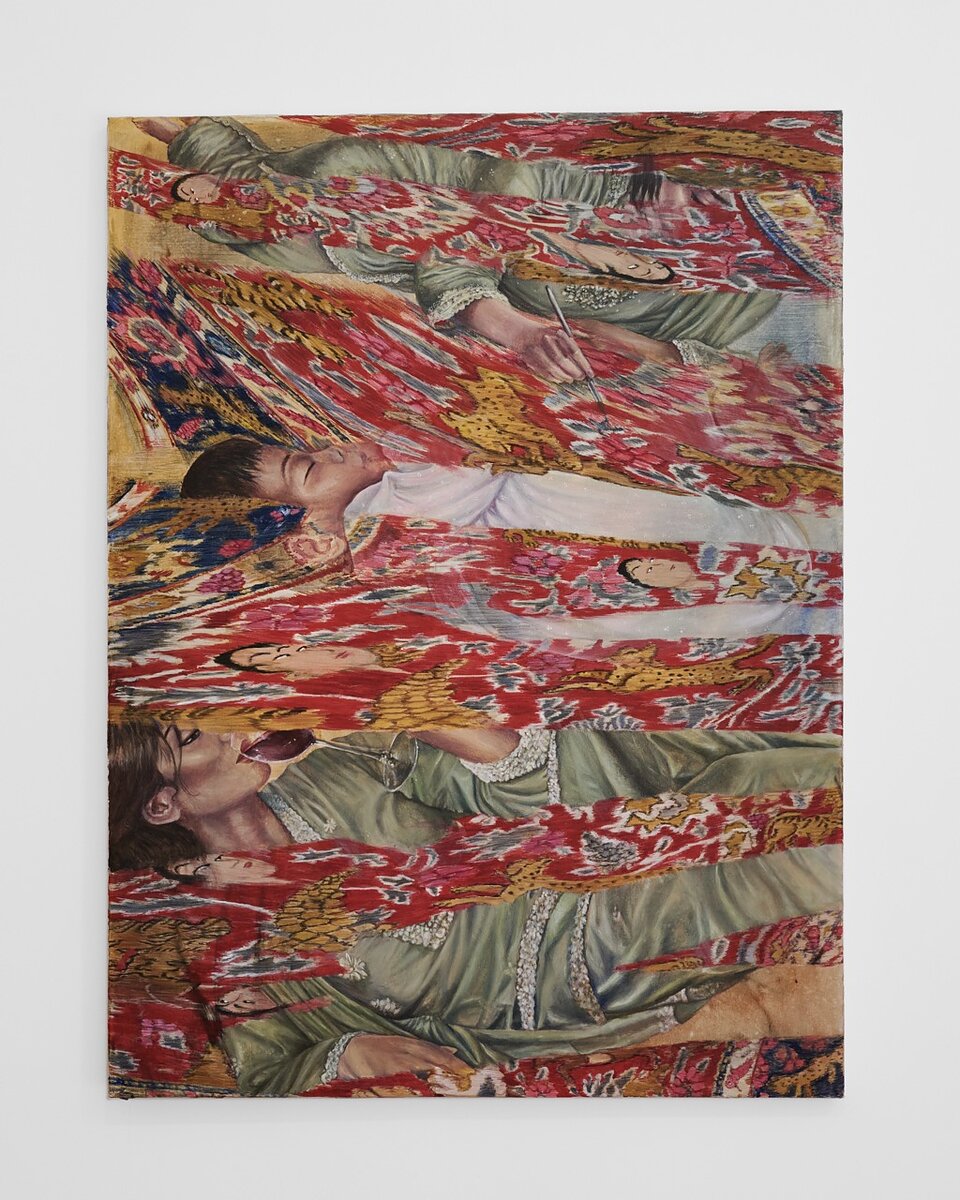
Other works in the exhibit anchor themselves in South Asian history, conveying the sense that timepass is not a contemporary phenomenon but is something that has long been practiced. Bokhari’s acrylic and pastel paintings Pattern Outlives the body (2026) and Inheritance as Interference (2026) showcase slits of vivid patterned textiles that intermix with figures of women at different scales and states—two are asleep folded into each other, one has a chin resting on her hand, and another one is lying face up. The patterns aren’t in the background but rather pressing forward. The boundary between body and fabric dissolves here as well, like in Khanna’s. The textile patterns, rooted in Indo-Persian visual traditions dating back to the Mughal era, will stay long after the bodies are gone.
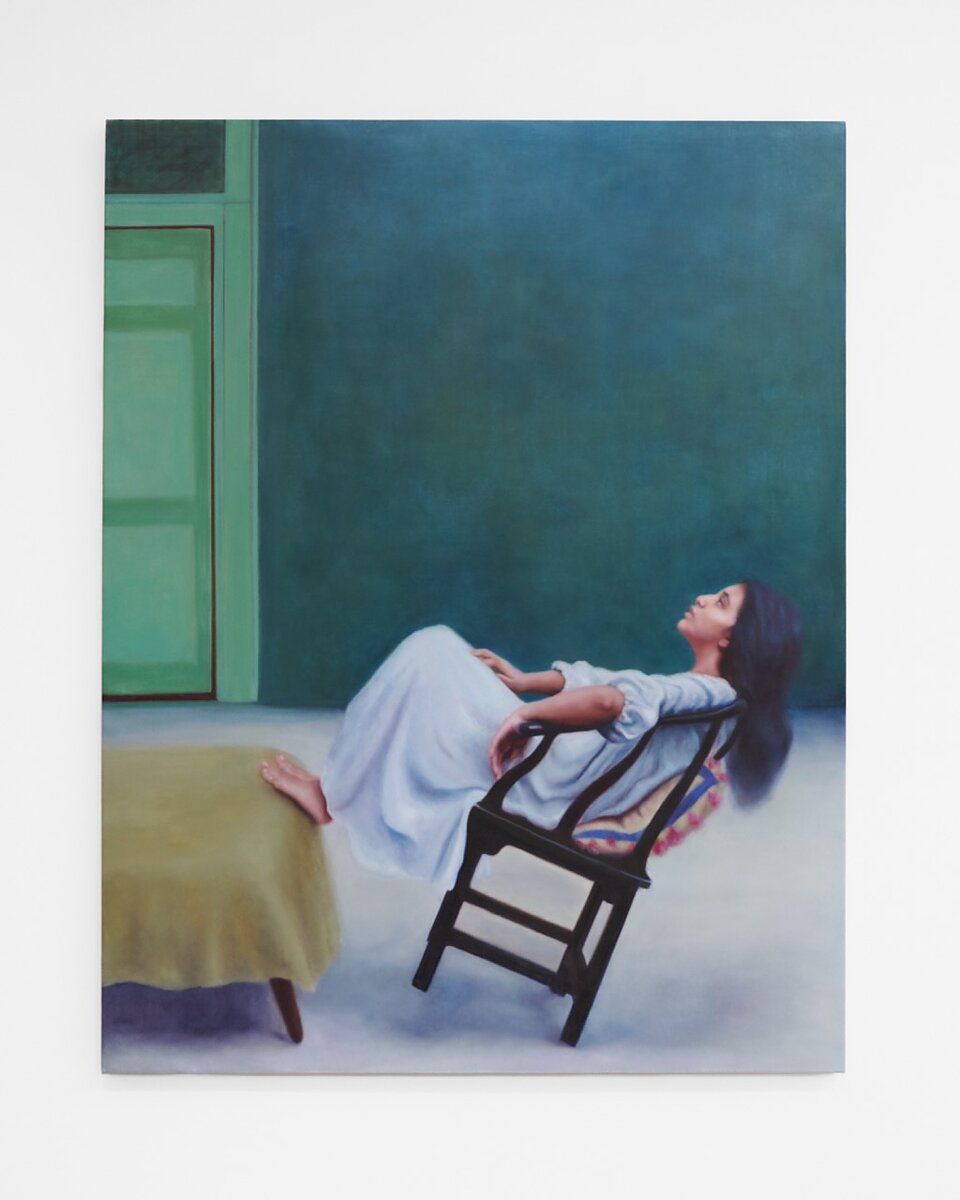
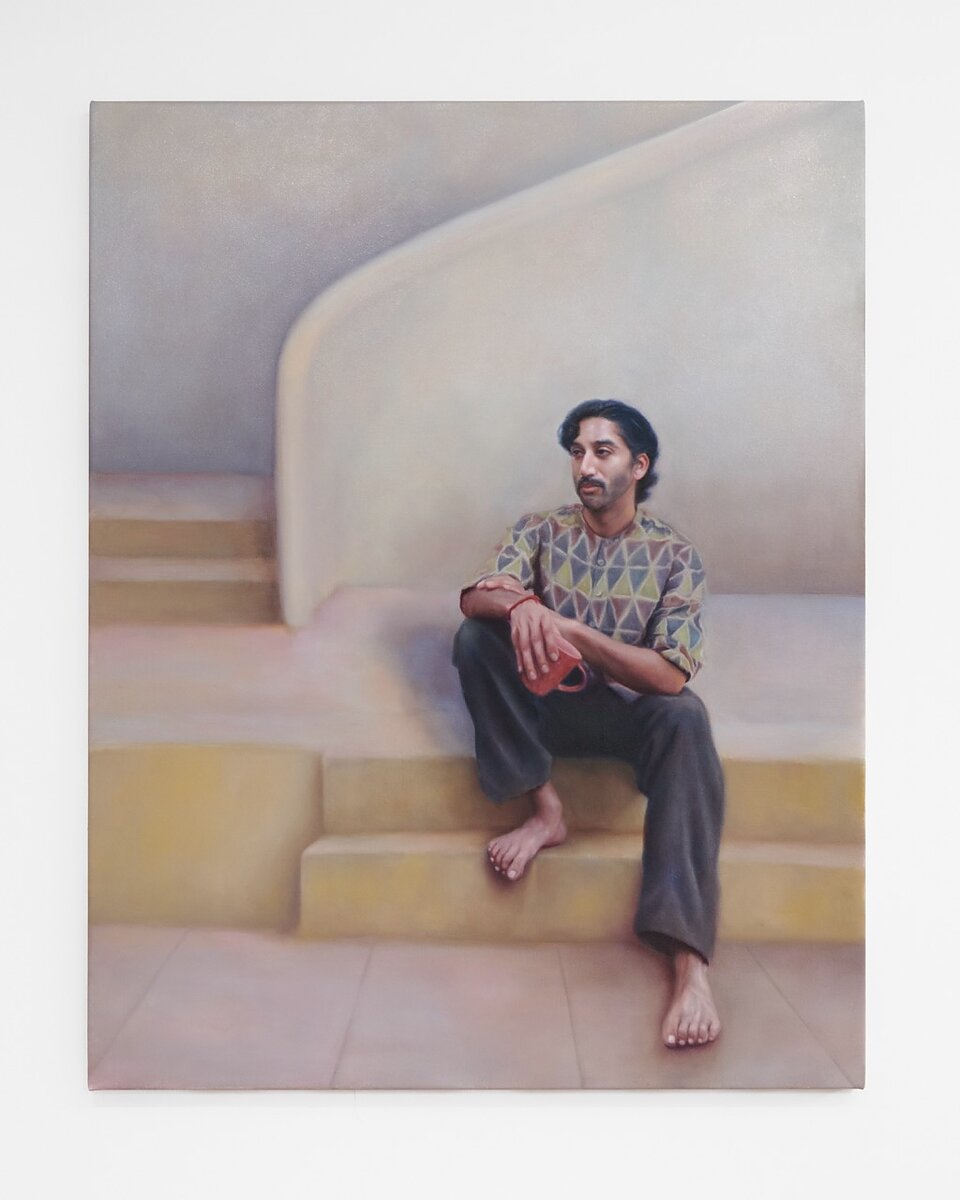
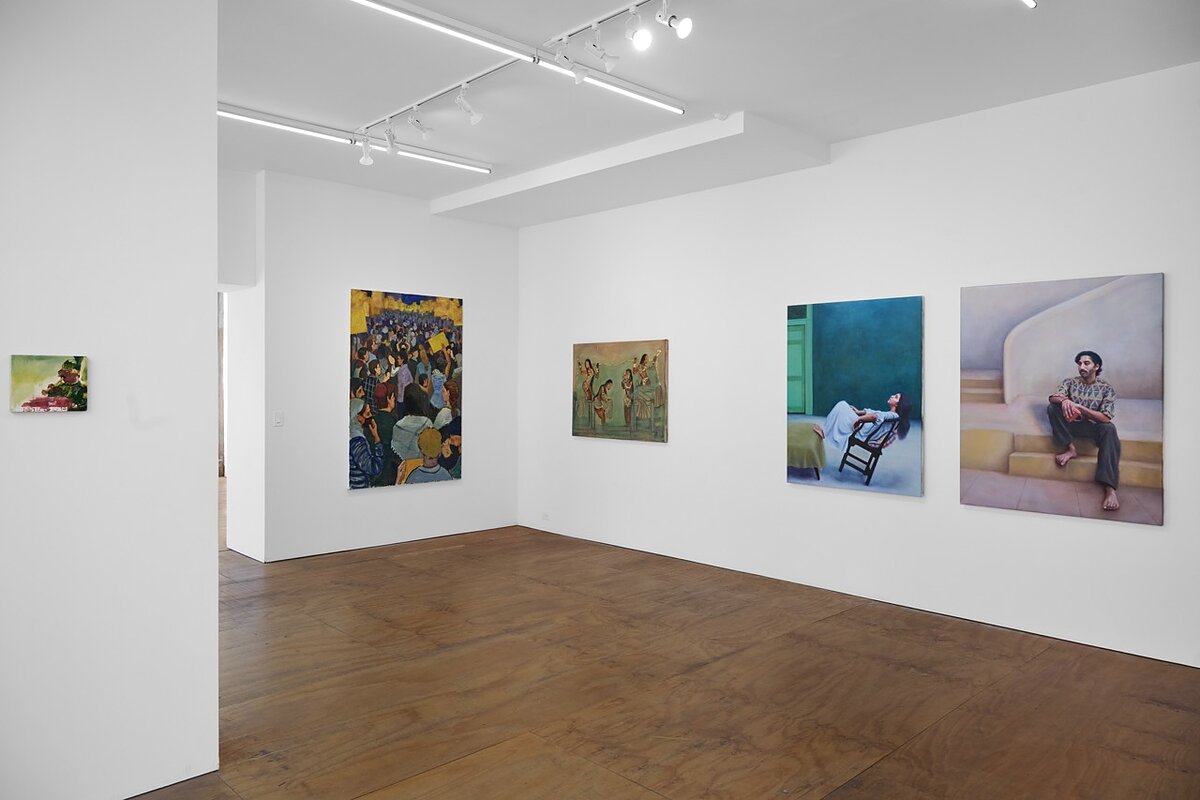
Sajeela Siddiq’s dream-like portraits, meanwhile, showcases a dimension of timepass that is without company, gadgets, or other distractions. In Conference of the Birds (2025), a woman in a long white tunic is leaning back in her chair. The ends of her hair are blurred along with edges of the table cloth where her bare feet stay perched. In Here Again (2026), a man in a short-sleeve kurta style shirt with a geometric print of triangles and diamond shapes is seated on a stoop holding a mug. His feet are also bare as they set upon a step. Painted live, these paintings require their subjects to sit still for lengths of time without doing much else. Yet Siddiq uses texture to show movement of the subject’s hair and the table cloth to reflect the movement that, counterintuitively, accompanies such stillness.
The man in Here Again happens to be the exhibition’s curator. “Sajeela invited me to take a minute to be still, to chat through my day, and to really sit in the feelings I was trying to explore in the show,” he explained.
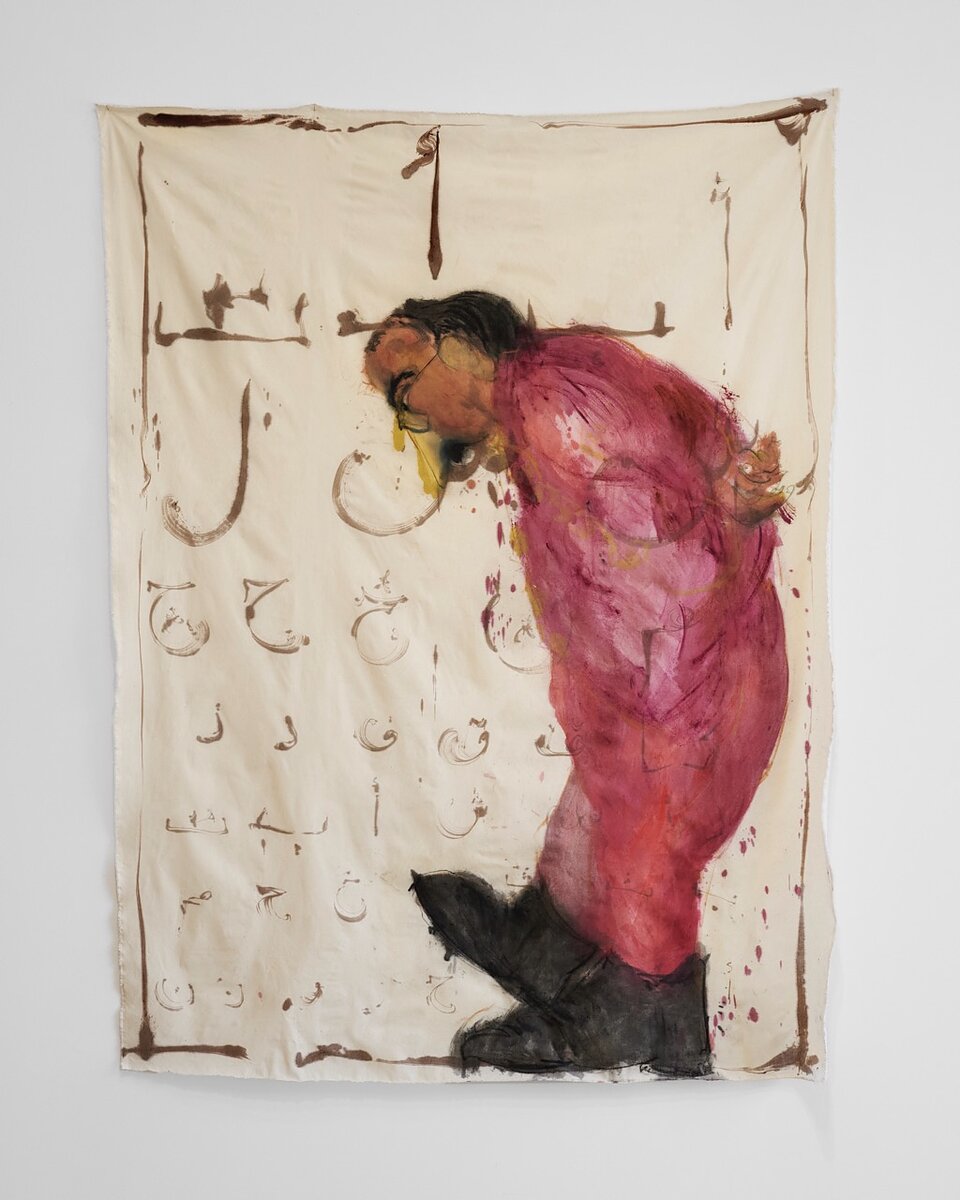
In all the artwork, a common thread was the use of mark-making to capture the passage of time, embodying how the physical act of making these works is itself a form of timepass. Across paint and textile, the artists explore how present experience gradually fades into memory, each developing a unique visual language for remembrance. In Aiza Ahmed’s Teree naq, teree chal (crooked nose, crooked walk) (2026), a figure in a loose faded magenta garment is bent forward, head down, glasses on, as though mid-movement or mid thought. Behind and around the figure are scriptures scattered across the raw muslin. Some are rendered clearly and others are loosely, as though one is practicing writing the script in repetition. The canvas itself is unprimed muslin that is visible in the edges with a rough border drawn around it. The act of writing the characters repeatedly, maybe unhurriedly, reflects unstructured time and with this piece, we can see how the making of the work is the subject of the work—the figure recalls a teacher-like figure writing on a board that evokes an endless lesson.
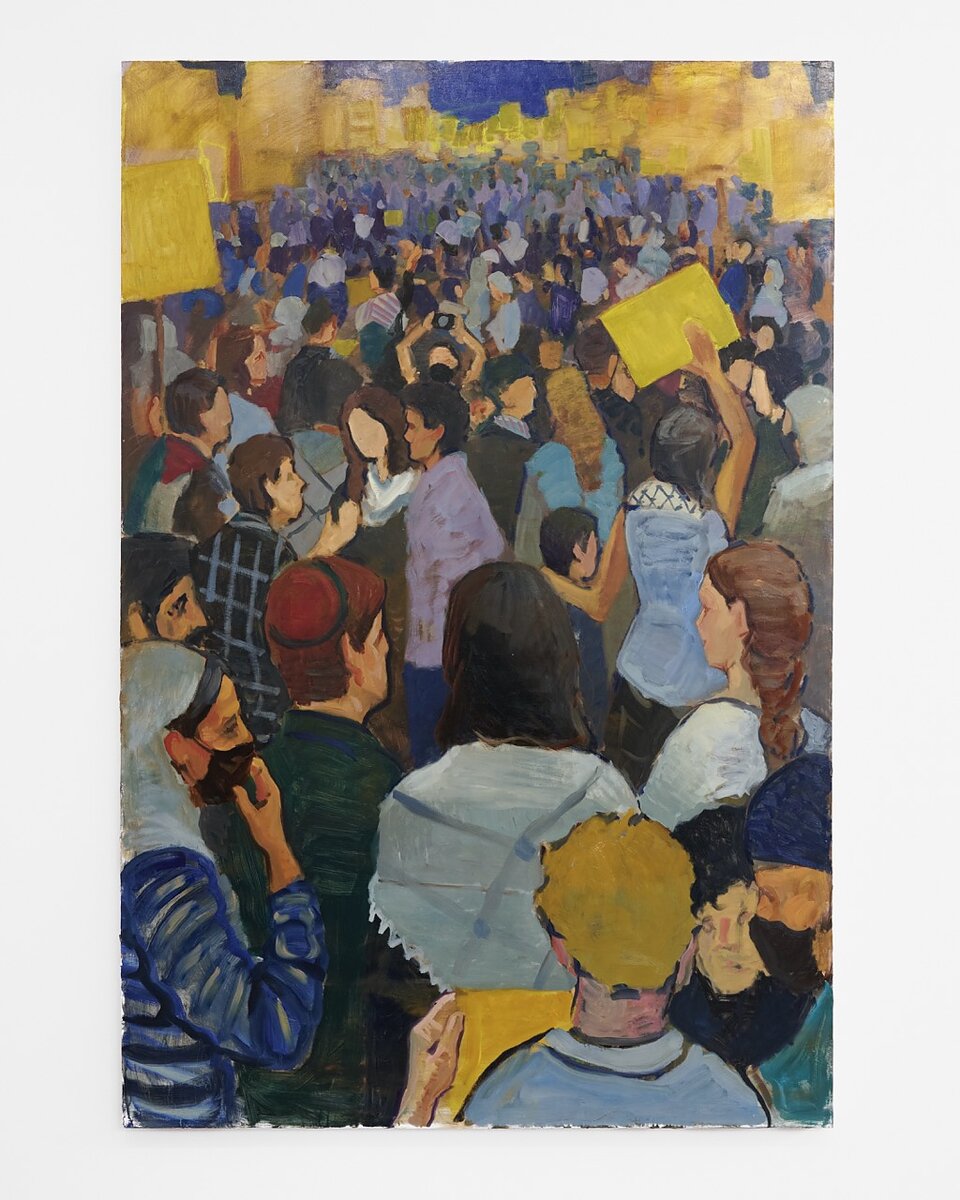
Not all timepass is as gentle or gently viewed, however. Mustafa Mohsin’s oil painting Meetup (2026) depicts a large crowd with sharper outlines of individuals at the front fading into blurred ones at the back, almost in the way one’s vision loses clarity across a distance. Select individuals on the canvas are holding up yellow signs, some with sticks attached, as though they are suspended in time of a protest. The tension is pointed. Here, Mohsin explores how timepass can also be used to dismiss collective action as frivolous. To call something like a protest a timepass is to strip it of its urgency and to frame political conviction, or any type of stance, as idleness. Mohsin, in this depiction, ostentatiously refuses that dismissal, and in doing so points toward the paradoxical quality of an exhibition that, in focusing on as seemingly idleness an act as timepass, evokes meaningful cultural questions and gives space to talented artists of the diaspora.