The Woes of Embodiment with Cato Ouyang, Fernanda Galvão, Ren Light Pan
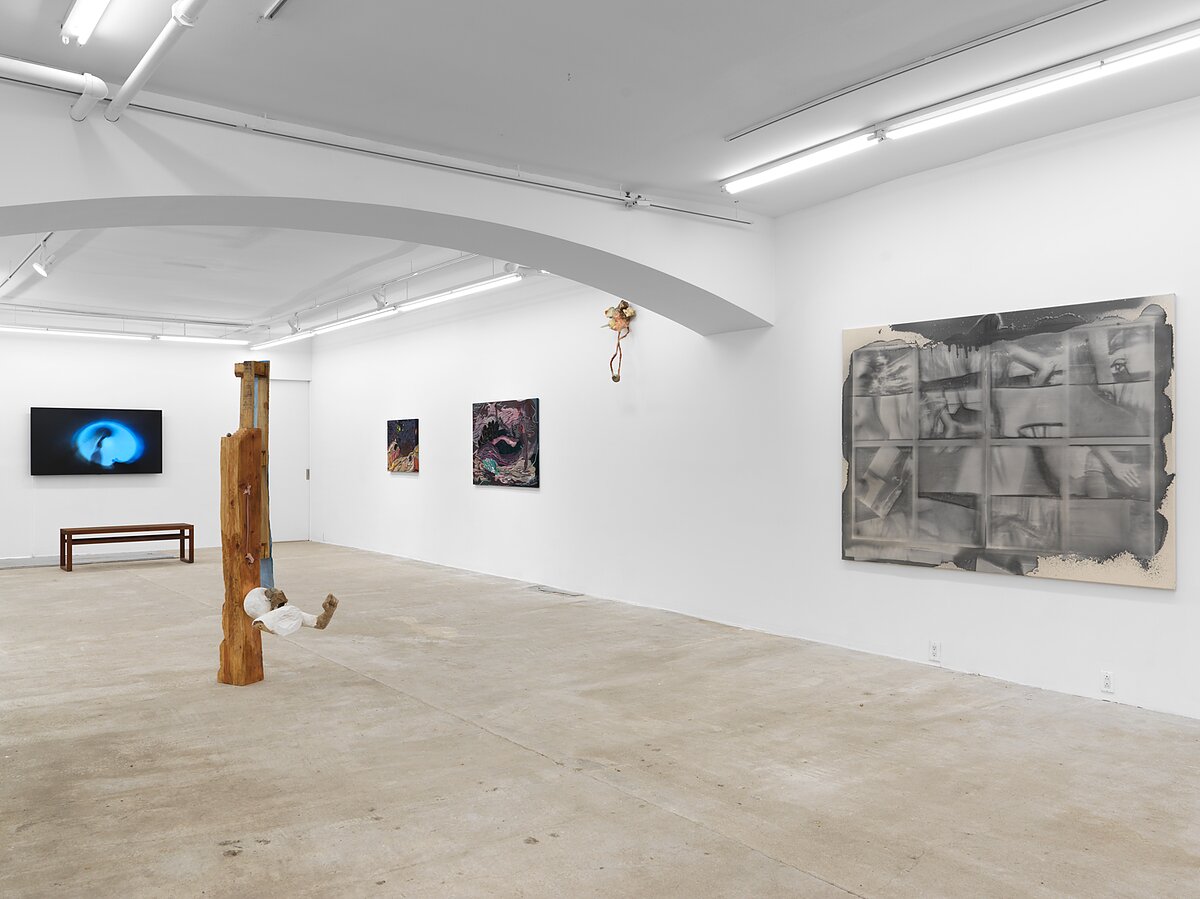
At a recent exhibition at Lyles & King, works by artists Cato Ouyang, Fernanda Galvão, and Ren Light Pan engaged in a conversation about the woes of existing in space, as humans, and within a built environment. Ouyang and Pan, both transgender, Asian artists, interrogated the cruelty of being within a flesh-and-blood body, while Galvão drew us into a quietly chaotic oceanscape, where flesh and environment became one.
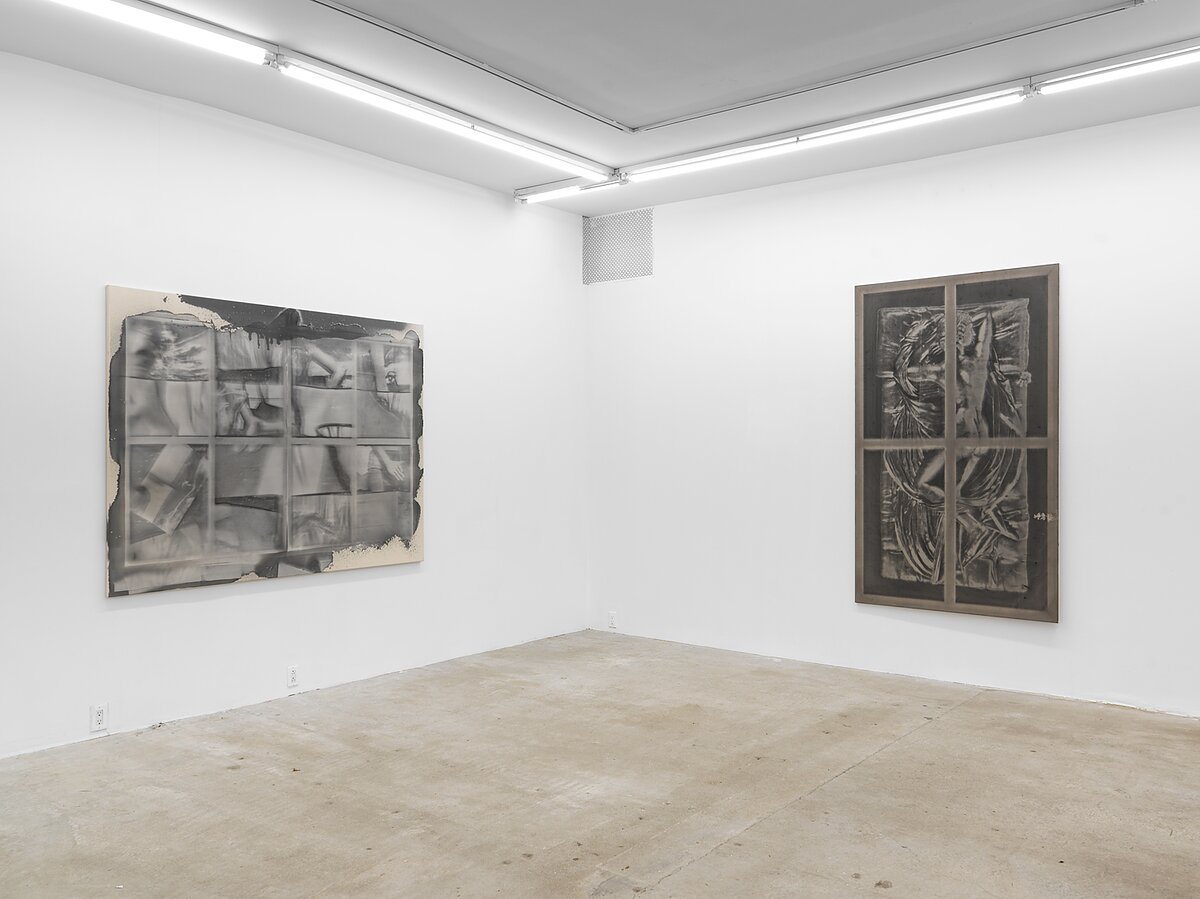
Pan’s Sleeping Hermaphroditus, Bronze commissioned by Diego Velázquez for Philip IV of Spain (2026) is an inky photo of the titular Greek god—in it, Hermaphroditus’ body is quartered, with each limb occupying its own stretch of canvas. “It’s not surprising that a transgender artist would choose this subject, or that a transgender writer would immediately recognize it,” wrote McKenzie Wark of the work—funny, that’s what I was going to say.
For lack of forefathers and mothers in the historical record, Hermaphroditus occupies a special place in transgender mythology. In answer to a misguided naiad’s prayers, the gods fuse the nymph’s body with that of her beloved to create a mythological being that is, in Ovid’s words: “…no longer man and woman,/But neither, and yet both.” The work reminds me of Pan’s older series, “Sleep Paintings,” in which Pan would spill ink on large stretches of canvas, then use her body to create an image. Pan’s added body heat causes the ink to dry unevenly, leaving an impression on the canvas.
Facing the gallery’s entrance was Pan’s painting untitled (scene) (2026), a blurred smattering of body parts and sequences of an interior space. The canvas is interrupted by the impression of the stretcher bars, reminiscent of a window frame, which creates smaller scenes, dismembering Pan’s limbs and the space she occupies. The smeared and compressed images induce a frenzied effect, which seeps out through the monochromatic ink wash. The sensation of becoming an unwilling voyeur settles in my stomach, as if I’m peeking into an uncovered window, catching glimpses of some sort of breakdown.


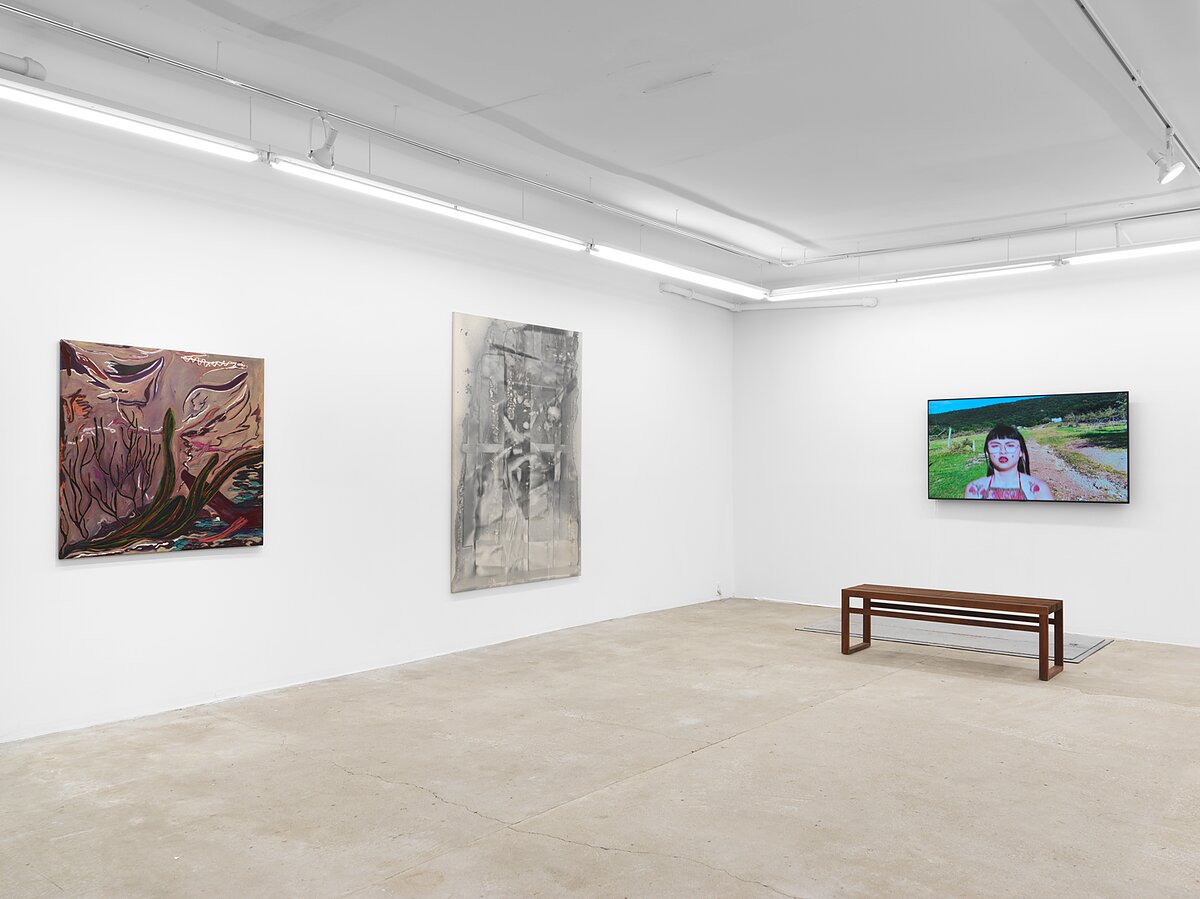
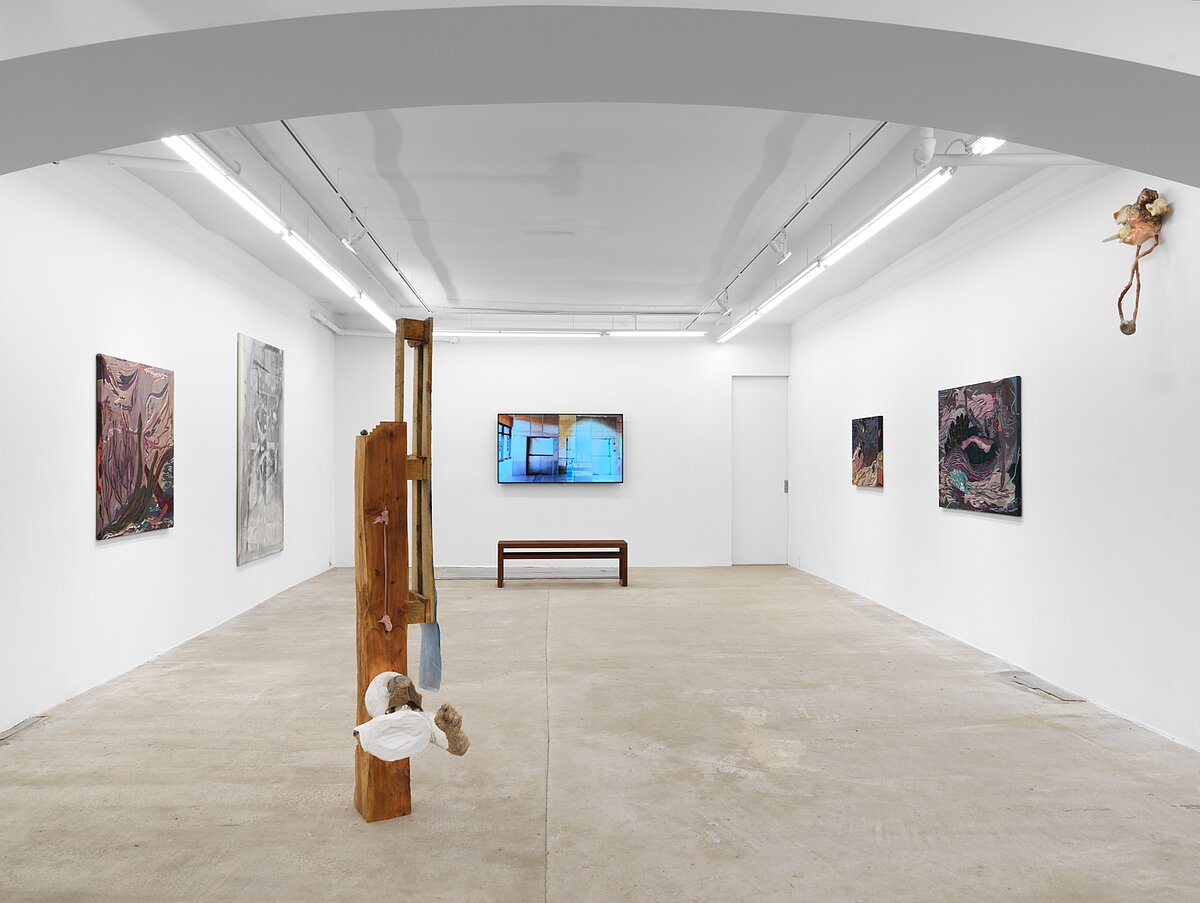
While Pan’s greywash ink paintings turn the body into something unfamiliar, Cato Ouyang’s sculptural constructions, though hard to place, ask empathy of the viewer. In the center of the gallery was carrier / the seeking soul (2026), a warm-toned wood structure interrupted by a fragmented body: a head, neck, and reaching arm that hesitantly extended outwards. A large scroll of cyanotype hung on the perpendicular side of the wood, displaying a ghostly image that inspires a slight shiver. The work extends Ouyang’s enduring embrace of the erotic and the grotesque; their works, though at times hard to look at, convey a magnetic intimacy.
High up on the wall, it bears the traces if not the stigmata of its ancestry (Oriental Jane Doe) (2020) was similarly gruesome, also reaching out, and bearing no less intrigue. Made of a horse tibia enhanced with resin, shellac, and beeswax, two trailing pink-and-red tendrils were attached to an ammonite fossil that dangled just above the viewer’s eyeline. The sculpture is fleshy in its conception, somehow as pleasurable as it is monstrous. Like Pan’s untitled (scene), it felt as though you were catching sight of something that you shouldn’t have, something you’ve never seen before; it felt disrespectful, and it also felt thrilling.
With Whale (2026) Fernanda Galvão built a colorful dreamscape within the gallery’s white walls. Galvão’s work draws inspiration from science fiction, and indeed, the underwater scene invented a future landscape, built in the detritus of a whale. The painting was slathered with glittery, purple waters and dark, anemonous growths taking root. Likewise, Purple Lightning (2026) drew us out of Pan and Ouyang’s private worlds and into a larger ecosystem where flesh interacted with plants, bio-matter, and phenomena in a wine-dark sea.
Galvão’s work brought balance to the show. If Pan and Ouyang were preoccupied with the deconstruction of the body, their works, in conversation with Galvão, also become about building something new from that decay. Together, these works seemed to ask: Through the messy, gruesome, and disjointed nature of our bodies, what can we build together?
—XY Zhou is a multidisciplinary artist and writer based in New York City. They want to know everything and live forever.