The Failure of “Orientalism: Between Fact and Fantasy”
A few weeks ago, I went to see “Orientalism: Between Fact and Fantasy” at the Metropolitan Museum of Art with high hopes. The exhibition is the first in the museum’s 156-year-old history ostensibly dedicated to how the West misinterprets Asia. It also comes on the heels of last year’s groundbreaking show, “Monstrous Beauty”, which touched on the subject and offered fresh critical perspectives illustrating the connection between chinoiserie and the objectification of Asian women. I was convinced that “Orientalism” would build on this momentum and looked forward to new insights from contemporary scholars of color on Europe’s relationship with West Asia—only to leave disappointed.
The term Orientalism can be used to describe either the European artistic movement in the early 1800s which portrayed impressions of the “East” after the French military’s occupation of Egypt; studies of Islamic culture in the same century; or most commonly, the critical lens famously detailed by Edward Said which identifies depictions of the East as a Western construct, created to be easily understood, desired, and ultimately controlled. This current exhibition on Orientalism seems determined to focus on the artistic movement, minimizing the historical inequalities between Europe and West Asia at that time and the long term impact of these images and the ideas they still carry.
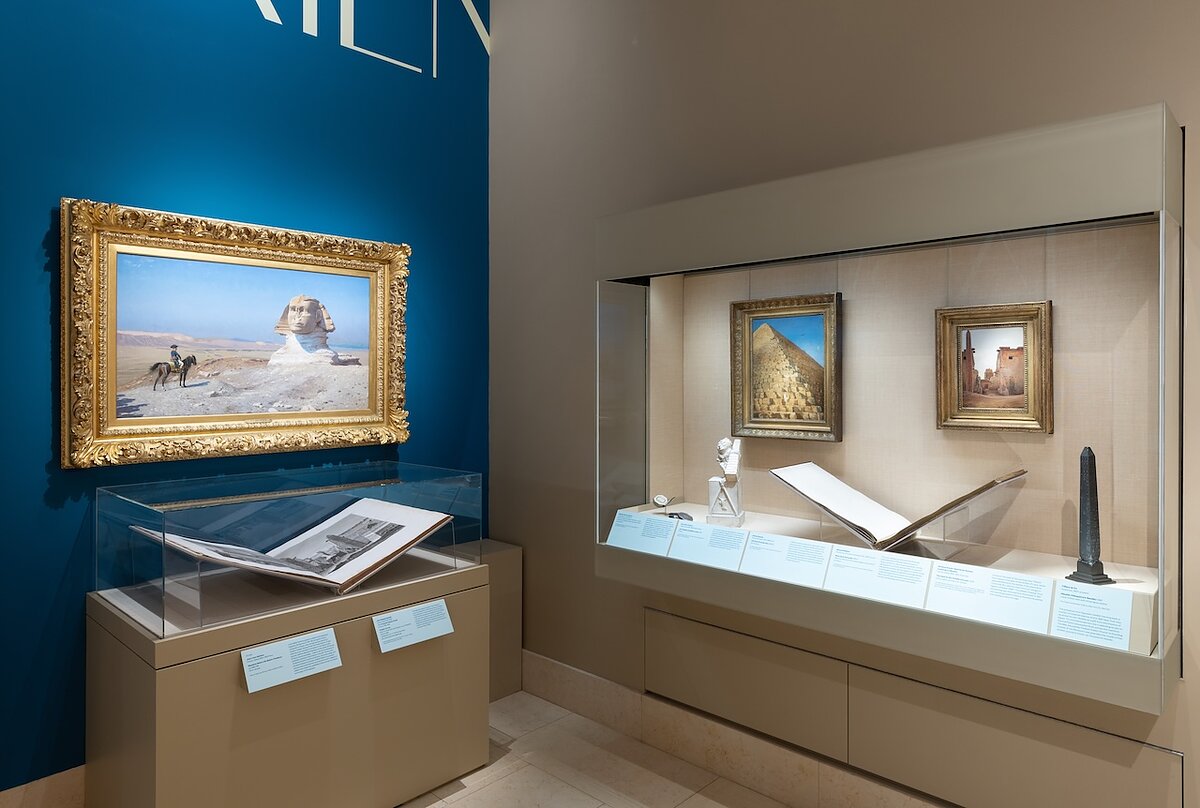
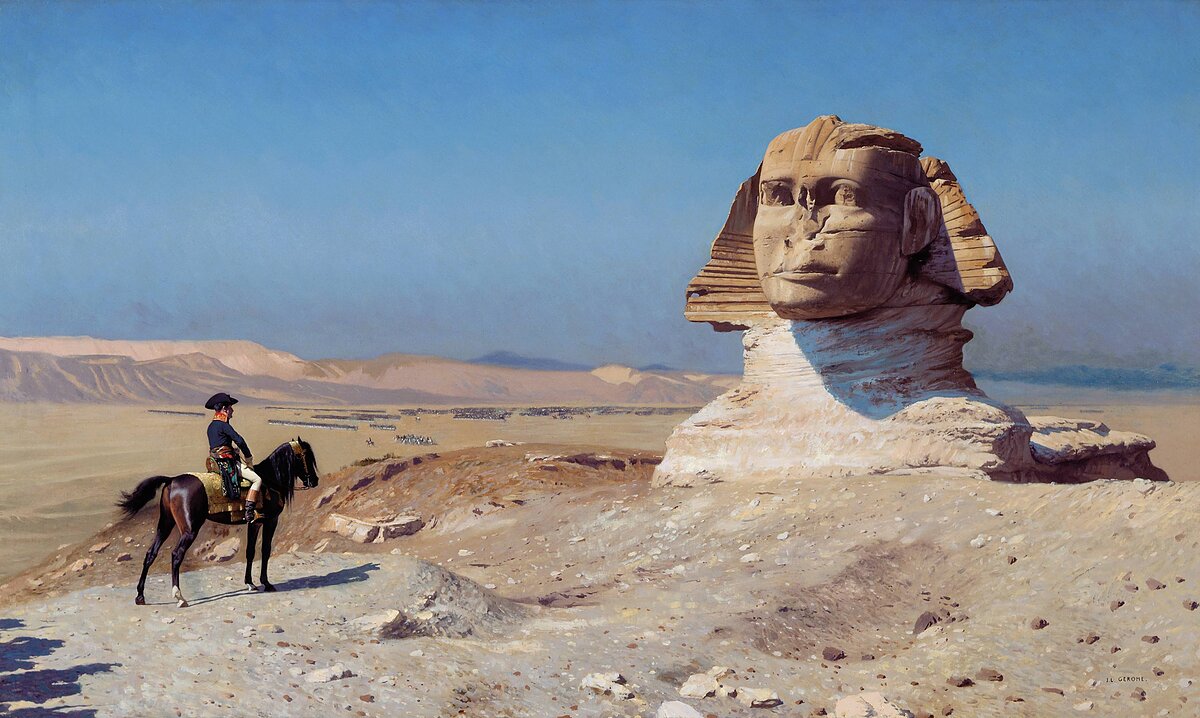
The exhibition opens with Oedipus, an 1886 portrait of Napoleon Bonaparte overlooking the Great Sphinx of Giza by Jean-Léon Gérôme. Small but valiant, Napoleon sits alone astride his horse, facing the monolith, while his troops amass in the distance. The text briefly mentions the French occupation of Egypt and hints at the painting’s propagandist intent, but ultimately praises the work’s “fine brushwork” and “chromatic range.” This description sets the tone for the rest of the exhibition. Historical context is sketched out in broad strokes, but a reverence and appreciation for the object itself is ascendant over deeper analysis.
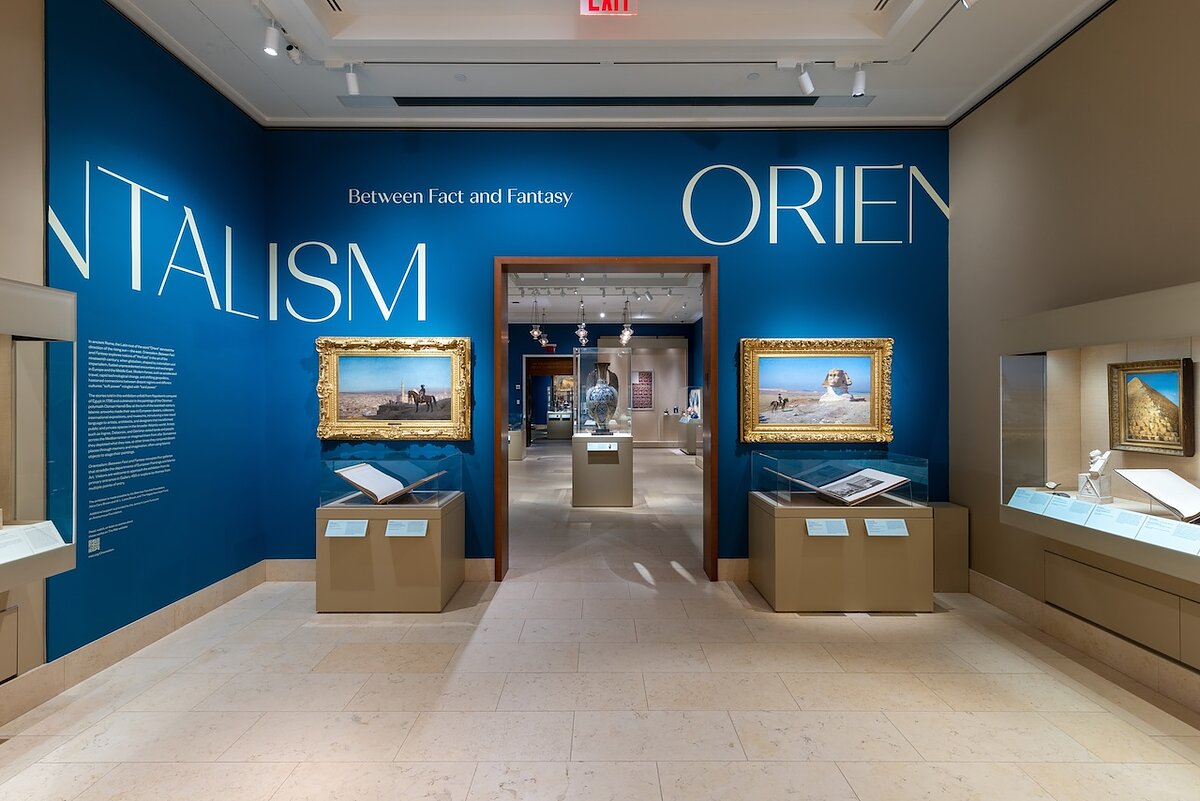


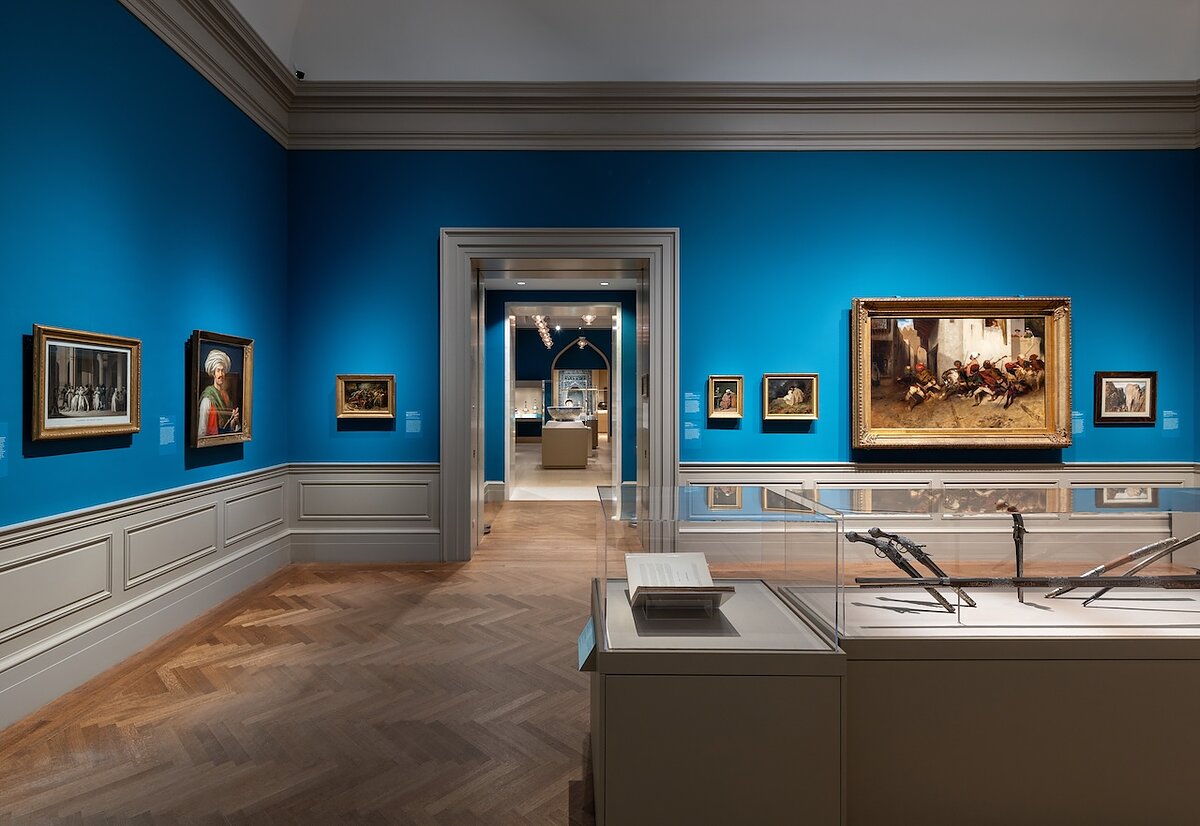
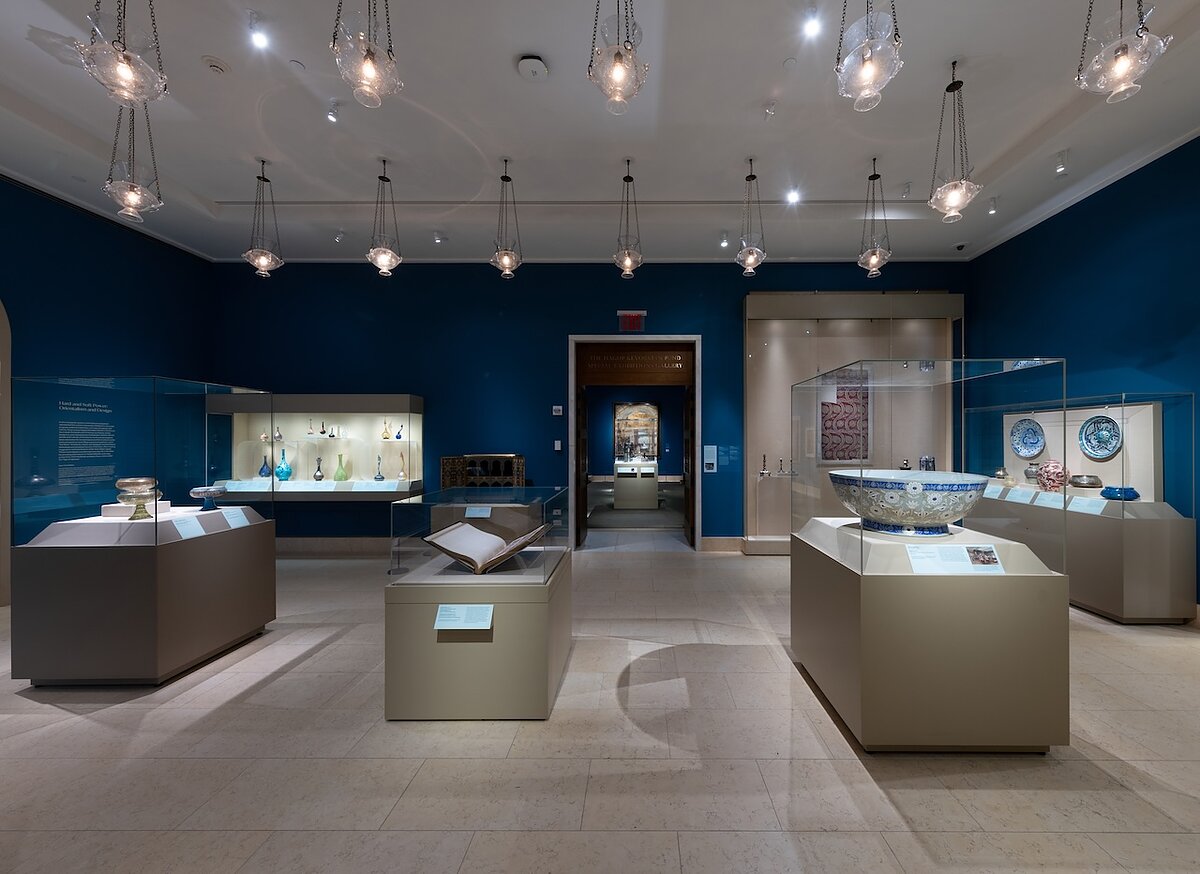
Separated into four rooms, the first gallery begins with examples of Islamic decorative arts, tracing the influence of one of the best preserved examples of medieval Islamic architecture, the Alhambra, as well as decorative objects such as vases, plates, and textiles.
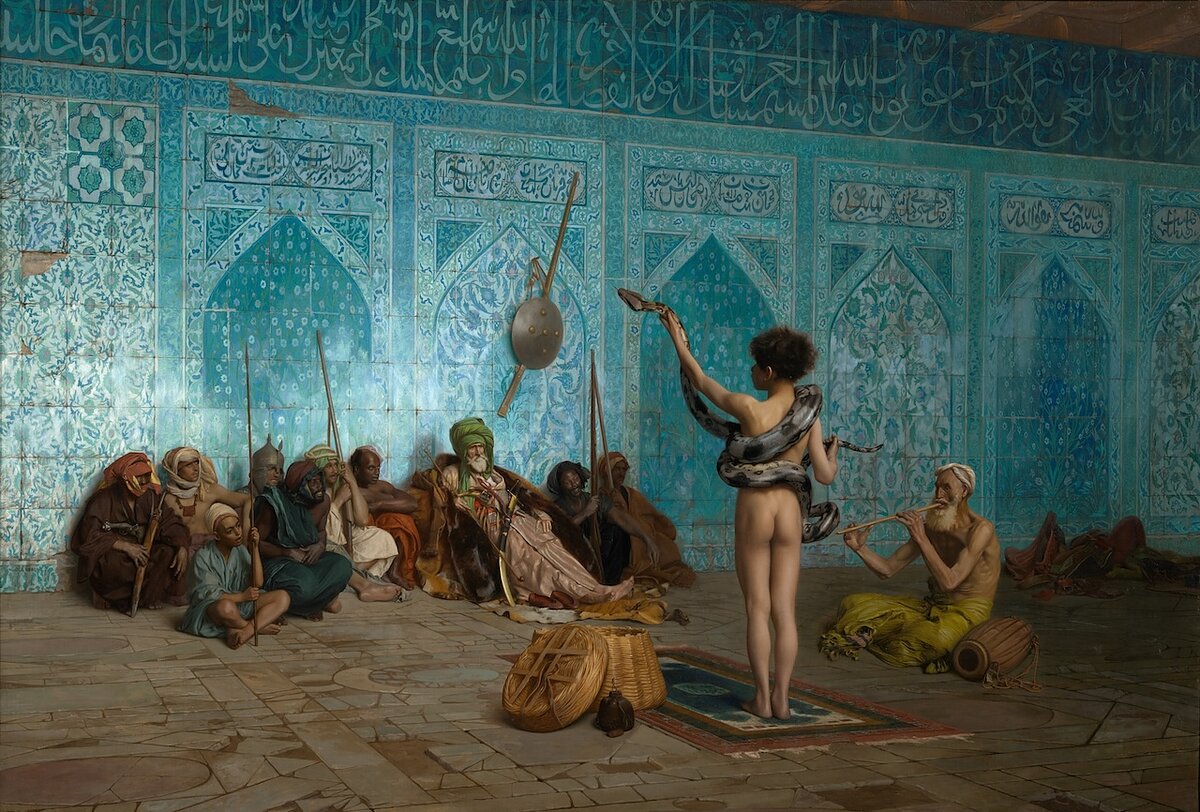
In the second room, among a selection of paintings including Gérôme’s infamous Snake Charmer and a painting of a scene from the Exposition Universelle of 1889 by Louis Beroud, a copy of Edward Said’s seminal 1979 book Orientalism is bizarrely displayed like an artifact on a floating stand under glass next to three metal helmets. Said’s ideas are explained in a short text, but this is the only time his ideas or other Orientalist theories are explicitly referred to.
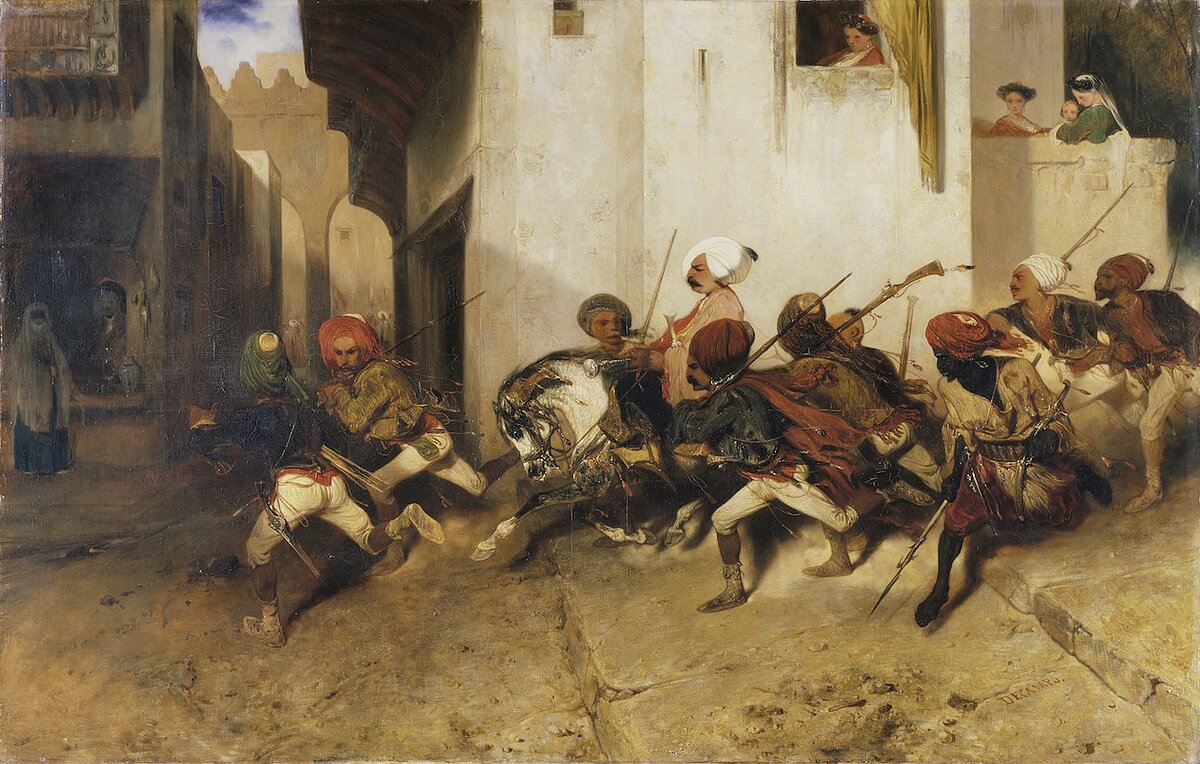
Curatorial texts throughout often led me to question the decision to avoid a more extensive analysis of the Orientalism art movement through Said’s lens. A description for Alexandre-Gabriel Decamps’ painting, The Turkish Patrol (1830-31), states, “The canvas was acknowledged as the first scene of daily life in the Ottoman Empire painted by someone who had recently lived there… Decamps’ mixture of objectivity and imagination would become a hallmark of Orientalist art, providing a framework for its aesthetic appreciation.”
But could a painting of the Ottoman Empire by a French citizen, even an expat, truly be “objective”? Where is the line between aesthetic appreciation and misappropriation? This is a question that the exhibition never truly addresses, even as it features so many of the French painters of this time period who have been widely critiqued for their often deeply inaccurate and sexist portrayals of “the Orient.”
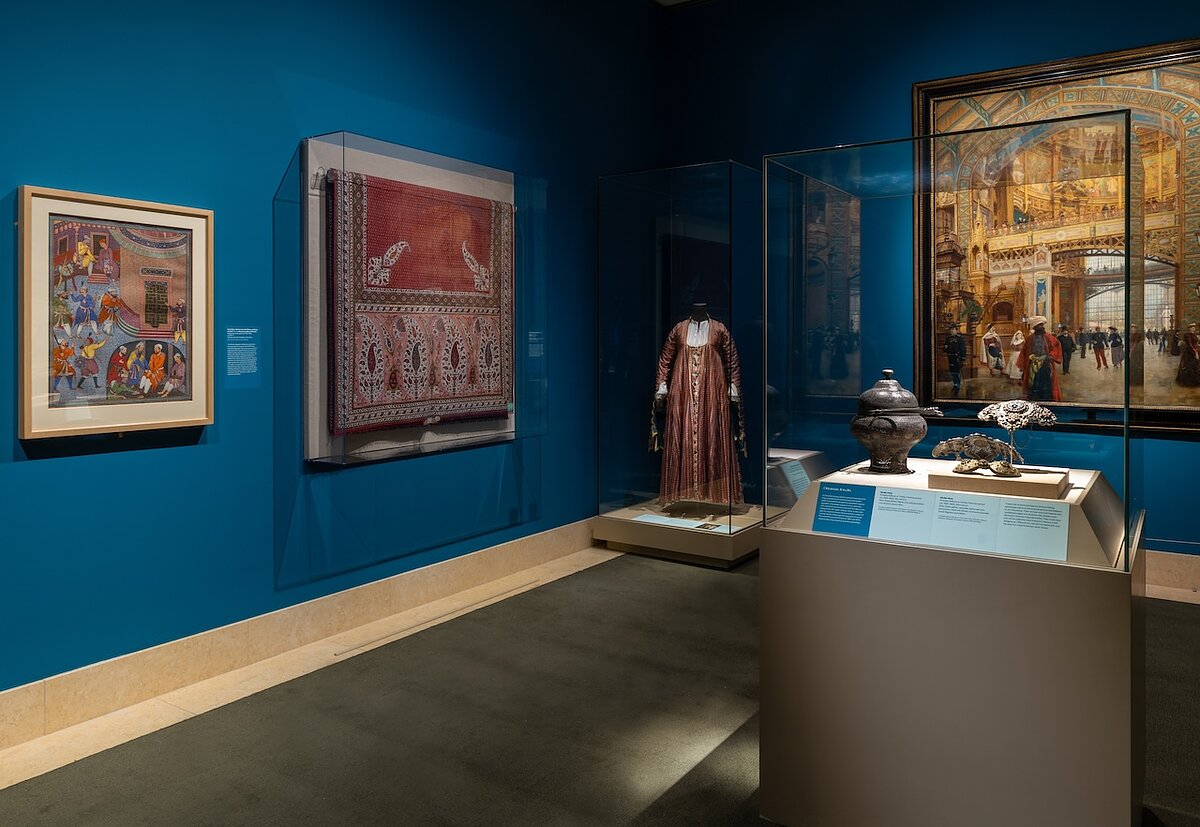
As key members of the Orientalist art movement, Eugène Delacroix, Jean Auguste Dominique Ingres, Théodore Chassériau, and particularly Gérôme appear often in the exhibition with inconsistent context. In the exhibition’s fourth and final room, a selection of harem and bathing paintings—disturbing, if best-selling genres for that era—are finally criticized, with Gérôme’s work, Moorish Bath (1870), described as “bodies painted for consumption.” But this does not go far enough. Derived from the Arabic word, “haram,” the harem originally referred to women’s private domestic spaces, which were sacred and safe, but used in works like these as a projection of European male fantasy. The word later came to denote groups of sexually available women housed in beautiful and mysterious rooms.
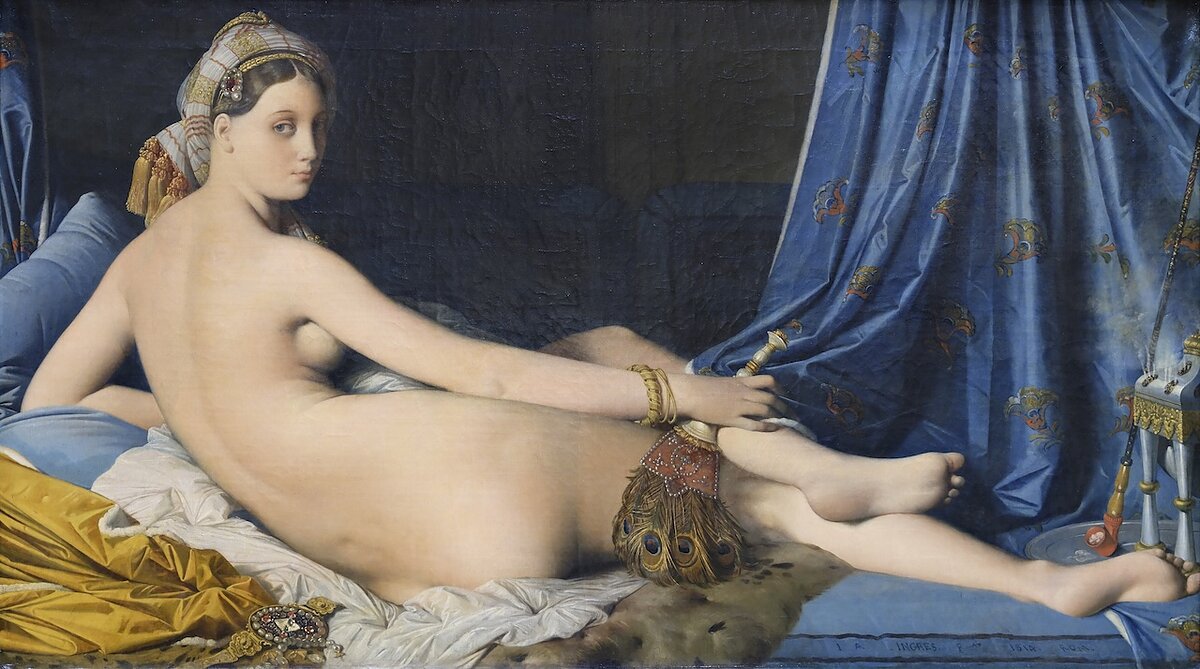
Paintings by these French artists underscore this linguistic and conceptual transformation. In a description of a grayscale version of Ingres’ La Grande Odalisque (1814), a foundational Orientalist image which has had lasting art historical impact, the curators note that Ingres never traveled to the East and that this and other Orientalist images he created were entirely imagined. They neglect to mention that for centuries, the French academy only allowed nudity if it appeared cloaked in fiction, such as in myth or Biblical stories—women were supposed to be idealized, not overtly sexualized. Academic art only began to introduce Orientalism into this category of exceptions at the turn of the century, after Napoleon’s occupation of Egypt. La Grande Odalisque was accepted into the 1819 salon as an early example of this new, legitimized fantasy.
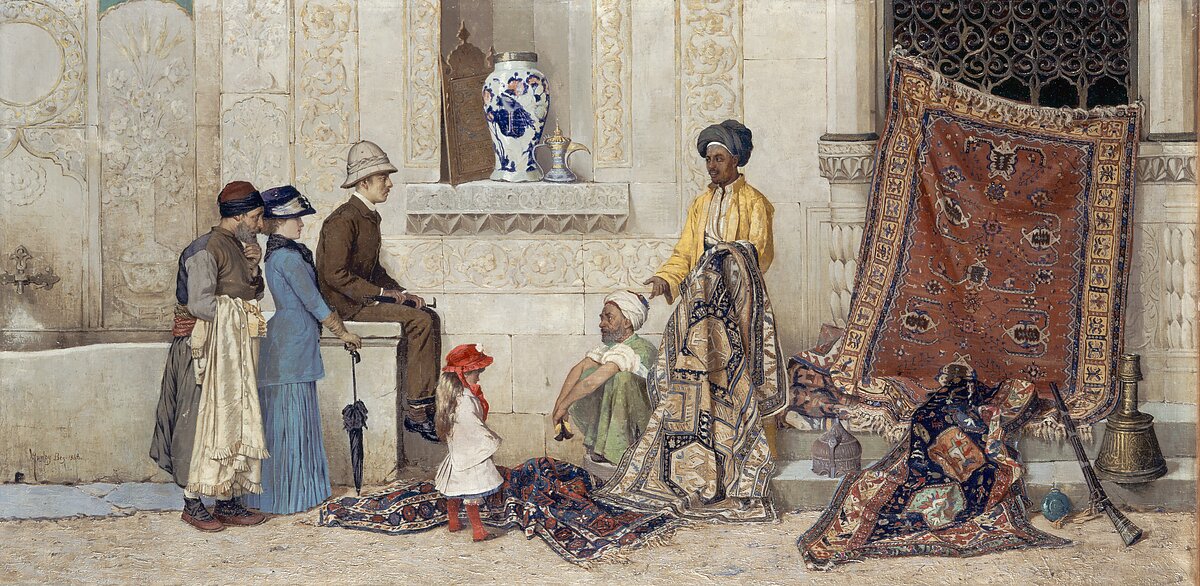
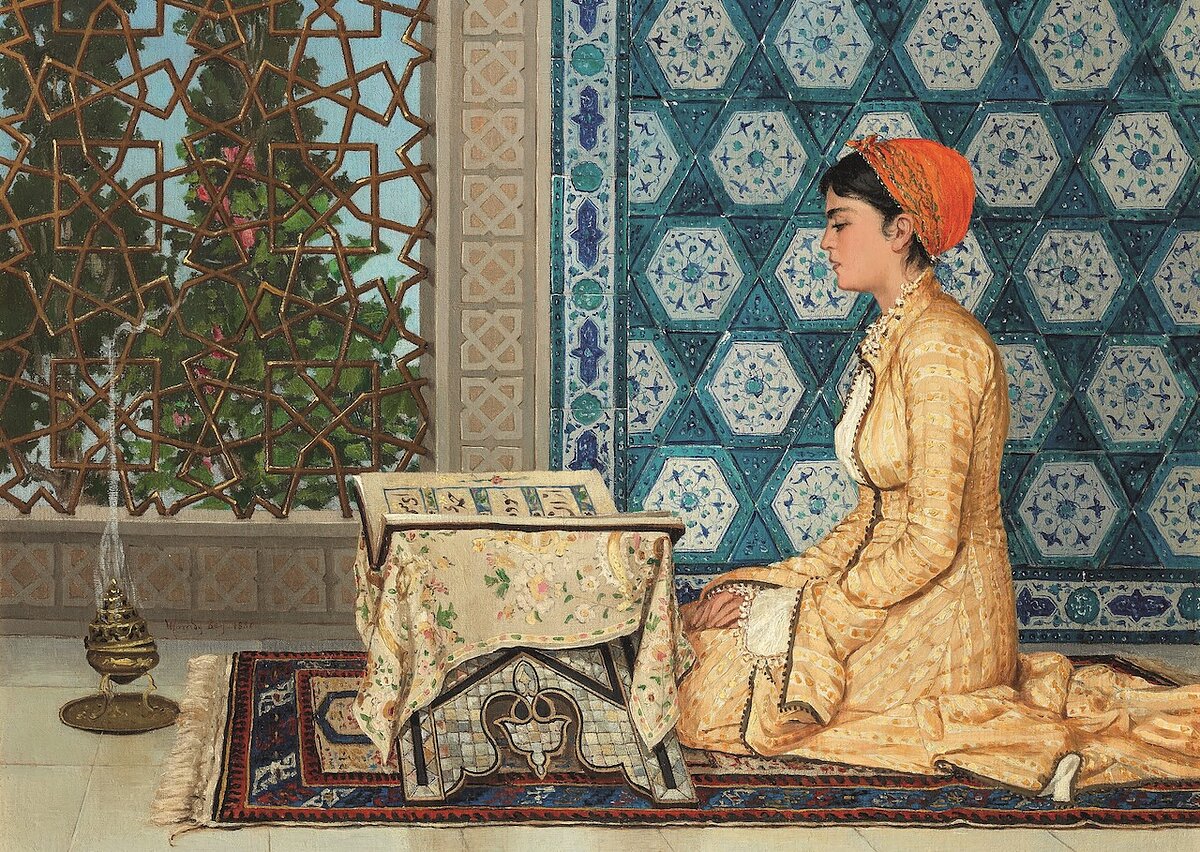
Paintings by Osman Hamdi Bey, an Ottoman polymath who is held up as the singular example of “authentic” representation, are shown in the same room as depictions of exoticized women. Hamandi Bey was trained by French Orientalists like Gerome and Gustave Boulanger, and exhibited and sold his paintings mainly in the West. Details in his paintings, like the broken tiles behind the Man Meditating over the Qur’an (1902) or the pair of slippers propped up in the corner of At the Mosque Door (1891), make his scenes feel more realistic, but his paintings are still jewel-toned and highly decorative—they feel made for Western audiences and collectors.
The Met has often stumbled on how it represents non-Western cultural history. The most relevant example might be their 2015 exhibition, “China: Through the Looking Glass”, an exhibition that many in the Asian and Asian American community criticized for encouraging Orientalist fantasies of China. Many saw “Monstrous Beauty”, developed by curator Iris Moon and rooted in Anne Anlin Cheng’s theory of Ornamentalism, which reworks and amends Said’s original theory to posit that Asian women have been historically fetishized through ornament, rather than through nudity, as rejoinder. If thousands of people had walked away from “Monstrous Beauty” with a new understanding of the soft power of decorative arts, what would those coming to see this exhibition on Orientalism understand about representation?
I left the exhibition feeling unsettled. Art, particularly that which contains a perspective from a powerful institution or population on other groups of people, continually requires the contextualization of history, society, and quite often, geopolitics precisely because of its subtle and pervasive influence. Orientalism remains relevant to our social and geopolitical inequalities both globally and domestically. Just as connections can be drawn from images in chinoiserie to the ongoing objectification of Asian women, so too can correlations be made between European Orientalism and American Neo-Orientalism. European Orientalism presented West Asian societies as advanced in craft and design but fundamentally inferior to European social modernity and in need of a guiding hand.
Following the US’s decades-long paternalistic military presence in West Asia, which now has us locked in yet another unwinnable and profligate war, it feels as if the Met missed an opportunity to reflect on the centuries of Orientalist thinking which led us here.
“Orientalism: Between Fact and Fantasy” is on view at the Metropolitan Museum of Art through February 27, 2027.
—Rachel TonThat is an interdisciplinary artist and writer working with narrative structures around themes of possible futures, memory, and space-time across forms, including socially engaged art. She is co-founder of the publishing project, Oreades Press, curates the project space Airtight Garage, and volunteers as director of the North Shore AAPI Coalition. She has been a fellow of She Who Has No Master(s) and Tin House Writing Workshop, and is the co-author of Die Alp an sich, a bilingual book of translations and retellings of Swiss folklore from Poets & Traitors Press.