Embracing the “Multiple Offerings” of Theresa Hak Kyung Cha
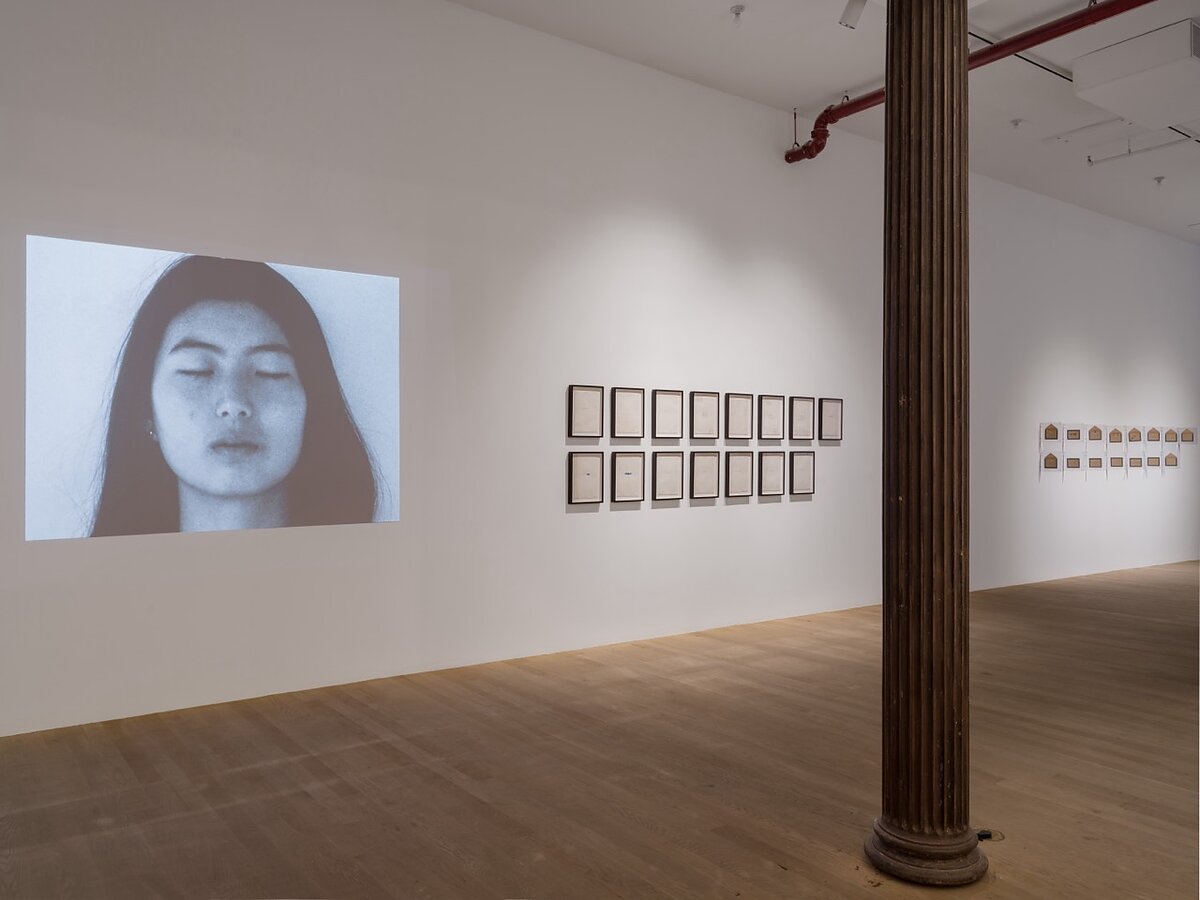
In Theresa Hak Kyung Cha’s 1976 video piece Permutations, we see a randomized sequence of six one-second shots of her younger sister, Bernadette, either turned towards or away from the camera, with her eyes either open or closed. Seemingly redundant at first glance, the video’s full 10-minute duration reveals, to those who stay committed, a glimpse of the artist as she briefly appears in frame.
Organized in collaboration with the Berkeley Art Museum and Pacific Film Archive, where it was first shown, “Theresa Hak Kyung Cha: Multiple Offerings” at Artists Space is the first retrospective in 25 years dedicated to the Korean American artist’s prolific career.
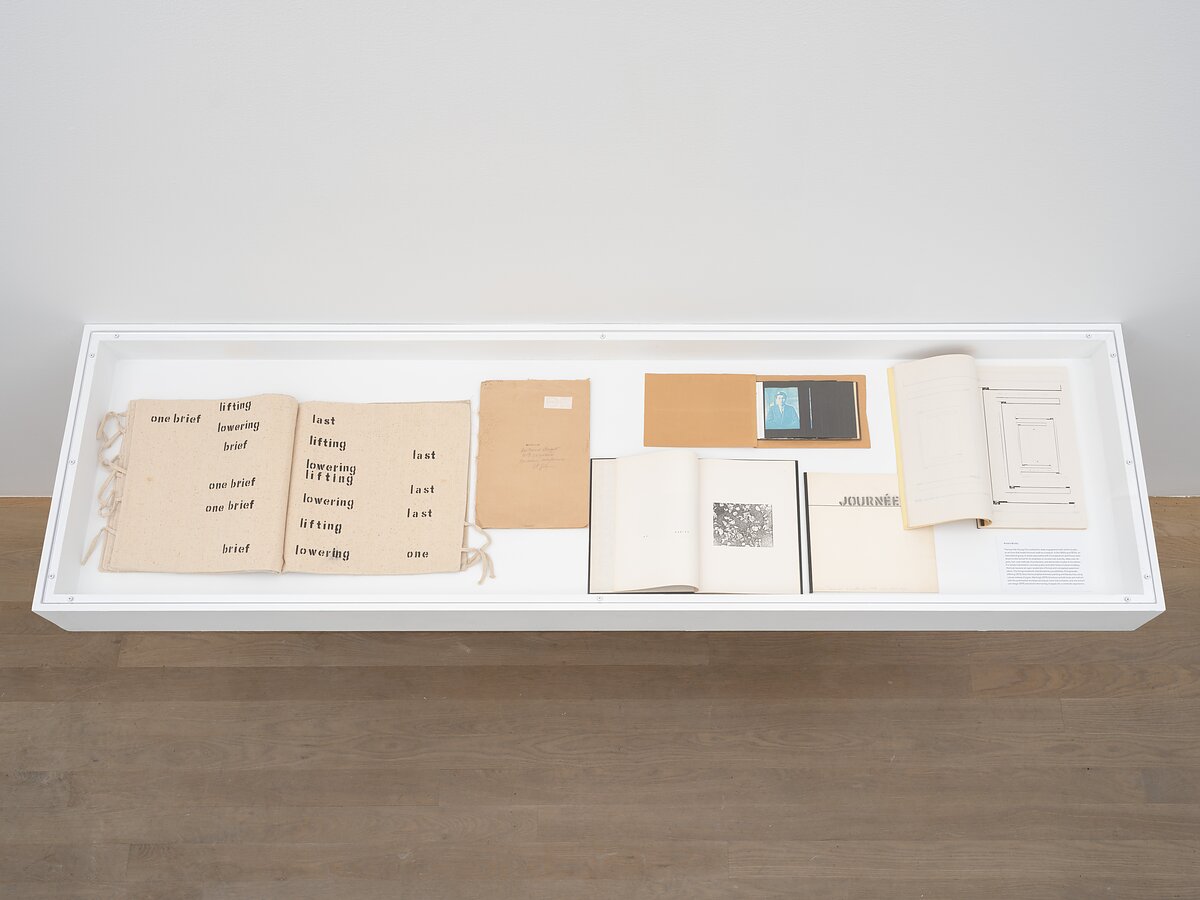
The exhibition displays a wide array of Cha’s experimental works, ranging from video installations to published books to performance ephemera. While her work greatly varies in form and medium, curator Danielle A. Jackson describes Cha’s primary occupations with “the unstable territories of memory, language, translation, history, and displacement.”
Cha emigrated from South Korea to the United States at 11 years old, first to Hawaii and then to the Bay Area. She later attended the University of California, Berkeley, cultivating her artistic and intellectual practice while obtaining her undergraduate and graduate degrees in comparative literature and art. Cha moved to New York City in 1980, working several jobs and exhibiting across the city before she was murdered in 1982 in the midst of preparations for a planned exhibition at Artists Space.
Discussion of Cha’s career necessarily acknowledges, but too often fixates on, her untimely death. Rather than fossilize Cha’s work in the span of her life, “Multiple Offerings” adopts her method of “Multiple Telling with Multiple Offering,” evident in both title and curatorial design, to illuminate the ongoing resonance of Cha’s career and creative spirit.


The exhibition guide includes an excerpt from her M.F.A. thesis, where Cha writes, “Inspiration given to an artist, Imagination breathed upon, breathed into him/her…insists upon a communion with the audience…In this way, the piece becomes an intimate sharing, a collective experience, of the collective memory and imagination.” For Cha, art is not produced solely by the artist; instead, it’s perpetually offered up to be differently received, interpreted, and understood by audiences. From that ongoingness and collectivity, a single piece of art can manifest infinite meanings—in other words, multiple tellings with multiple offerings.
“Multiple Offerings” is a reconvening of this communion, and Cha’s works again inhabit countless new (after)lives.
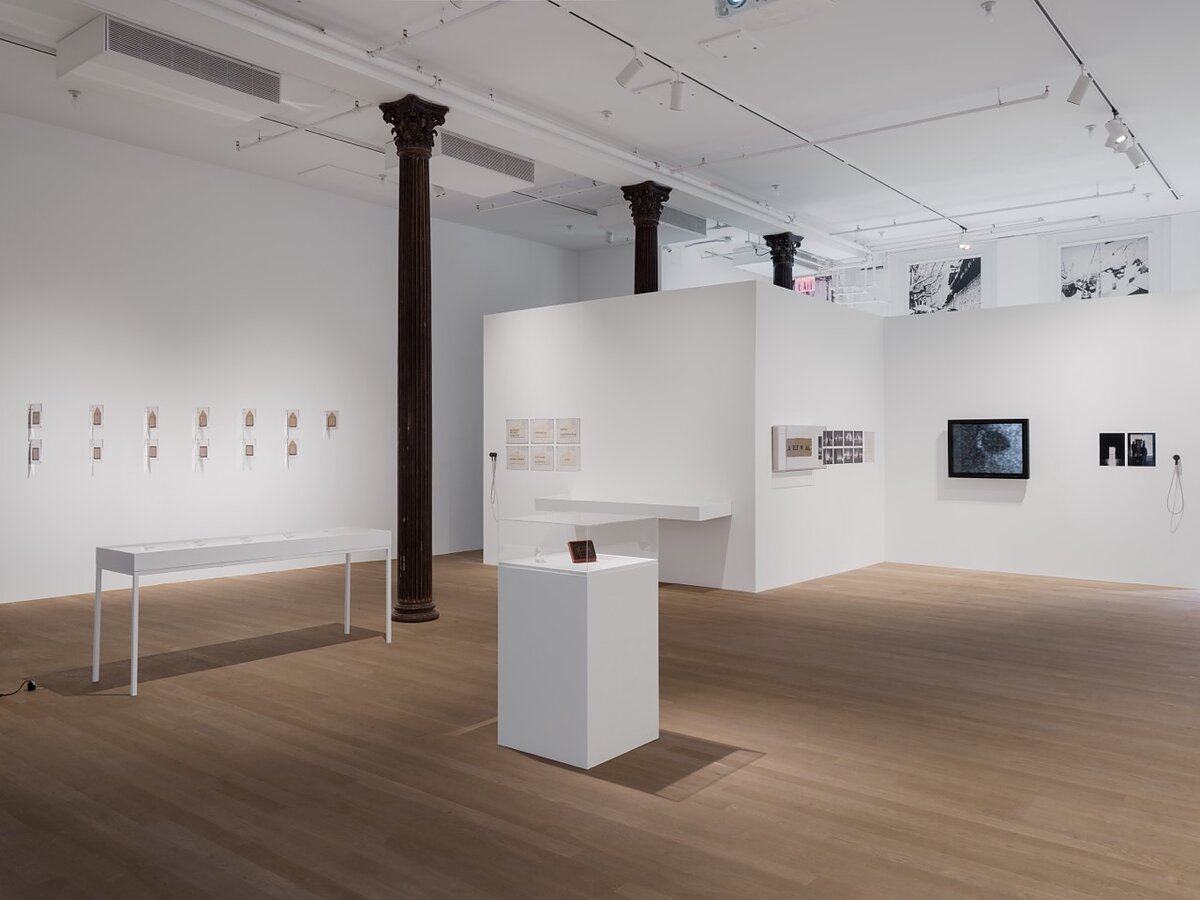
By refraining from a chronological or linear organization, the exhibition allows visitors to wander and follow wherever they may be drawn. Upon entering the gallery, to the right and down the stairs, there’s a display case featuring Dictée (1982), the most famous of Cha’s literary works. Meanwhile, straight ahead and up the stairs into the main floor is the aforementioned Permuations.
Moving towards either end of the floor, two of Cha’s video installations, Exilée (1980) and Passages Paysages (1978), are sectioned off from the rest of the show and displayed in separate alcoves. With little light and surrounded by walls painted a darker shade of gray, the arrangement prompts a more focused viewing experience.
Exilée, meaning “exiled” in French, presents two forms of video: a television monitor and a Super 8 film projected on top of it. The dual visual is accompanied by a soundtrack on which Cha reflects on the physical and temporal distance between California and Korea, distances which structure the experience of/along diaspora. The installation is accompanied by its corresponding text, titled Exilée/Temps Morts and published in the same year.
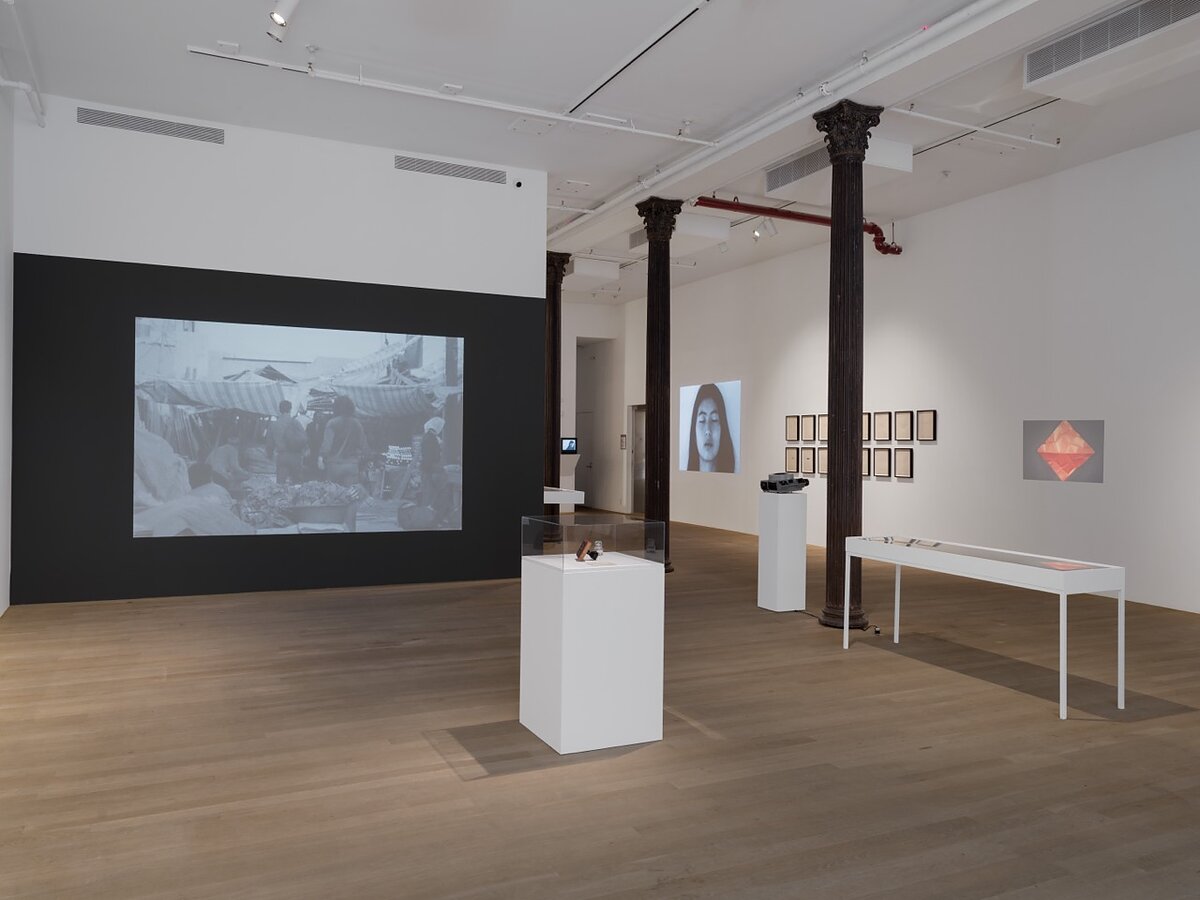
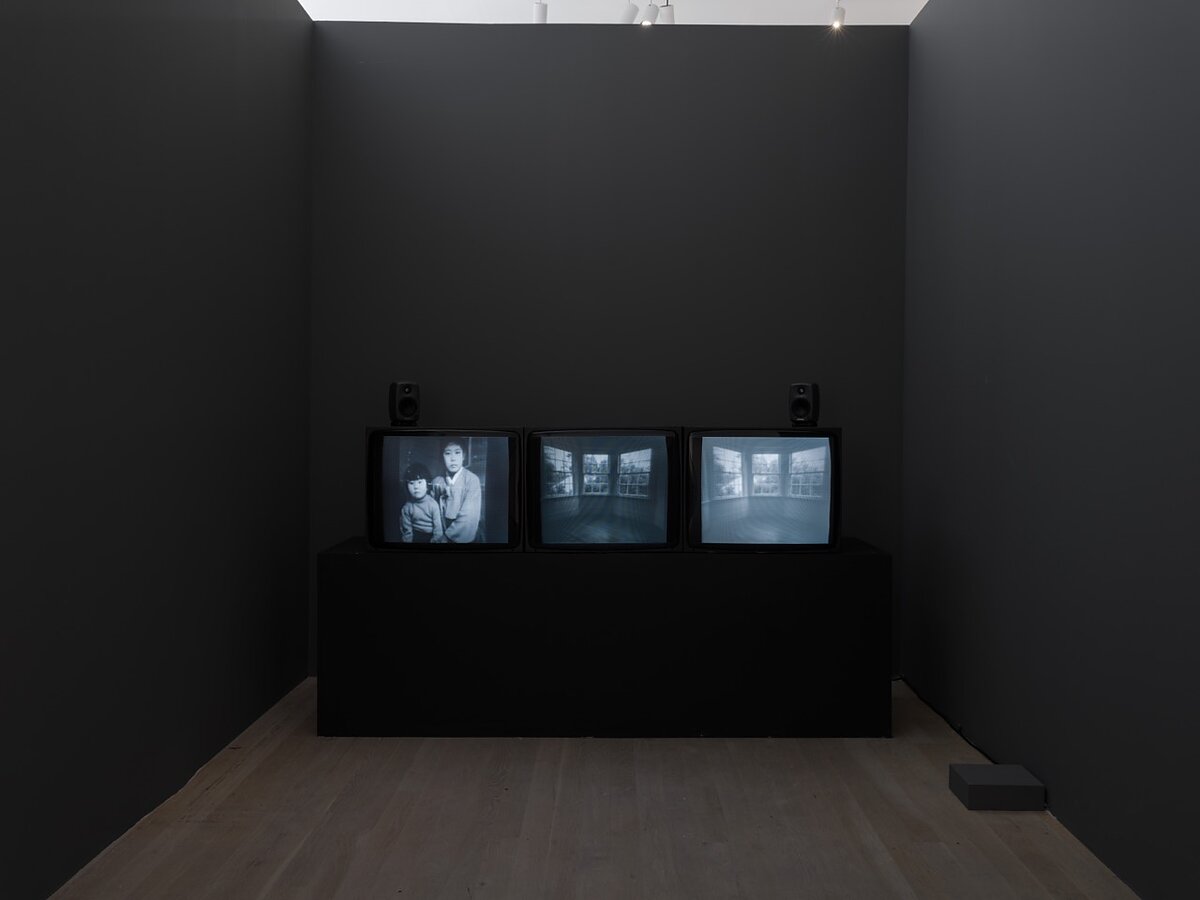
Across the exhibition, Passages Paysages is a three-channel video installation, featuring still photographs taken by her partner, Richard Barnes, of his bedroom at UC Berkeley and paired with a paper counterpart, similar to Exilée. The photographs dissolve and fade in and out of the screen, accompanied by Cha’s disembodied voice sharing a text on memory, ancestry, and homeland. In the darkness of the alcove, there’s a sense of intimacy, but in this discordance between the visuals of Barnes’ home space and the evocation of Cha’s homeland, we’re left unsettled.
Despite their isolation, these pieces are hardly contained and their audios leak into the general gallery space. That uncontainability itself again evidences Cha’s method of “Multiple Telling with Multiple Offering,” as the other objects on display give new form to those narratives of diasporic movement, displacement, and (dis)belonging.
The broader exhibition continuously engages these themes, particularly through Cha’s varied (mis)uses of language to challenge the ways that meaning is conveyed and bound by conventions. Works like Cha’s video piece Mouth to Mouth (1975) strip languages into its units; in this instance, Cha fits the frame around her mouth as it sounds out the eight Korean vowels. While her lips visually perform this “sounding out,” the actual sound of the video is replaced by running water, and “the embodied search for one’s mother tongue,” as described in the exhibition guide, is rendered unattainable.
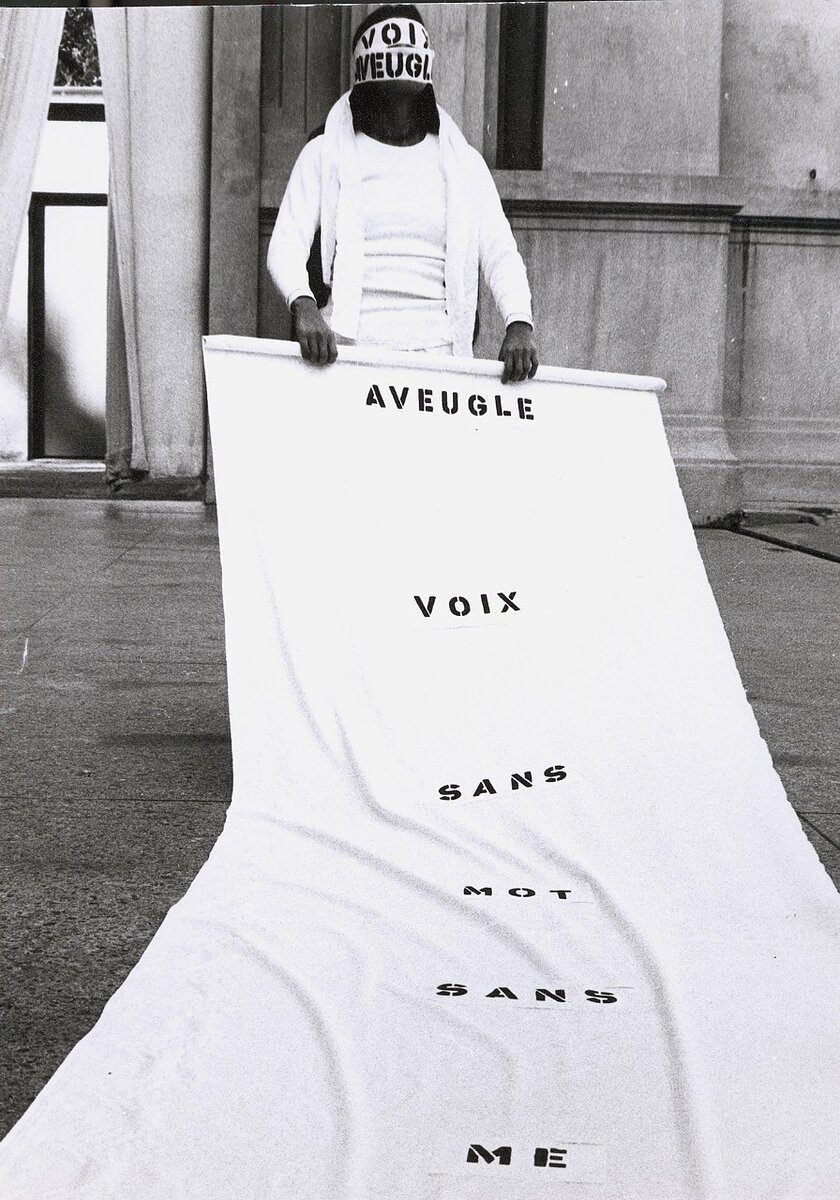
In addition to her video work, the exhibition includes documentation and ephemera from a number of Cha’s live performances. For instance, A Ble Wail (1975) evokes Korean shamanistic rituals (musok) as Cha performed a combination of “stillness and ritualistic motions,” dressed in white and covering her eyes with a strip of fabric. In the original performance, Cha was separated from the audience and partially obscured by a curtain made from cheese cloth, expressing her desire to be “the dream of the audience.” Now, presented only as photographs for our viewing today, we are similarly suspended in a level of opaqueness wherein we cannot fully witness the performance, left with mere glimpses.
This tension of inconclusiveness is most illuminated by the exhibition’s inclusion of Cha’s unfinished projects, including the plans for a historical film, titled White Dust from Mongolia (1980), and pieces from the Untitled (Hands) (1982) series, originally intended for the group exhibition at Artists Space at the time of her death.
White Dust from Mongolia draws from footage taken by Cha in South Korea in 1980, during a trip with her brother James and in the midst of student-led protests against the military coup of Chun Doo-Hwan which would culminate in the May 18 Gwangju Uprising. Though the film was left unfinished, the footage, storyboards, and shot list on display depict the story of a young Korean woman in Manchuria during Japan’s imperial occupation of Korea. “It represents a body of time, units in time inside the time mass that is eternal and immeasurable, within which our existence is marked like a wound,” wrote Cha in the project’s proposal. Through the work’s incompleteness, we might reckon with the obscurity of the “eternal and immeasurable,” as in all that exceeds our own existence, thoughts, and memories.
“Multiple Offerings” dwells in the irresolvable and the unknowable, providing as its title suggests: new encounters with Cha’s oeuvre in its many, multiple offerings.
“Theresa Hak Kyung Cha: Multiple Offerings” is on view at Artists Space through November 21, 2026.
—Hannah Bae (she/her) is a PhD student in American Studies at NYU. Her research attends to contemporary visual and performance art emerging from/within diasporic communities, drawing from performance studies, queer theory, and relational ethnic studies.