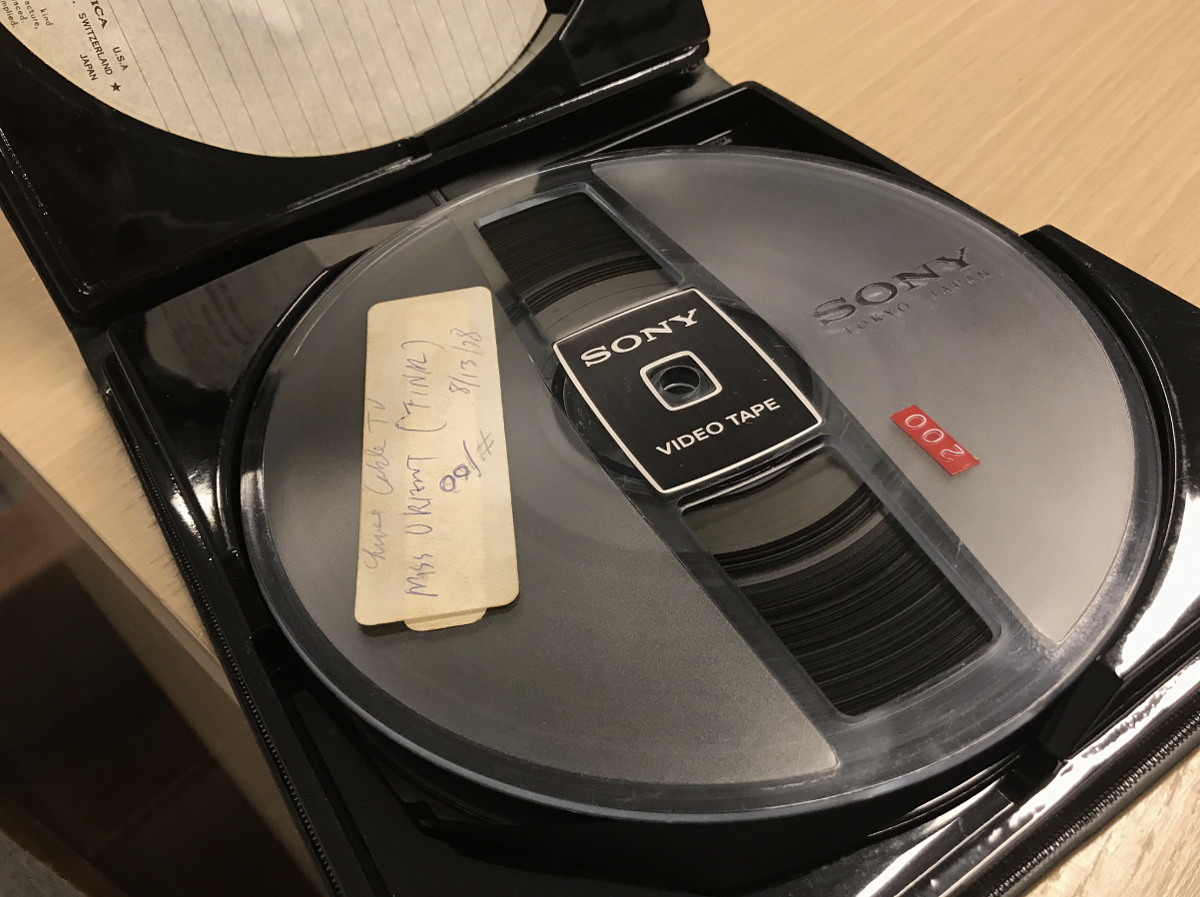
Reviving Chinese Cable Television’s Footage of 1970s Chinatown
In May 2020, as New York City was in the thick of the COVID-19 pandemic lockdown, Klavier Wang sat down in her apartment to watch over 100 digitized videotapes from Asian CineVision’s archives at NYU’s Tamiment Library. Through hazy footage, she saw scenes of people picketing at a labor rights demonstration in Chinatown, chanting in Cantonese.
This footage was from Chinese Cable Television (CCTV), a public access program that ran from 1976 to 1983 out of a loft on East Broadway in Manhattan. When CCTV first aired on Manhattan Cable’s Channel D, it became the first programming dedicated to the Chinatown community that spoke the neighborhood’s primary languages, and was for its residents. A 1972 Federal Communication Commission mandate requiring cable systems to provide public access channels made community-run programs like these possible. Cable operators were also interested in reaching non-English speaking markets to expand their viewership.
Nancy Tong, a documentary filmmaker and CCTV producer who volunteered from the program’s beginnings, recalled spending an entire summer knocking on doors in the neighborhood with translated flyers, persuading tenants and landlords to let cable operators wire their buildings. If enough of them said yes, CCTV would get an hour of airtime every day.
The beginnings of CCTV had a utopic quality—not in the sense of perfection, but of limitless possibilities and ideals and a spirit of collective experimentation. Local filmmakers and activists, many without a job or any income, volunteered from the start, not knowing what the project would become. Over the years, the program would evolve into a launching pad for pivotal figures in the AAPI art scene. Its founders included Tsui Hark, who became a central figure in the Hong Kong New Wave movement; Danny Yung who founded the experimental art group Zuni Icosahedron in Hong Kong; and Christine Choy who would go on to direct the Academy Award-nominated documentary Who Killed Vincent Chin? with Tong and co-found Third World Newsreel.
Operating under the name of Asian CineVision, the group organized acting and production workshops so community members could tell their own stories using the then-emerging technology of video. As Tong remembered, their news anchor at the time had a day job on Wall Street and would rush up to Chinatown after work to record in front of a set the crew had built from a wooden frame. The team would often run red lights to deliver the tape for that evening’s broadcast. Their only equipment was a Sony black-and-white portable video camera and a half-inch reel-to-reel recorder. With no editing equipment of their own, they made an arrangement with Trinity Church in Lower Manhattan to do their editing work after the church’s service hours, often working into the early morning.


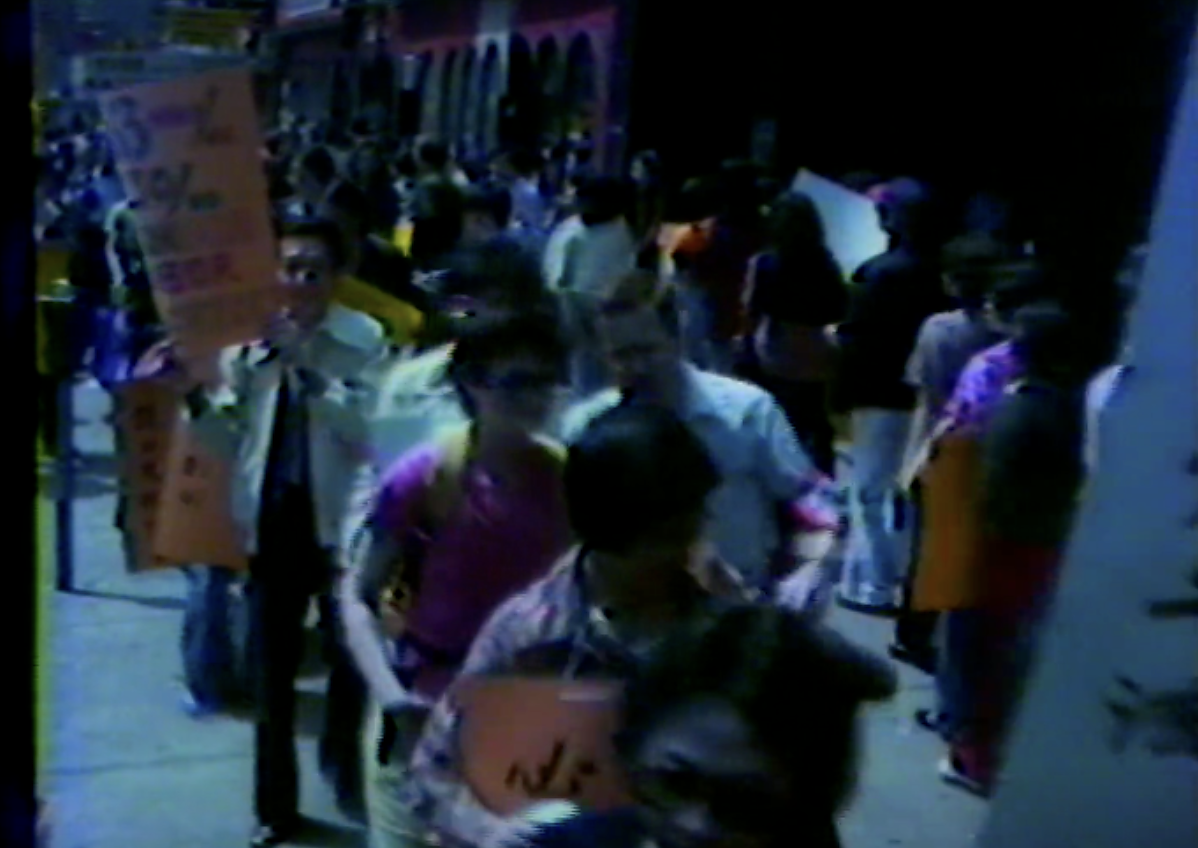
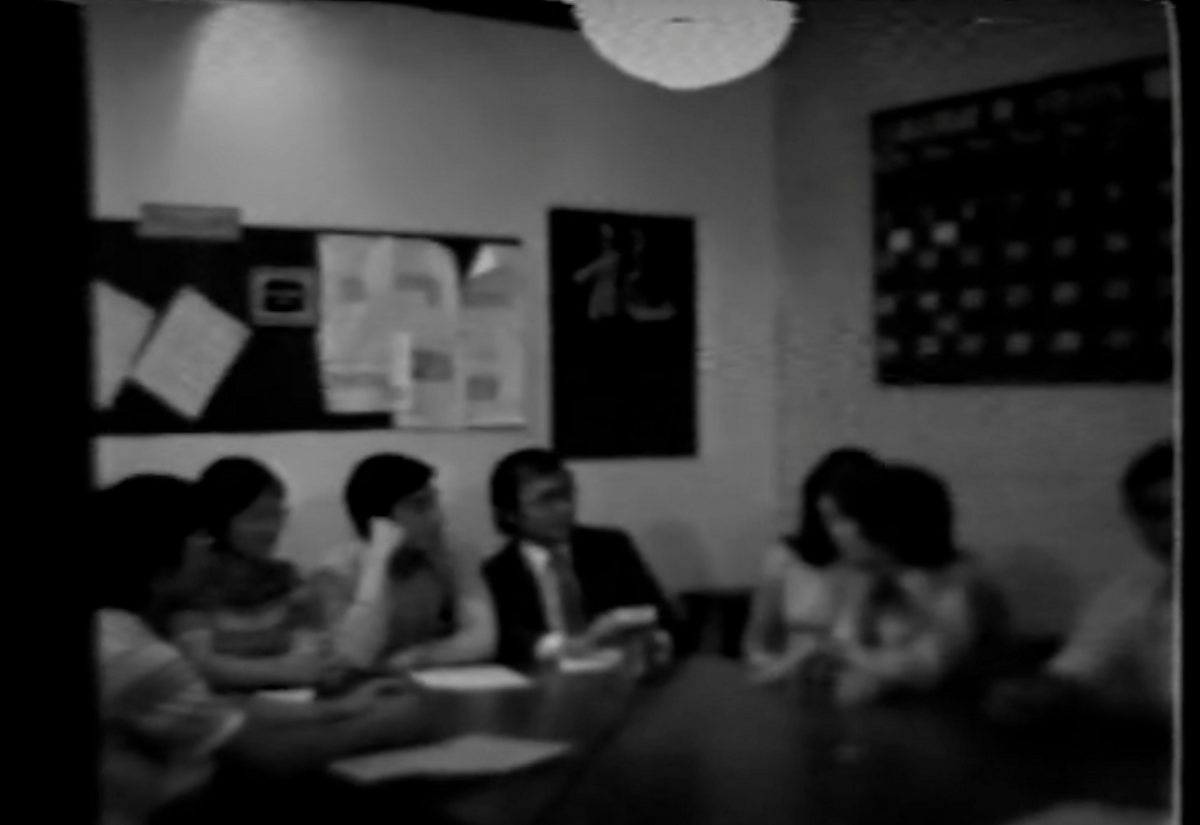
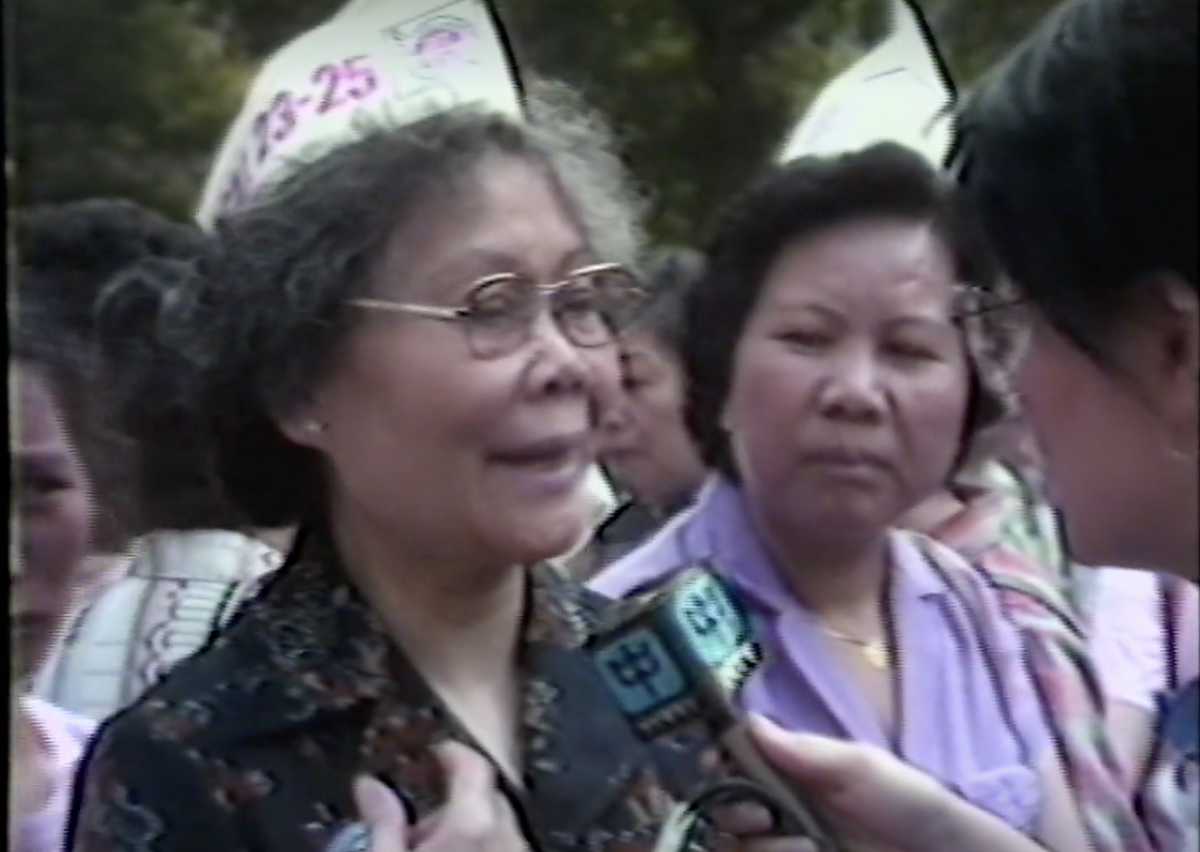
Over seven years, CCTV documented events that would come to define late 20th century Chinatown, such as the 1980 Silver Palace waiters’ strike over tip pooling and the Manhattan Bridge rezoning fight. But for Tong, the most memorable coverage was the 1982 garment workers’ rally at Columbus Park. The strike saw more than 20,000 Chinese garment workers, most of them women. Together, they protested an industry that had grown tenfold since the 1960s without improving wages or hours. It became not only one of the largest demonstrations in Chinatown history, but also marked the first time Chinese immigrant women had organized on that scale. Where today’s trendy art galleries and restaurants now stand were once the very factories these women walked out of. Without CCTV’s documentation of the resolute faces of these Chinese immigrant women anchoring our memories of Chinatown’s collective action, this history would likely have faded into imagination.
NYU’s Tamiment Library began collecting CCTV’s footage in 2007; the library’s focus on labor history made it a fitting custodian for CCTV’s reportage on labor disputes happening in Chinatown in the 1970s and ‘80s. Still, the archive was an obscure part of the collection, largely collecting dust.
It had been difficult for the library to access much of the archive’s contents as not a lot of their audiovisual archivists could speak Cantonese. Klavier Wang was the first, and so far, the only person to understand and describe the CCTV tapes, which she did from her apartment during COVID-19 lockdowns in 2020. After her internship ended, however, no one continued her work—some 200 additional tapes have since been digitized and remain undescribed.
In today’s political climate, with libraries and archives struggling under increasingly limited resources and budget constraints, item-level descriptions on archival footage can feel almost like a luxury. But the distillation of vast amounts of information into clear and meaningful summaries is especially crucial for providing access to moving image records like these. Good descriptions allow researchers to narrow the scope of their inquiries by browsing summaries instead of spending hours watching every episode. This is even more critical for a multilingual collection like CCTV’s, where language is not a technical detail or a metadata field but a consequential factor that influences future access and discovery—the language of these entries determines who this archive is ultimately made for.
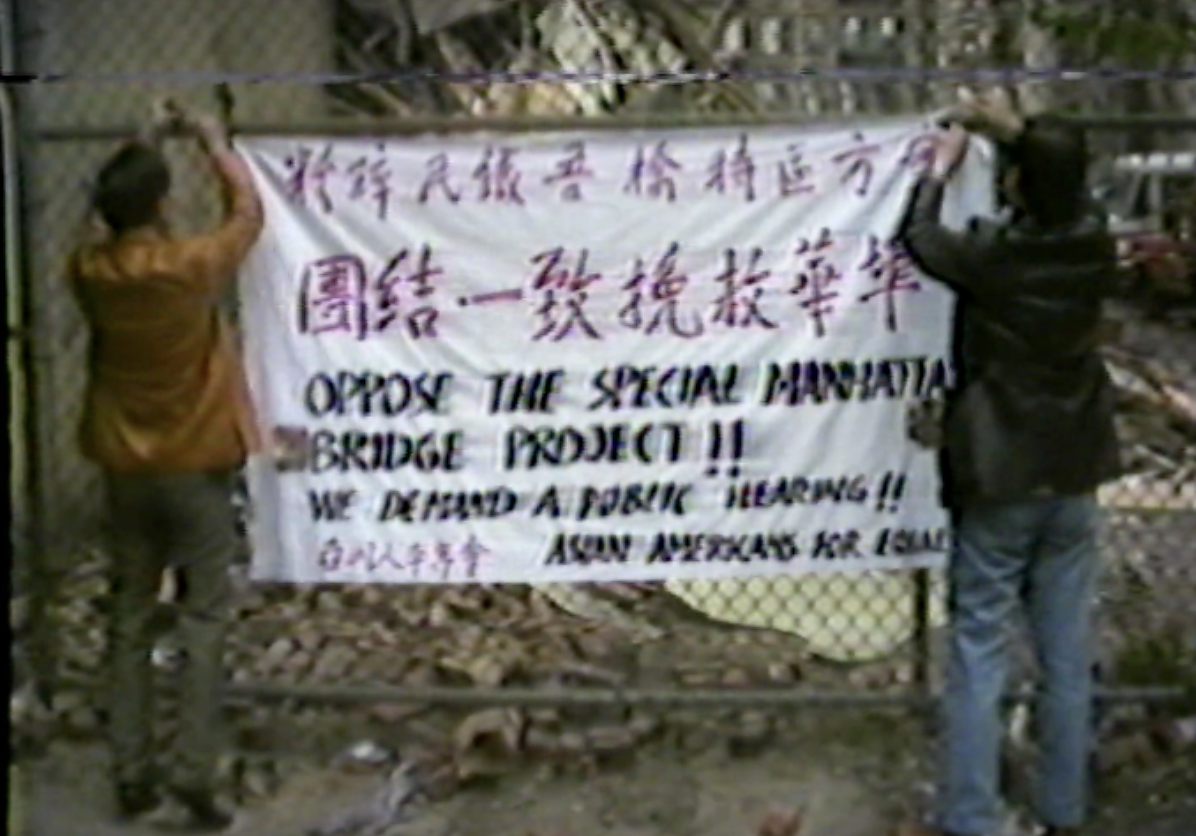
For example, the Special Manhattan Bridge District rezoning project is a frequent topic covered by many of the CCTV tapes. In those descriptions, the rezoning is never referred to as “民鐵吾橋特區方案,” the name commonly used by CCTV’s news anchors and by Chinatown residents. “民鐵吾” is a Taishanese transliteration of “Manhattan,” and its exclusion from the archival records risks erasing the heterogeneous linguistic landscape of early Chinatown, before Taishanese was superseded by Cantonese, and later, Mandarin. Archival description, in this sense, is a site of power, as it decides what is essential and what is marginalized.
For a collection like CCTV that cannot be represented through English alone, it is worth considering the possible ways that multilingual description could improve accessibility, such as through the training of Cantonese-speaking archivists, participatory description projects, or even AI approaches. Programming initiatives, including community screenings, could also bring these episodes back into the neighborhoods they depicted. To make that possible, archival description is key for researchers, curators, and community organizers to assess the value of these records for themselves.
None of these possibilities are easy—each embodies its own network of complications in resources, copyright and consent, and navigating the appropriate scope of a university archive’s obligations to communities beyond its own usual, functional role. But in its own way, isn’t the work of making archives like these accessible a continuation of the impetus behind CCTV in the first place? Language access is never an afterthought or an incidental feature of archival practice—it stands for an archive’s fundamental commitment to representational belonging. In other words, it ensures that a community’s voice can continue to be heard through generations.
—Koel Chu is a writer and curator from Hong Kong. Her writing and translations have appeared in SEEN Journal, MUBI Notebook, In Review Online, M+ Magazine, and elsewhere.