Budots in the Filipino Diaspora
It was a Friday night in Bushwick at the end of May. I traced a straight path walking beneath the elevated subway line from my hotel to the trendy nightclub, Mood Ring. Upon entering, I found the bar packed with young and fashionable attendees. The interior was outfitted to resemble a Wong Kar-wai film, the glow of seductive neon red lights matched with an assortment of hanging decorative lanterns. Avatar the Last Airbender played on a television above the bar.
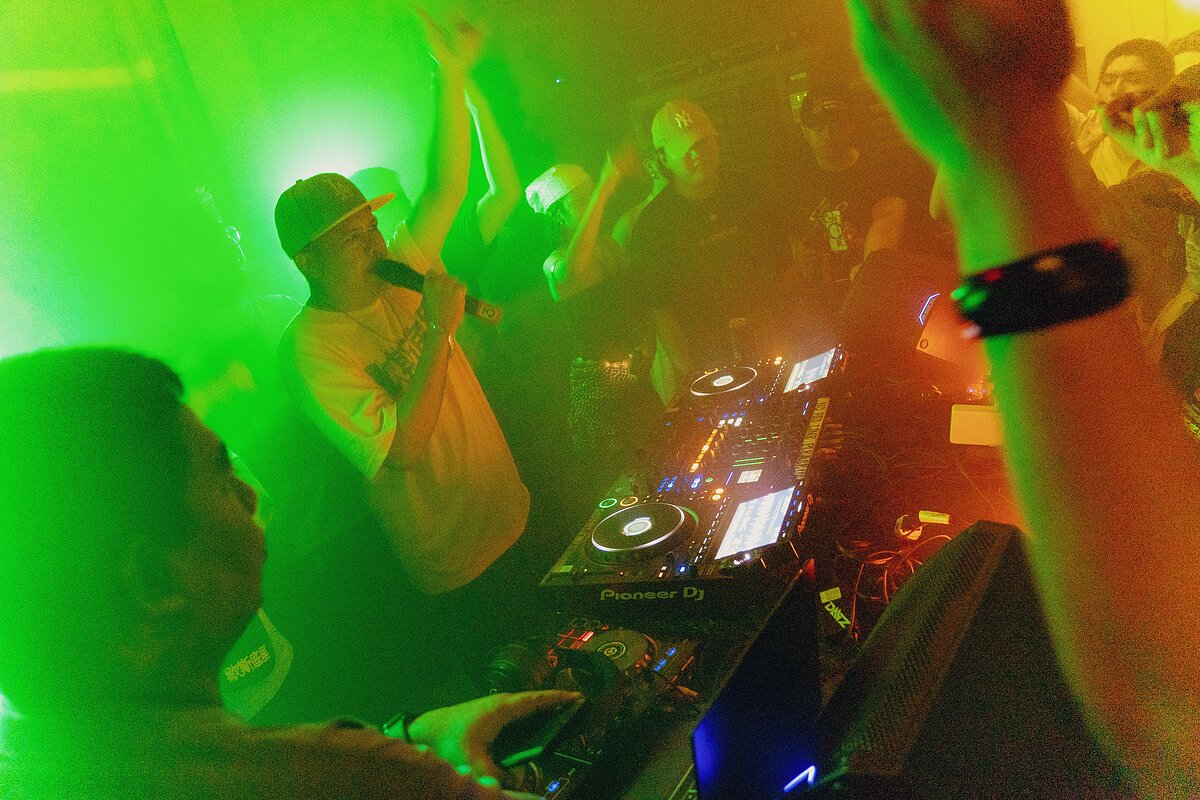
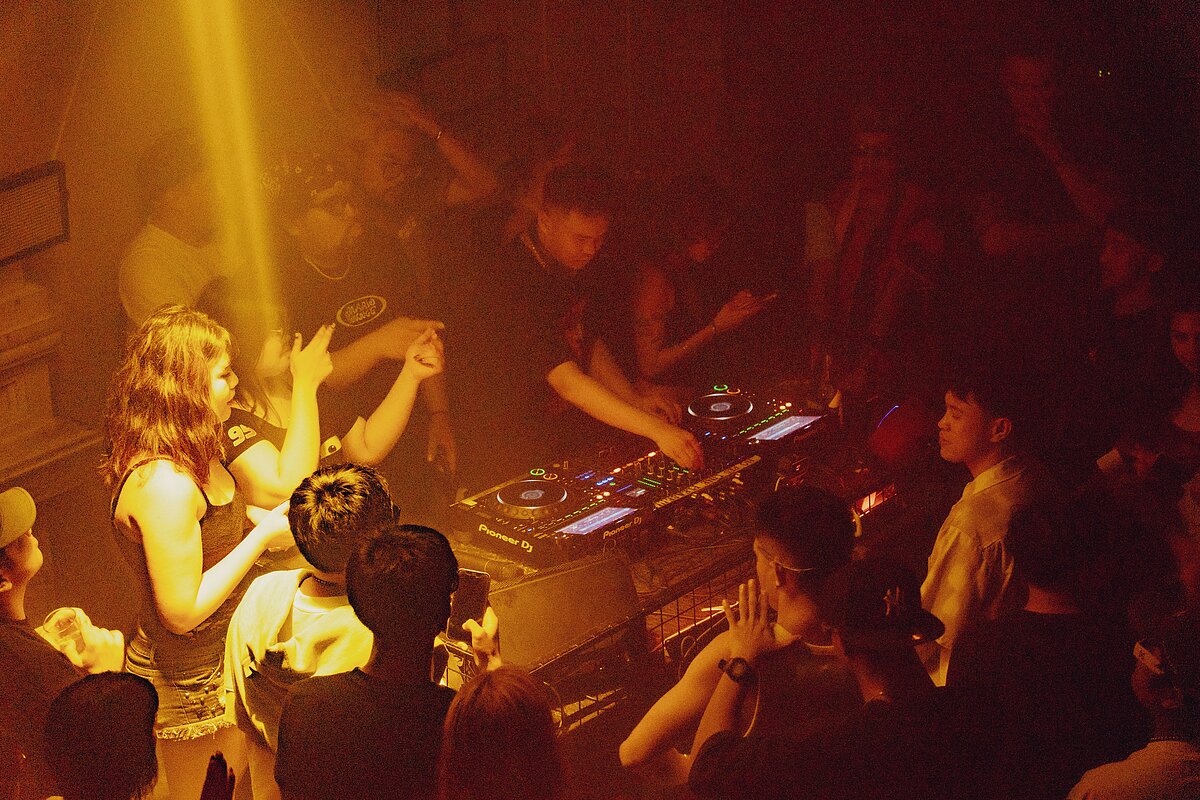
I followed a trail of artificial smoke to a popping dance floor. The clock hadn’t even struck midnight but the room was already electric. Dancing is the foregone conclusion when the music is this enticing. The beat was hypnotic; pulsing, fast-paced drums matched to a bouncy bassline and sharp piping tones.
That’s the magic of budots, a Filipino music genre originating from Davao City that utilizes heavy percussion, high-pitched whistling, satirical samples, and sounds common to barangays, like car horns and ambulance sirens.
I was at Mood Ring for Barrio Bounce, a traveling event series promoting budots and Southeast Asian dance music. The lineup that night featured Filipino and Southeast Asian DJs, including KONTRAVIDA, Castillionaire, Møod Ring, rogue.wav, WILHELMINA, and sebs.
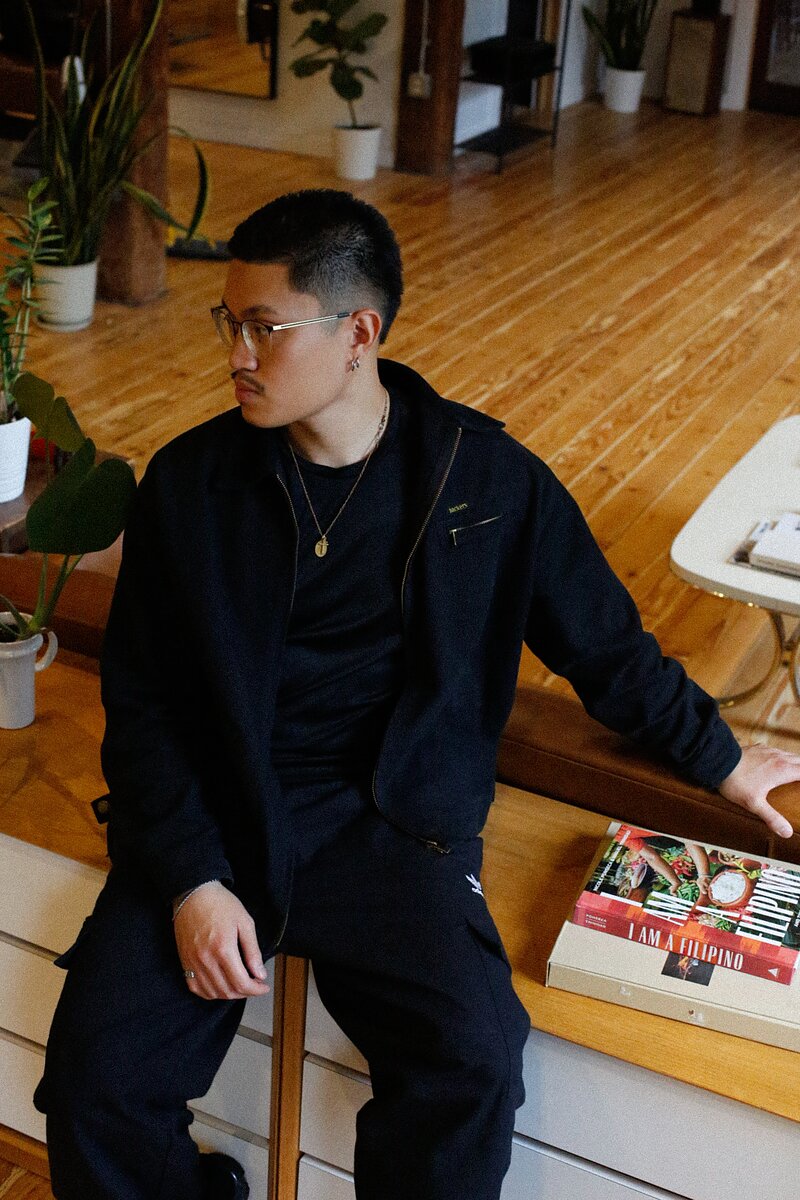
WILHELMINA was born in Mandaluyong City and came to the US as an infant. “I grew up in New Jersey and am very Filipino at home,” he told me. “I’m proud of my heritage, as everyone should strive to be, and will rep Jersey till I die!”
He remembers discovering budots from researching regional dance music on the web. “I loved how different it sounded from western music—how ‘Filipino’ it sounded,” he said. “I had already been sampling Filipino stuff like scenes from a teleserye, or naming some songs in Tagalog, but I always felt like there was something more, something where the heart and rhythm is Filipino,” he said, describing how budots gave him a musical language he had long been searching for. His 2024 budots remix of “Guess” by Charli XCX and Billie Eilish became an online sensation. On the strobe-lit dancefloor at Barrio Bounce, WILHELMINA’s elastic set provided a spellbinding rhythm for dancers that swayed and swung with abandon.
DJ Love (Sherwin Tuna) is often credited as being one of budots’s founders. A 2019 documentary, Budots: the Craze, shows how Tuna helped popularize the genre by creating music and videos for his youth freestyle dance groups, the CamusBoys and CamusGirls, from his internet cafe.
There is a signature dance style that accompanies budots, characterized by a kind of squatting movement. It’s said to be inspired by Filipino dance styles like tinikling, Badjao dance, and Muslim dance. DJ Love provided a space for these dance styles to flourish, as an effort to keep youth off of illicit substances and out of gangs—issues that became increasingly violent due to President Rodrigo Duterte’s war on drugs which started in 2016 and led to his 2025 arrest by the International Criminal Court.
There is a signature dance style that accompanies budots, characterized by a kind of squatting movement. It’s said to be inspired by Filipino dance styles like tinikling, Badjao dance, and Muslim dance. DJ Love provided a space for these dance styles to flourish, as an effort to keep youth off of illicit substances and out of gangs—issues that became increasingly violent due to President Rodrigo Duterte’s war on drugs which started in 2016 and led to his 2025 arrest by the International Criminal Court.
Budots is not without its detractors. A 2020 article criticized the unseriousness and political plasticity of the genre, describing it as “defanged meme music” that is often appropriated by networks and politicians looking to appear relatable to their constituents. The most egregious example is when Duterte danced with the CamusBoys prior to his 2016 presidential election bid. Some have interpreted DJ Love’s slogan “Yes to Dance, No to Drugs” as signaling support for Duterte’s positions.
But proponents of the genre, like WILHELMINA, insist that the music cannot be defined by one person. “In the same way people aren’t their government, budots is not synonymous with Duterte and his ideologies,” said WILHELMINA. “While it has been co-opted by him and other politicians, the genre existed before them and without them at the center. DJ Love’s message of ‘Yes to Dance, No to Drugs’ resonates with dance communities around the world that also use the power of dance and community-building to steer young individuals away from violence and drug use.”
WILHELMINA continued to explain how social commentary is built into the very act of the budots dance—movements like gun hands to the head allude to the cold-blooded killings ordered by Duterte’s regime. He also has a different outlook on the “unserious” nature of budots. For him, the absurdity of the genre is the point. “I believe the satirical nature of budots is part of its spirit,” he said.“Sampling popular memes, cultural references, and pop songs make it relatable to not only Filipinos but people from all backgrounds. The music is simple and impactful by design, engineered for movement and joy and accessible by all. It is a reflection of Filipino warmth, humor, perseverance through strife.”
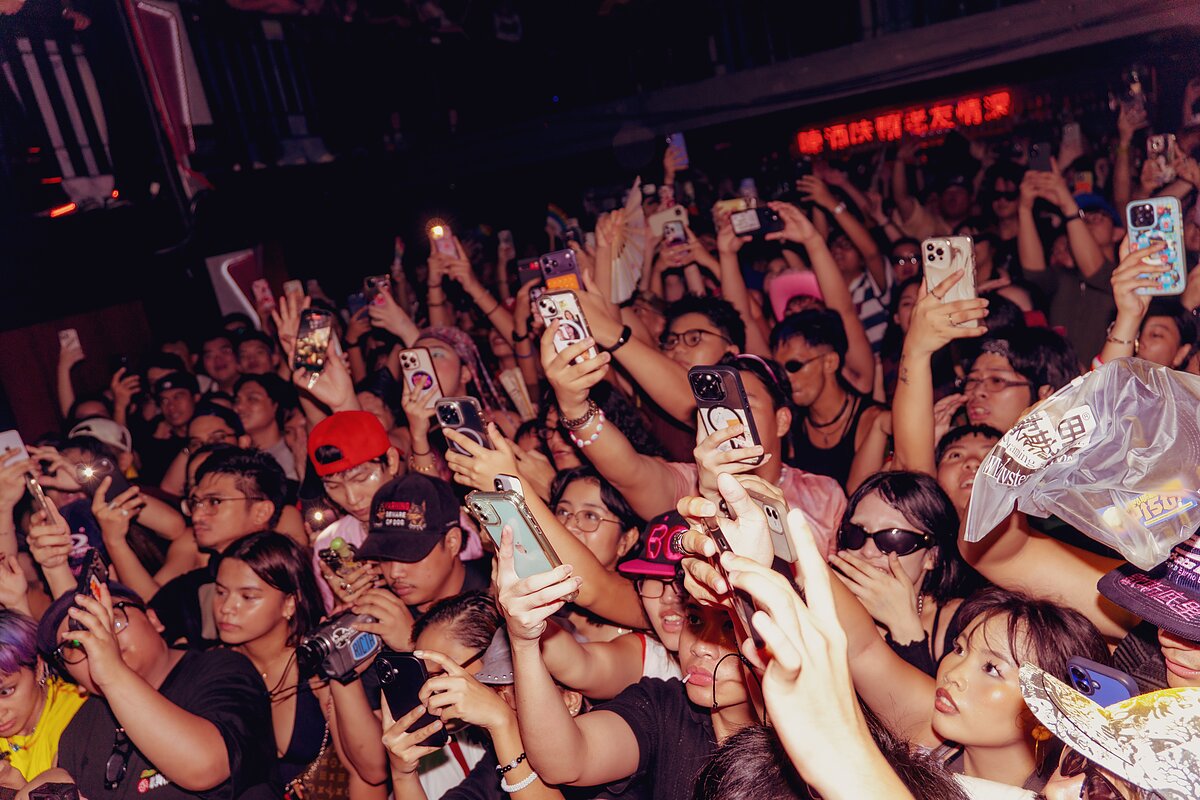


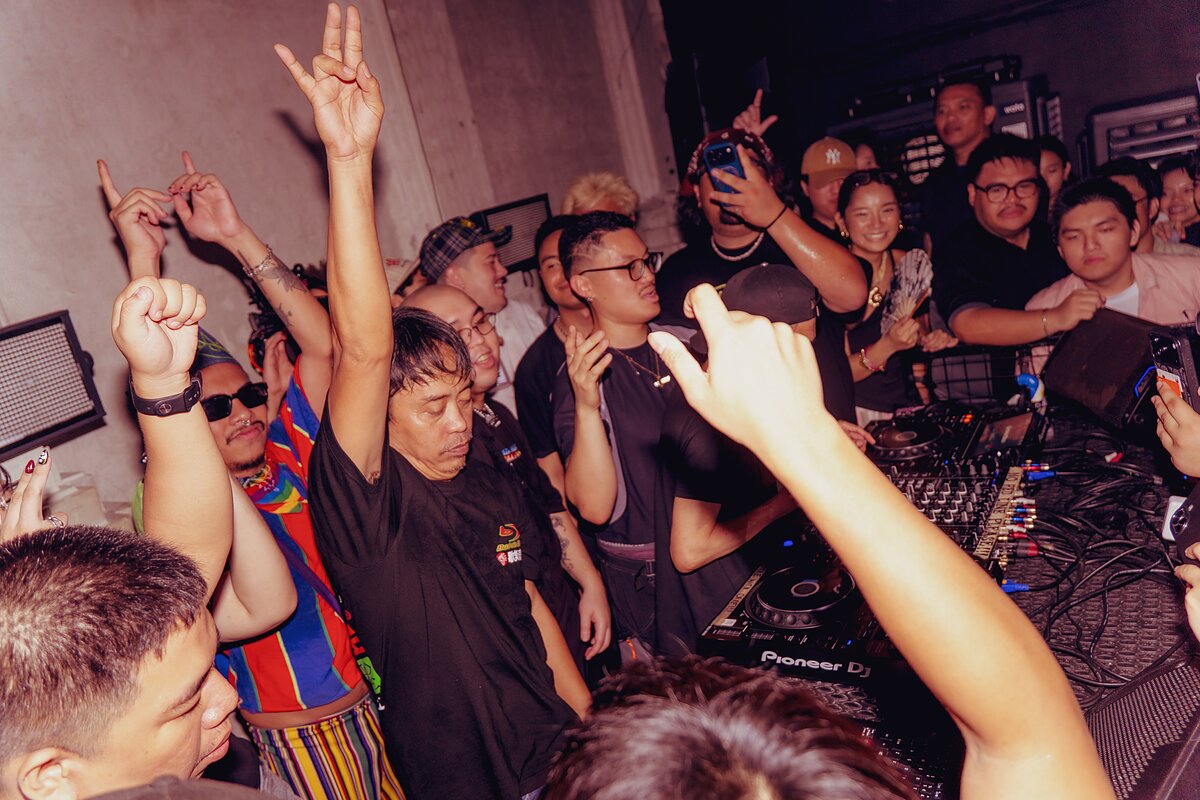
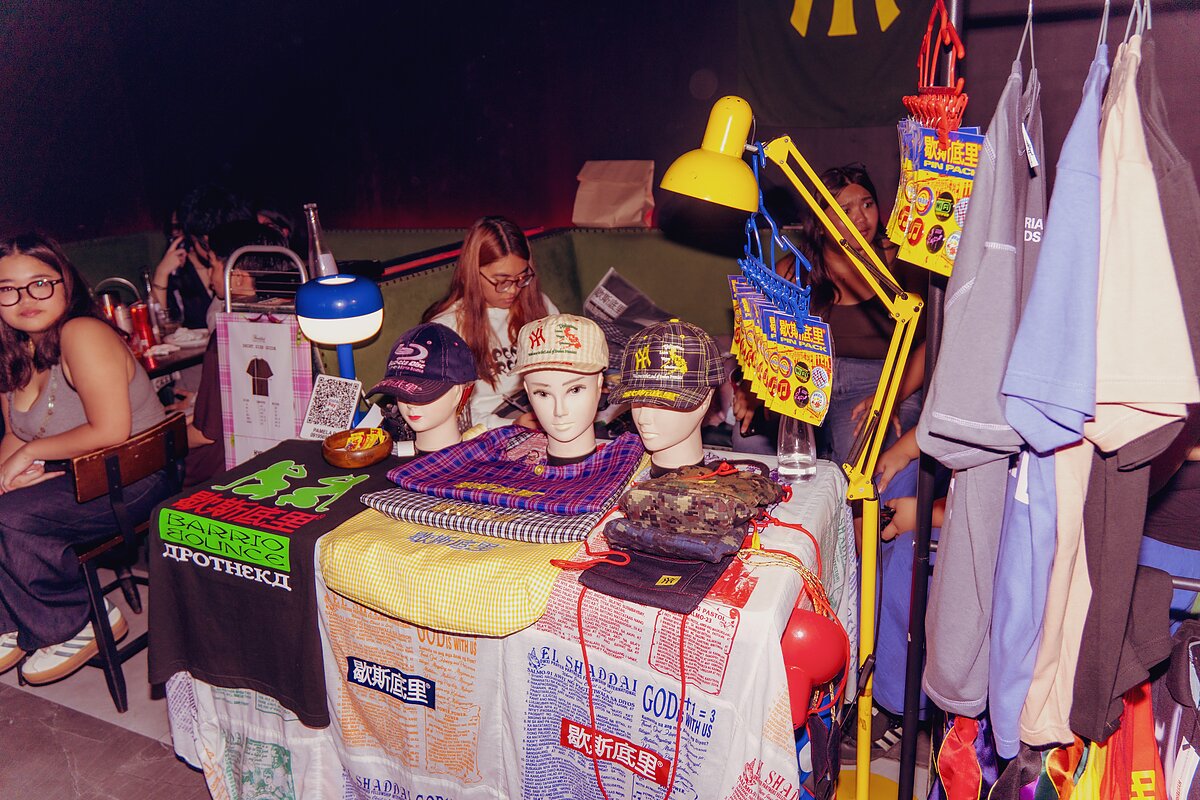
At Barrio Bounce, samples from Britney Spear’s “Toxic,” The Gorilliaz’s “She’s My Collar,” and comedy tracks were incorporated with budots flair. One song that I recognized was “Arizona B” by Arizona Brandy, a drag queen from Drag Race Philippines who spoofs the “Vegas Models” video, where a Las Vegas hotel manager is advertising hostess and model work to Filipino women. The clip circulated online among Filipino communities around the world, quickly becoming a meme. Arizona Brandy’s parody song, infused with Pinoy humor, pop culture references, and a budots beat, blew up on Filipino social media—the music video has 9 million views.
“When we play budots, it isn’t done as a meme—we play it in a decolonial sense,” said WILHELMINA. “Too often we use western/European dance music as a frame of reference when considering the validity of dance music genres. There is something profound about how powerful budots is and how it can make everyone move despite its simplicity.”
Before DJ Love’s 2023 Boiler Room set in Manila, there emerged concerns about packaging budots for the Western gaze through such a global platform. Critics questioned whether Manileños were tokenizing a grassroots provincial genre that was synonymous with low income communities in Visayas and Mindanao—whether it was culturally appropriate to showcase a genre outside its native context.
But in the years since, budots has become an international sensation. In 2024, the song “Emergency Budots” by DJ Johnrey became a viral Tiktok trend, with all sorts of people from every corner of the world emulating the signature budots dance moves. Budots is now being championed across the globe not just through viral internet videos, but by the Filipino and SEA diaspora, the DJs creating budots mixes for Barrio Bounce being just one example.
“When we play it in America, we aren’t in the communities that birthed and live this music on a daily basis,” said WILHELMINA. “But we do our best to emulate its joy while honoring those who made it possible for us to enjoy it. I feel it has now become an important sound for us Filipino Americans. We now have a musical language for electronic dance music, something that is Filipino at its core.”
When asked about the critiques of his Boiler Room set, DJ LOVE shared a similar sentiment: “Why do people think that way? What’s wrong with being Bisaya? Are we aliens? We’re all Filipino, we all love music. What’s the difference? ”
At Barrio Bounce, the crowd reflected the growing global audience for budots, with many different walks of life present. At some point, someone behind the DJ booth yelled, “Who wants some lumpia?” before a tray of chicken lumpia was passed out among the dance floor. Bouncing in that pitch black room chewing on crispy rolls reminded me of the parties I would go to as child, where the other Filipino nurses and medical technicians my parents worked with would come together.
For some reason, the only music we had back then was a CD with Flo Rida’s “Low” on it. The other kids and I would play it on repeat, doing the same moves and dropping into squats when “shawty got low” and then popping back at “the baggy sweatpants and the Reeboks with the straps.” Turns out we had been doing budots that whole time.
Reflecting on the current state of budots, WILHELMINA thinks the genre will only grow. “I think it will become a staple sound for Filipinos in the diaspora,” he said—with an important caveat: “I do hope that it is not something the diaspora sees as a ‘meme’ and that they see the true value of its existence for our Filipino identity.”