The Cast and Crew of “Clean Slate” on Expanding Queer AAPI Stories

By The Amp, Joyce Keokham, Josephine Chiang, Emily May Jampel, and Yoko Kohmoto
April 21, 2026
Interviews

In Clean Slate, a short film by Emily May Jampel starring Josephine Chiang and Joyce Keokham, drama ensues when two best friends audition for the same role in “Untitled LGBTQIA+ Gen Z Series” and get confused for one another. As the dark comedy unfolds, Chiang and Keokham are forced to contend with the stark competition of the industry and the city—and we are left to wonder whether friendship can survive this dog-eat-dog world.

The film premiered at Nitehawk on April 15 and is available to stream online. On the occasion of the film’s release, The Amp editor Shannon Lee spoke to Jampel, Chiang, Keokham, and producer Yoko Kohmoto about their collaboration, inspirations, and what it means to tell queer AAPI stories.

Shannon Lee: How did all of you meet? Did everyone know each other prior to this film?
Emily May Jampel: I had known Joyce and Josephine through our social circles and both of their acting work (the queer Asian film world in NYC is small). I loved Josephine’s performance in Dylan Rizzo’s short One Day I’ll Open My Fist (also shot by our DP of Clean Slate, Leo Zhang). Joyce I had actually met years ago while I was working at my old production company, because I loved a webseries they wrote, directed and starred in called Where You At, What You Doing? They also acted in one of my favorite short films ever, More Happiness by Livia Huang. Yoko was someone I had been wanting to work with for years after we were introduced through a mutual director friend.
Yoko Kohmoto: I had known all three separately—Josephine I met at a dinner party, Joyce had acted in my MFA thesis film (and actually, we had cast Josephine as well, but COVID kept us apart sadly), and I’d been a fan of Emily’s work since seeing and loving her first short Lucky Fish at Palm Springs ShortFest in 2022 before we met through a mutual friend Celine Sutter later that year.
Josephine Chiang: Joyce and I met playing sisters in a short film in 2022. We hit it off so instantly we would continue hanging out after wrapping 12 hour shoot days. Creating and playing together has always been at the center of our relationship. I had met Yoko at a dinner party that same year and met Emily through the film community at large. That’s what made sense about the four of us working together—it felt like we were all growing up in the NYC film world with a love for queer / Asian storytelling.
Joyce Keokham: I love this question! Emily reached out after seeing my first project, WYA WYD, then eventually we met in person and showed each other films we liked and were involved with. Sometime after, I was cast for a role that needed a sister. Emily was mentioned as a possibility, but the director and producer had another actor in mind, Josephine. We met over a chemistry read and hit it off. When that production wrapped, Yoko was working on a film that had Josephine as the lead, and I was auditioning to play Josephine’s love interest. We were both excited, but we knew it’s usually very unlikely for a production to cast two Asian Americans, especially East Asian presenting, as love interests and leads. But Yoko did! She went for both of us and was really cool and nonchalant about it. In a weird twist of fate, Josephine caught COVID just before filming, and their character had to be recast.
JC: My favorite part was when Celine Sutter, the director for Yoko’s film Well, I Should Get Going, called from the U-Haul to ask, “Are you sureeeeee you have COVID?”
SL: What was it like writing together?
JK: We do it all the time without realizing. For a long time, we were uncommittedly collecting bits, you know, punctuating real-life scenarios with “and that’s in our film.” But there was no film. It was all fictitious until one day, Josephine pieced together a plot. We both are major “yes, and” people, so naturally, I followed their lead from there!

JC: I threw a rough outline onto the page at 7 am one morning and sent it over to Joyce. They were living in Vietnam at the time. They said, “I’m coming back. We’re making this.” Over the next several weeks, we’d meet weekly over Zoom to write until they landed back in NYC.

We can get really lost in our own world. For example, since our film is about two actors auditioning for a TV series, we accidentally spent a whole session writing out the series– character descriptions and loglines galore. So, it was awesome to have Emily come in and help shape it into what it is today.
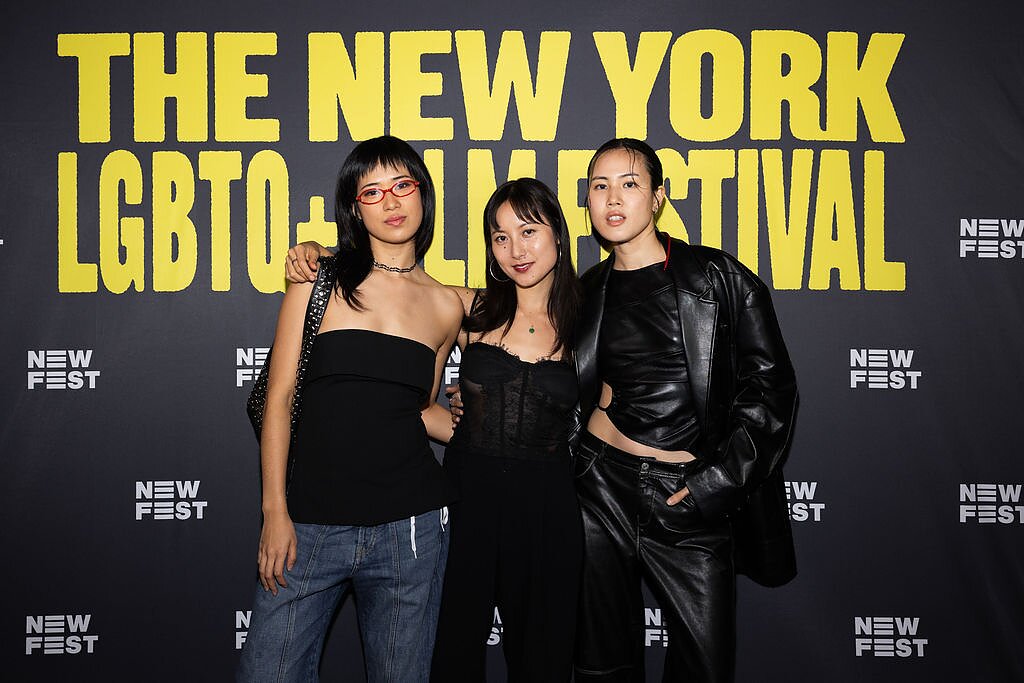
SL: At what point during the process were Emily and Yoko brought in?
JK: When Josephine and I finished our script, we had a call about what it would look like to make the film. The thing is, we each already had a director and producer in mind. We trusted our chemistry and decided to reveal our choices on the count of three. Luckily, we both said the same names: Emily and Yoko. There was a lot of excited screaming, then just hoping they would be interested. We didn’t prepare any backups.
EMJ: I remember reading a draft of the script that Joyce and Josephine had sent me in the spring of 2024 and was really excited about the potential I saw in it. We had a Zoom, and I told them I was super down to direct. We ended up shooting later that summer, so I think it came together pretty quickly after that.
YK: Joyce and Josephine had approached me and Emily separately regarding the project, with a meticulously edited Google Doc and script outlining an exciting story and characters. After Emily and I came on board, we did some virtual table reads (thank you friends & peers who gave us feedback!) before heading into prep, attaching additional team members, etc.
JC: We really could not thank Emily and Yoko enough for how much they nurtured this project. My favorite part of having them in the process was feeling like, “OK. Here are two people I deeply trust and admire who also want this project to be the best it can be.” And they did exactly that.
“Are we reducing ‘nonbinary’ down to this one aesthetic? Are we making room for gender expansiveness?” —Josephine Chiang
SL: I imagine much of this story comes from shared personal experiences. Can you elaborate on those?
JK: Our characters are sometimes just repeating conversations we’ve already had as real-life friends, like the bit about white therapists. But, at the time of writing, I was going through some major life changes. It’s reflected in my character as they consider moving away and giving up on acting. Because I was already spending so much time abroad, we only had a summer to fundraise and film. That was two years ago—since then, I’ve moved back to New York and recommitted to acting, so the film reminds me of an alternate timeline I once lived.

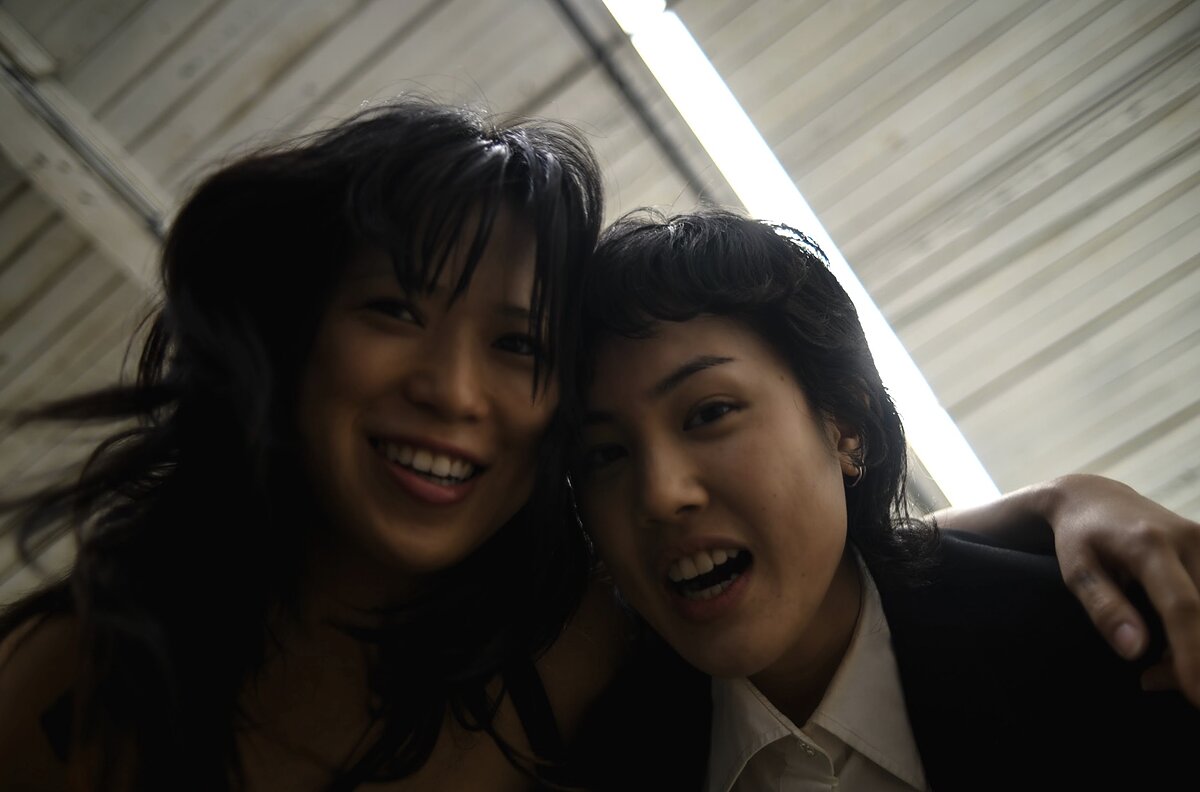
JC: True to the film, Joyce and I are always going up for the same roles and occasionally getting confused for the other, but we really could not be more different. That’s what a lot of the earliest drafts of the script were focused on. Whether it’s how to turn down someone you’ve gone on a few dates with or if a white therapist can truly understand you, we will approach the same situation in completely different ways and fondly argue our way through. In the film, when our characters get put in this messed up situation, these differences get pushed to the extreme. And that’s the yummy thing about fiction: you get to bring to life things that you wouldn’t normally do.

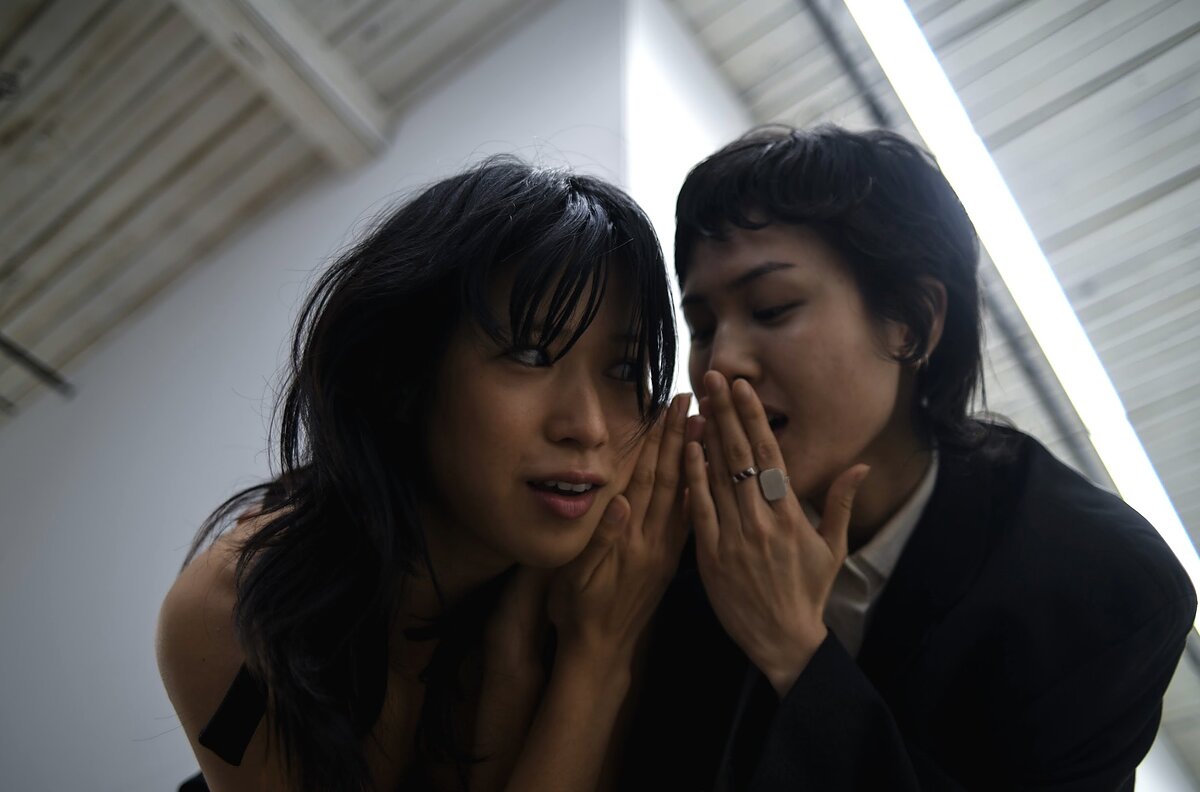
Something else I wanted to highlight is the scene of Josephine waiting in the casting room. It was one of my favorite images that we captured because that’s the image that’s in my head whenever I get an audition for a “queer, nonbinary” character. It feels like everyone else I’m up against is a white enby rocking a boyish pixie—that there’s just one way to be nonbinary. It’s not really touched on explicitly in the film, but it was impactful to me to be able to ask: are we reducing “nonbinary” down to this one aesthetic? Are we really making room for gender expansiveness?
SL: Yoko, what drew you to producing this film?
“How can I make this film feel like Pen15 meets The Talented Mr. Ripley? —Emily May Jampell
YK: Being familiar with each person’s (Emily, Josephine, Joyce) previous work, and imagining the possibilities with this specific collaboration, was very exciting to me. I was also drawn to the opportunity to help tell a story about how this industry tries to make us feel like there’s only one spot at the table that we need to fight over, but in a comedic and absurd way. As a producer, I’m currently most motivated by the people on the project and the core message of the story being something I want to put into the world, and this project had both.
SL: Emily, what were some of the considerations you had when directing this film? What was your approach?

EMJ: As a director, this was my first time adapting someone else’s writing and I had two main goals. The first was to make sure that the intention and spirit of the story that Joyce and Josephine wrote, rang true and came across in the final film. The second was to try and make this film the best version of itself—figuring out what visual style would fit this story best, how we could shoot and choreograph the big fight scene so that it felt believable. A big thing for me was figuring out how to balance the film’s very specific mix of tones.

I wanted to make sure that the film captured its subject matter believably, and felt emotionally grounded in a real friendship dynamic and circumstance, while also escalating into absurd surrealism in a way that wouldn’t lose the viewer, all while still making sure the film still felt like a comedy and retained a self of playfulness. I kept thinking, how can I make this film feel like Pen15 meets The Talented Mr. Ripley? Joyce, Josephine, Yoko and I collaborated on the script to help achieve the right tonal balance, and for the fight scene, we had an incredible movement director Celine Abdallah, who choreographed the entire fight scene. We blocked everything out in movement rehearsals, and on location with our amazing DP Leo Zhang, to make sure it all looked great on-camera.

Related Stories

Interviews

Pianist Eunbi Kim on Memory, Dreams, and Identity

By Adeline Baban
Mar 24, 2026
Interviews

Alison Nguyen on Preserving Cultural Memory

By Bri Ng Schwartz
Mar 20, 2026
Interviews

Chang Yuchen on Love, Loss, and the Mediated Self

By Nicole Kaack
Jan 30, 2026