Re-Navigating Memory at “We made it up to remember…”
On my way to the opening of “We made it up to remember …” at the Hessel Museum of Art at Bard College, my CarPlay glitched. I drove down a familiar road without the GPS I usually rely on, which felt extremely uncomfortable compared to my usual brainless map-following. This unease followed me into the exhibition, where I navigated a labyrinth of 12 other graduate thesis exhibitions on view as part of their collective presentation, “Everything That Happens Will Happen Today.”
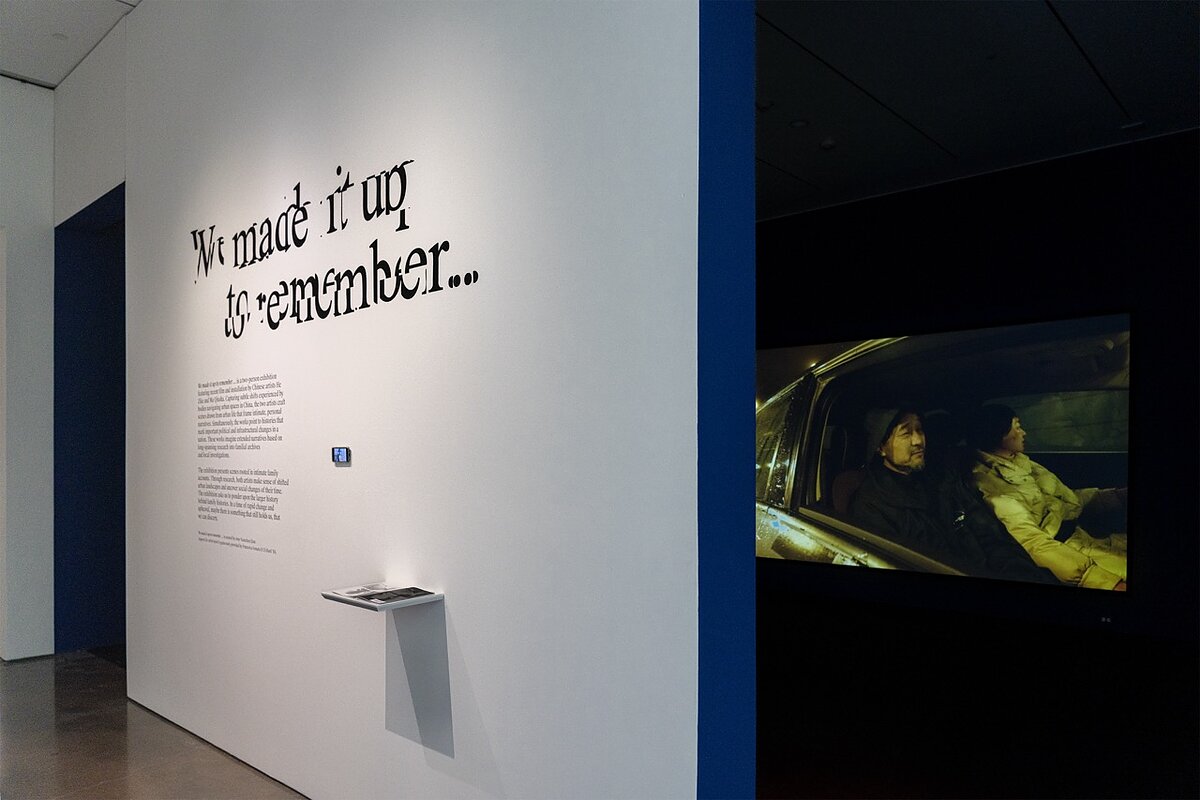
Curated by Amy Yuanchen Qian, “We made it up to remember…” brings together film and multimedia installations by two Chinese artists, He Zike and Ma Qiusha. Screened inside a dark blue gallery, He Zike’s Random Access (2023) begins with the unexpected crash of a central data center in the city of Guiyang. The fictional narrative follows Hongyan, a former taxi driver, and a passenger on a journey through disordered memories of the city, from ancient to personal. Before entering the screening room, an iPod mounted on a wall loops a 15-second clip of a cloudy memory-reset graphic paired with an old photograph of a young couple resembling the film’s protagonists. Through the wall text, I learn that the young couple is the artist’s parents.
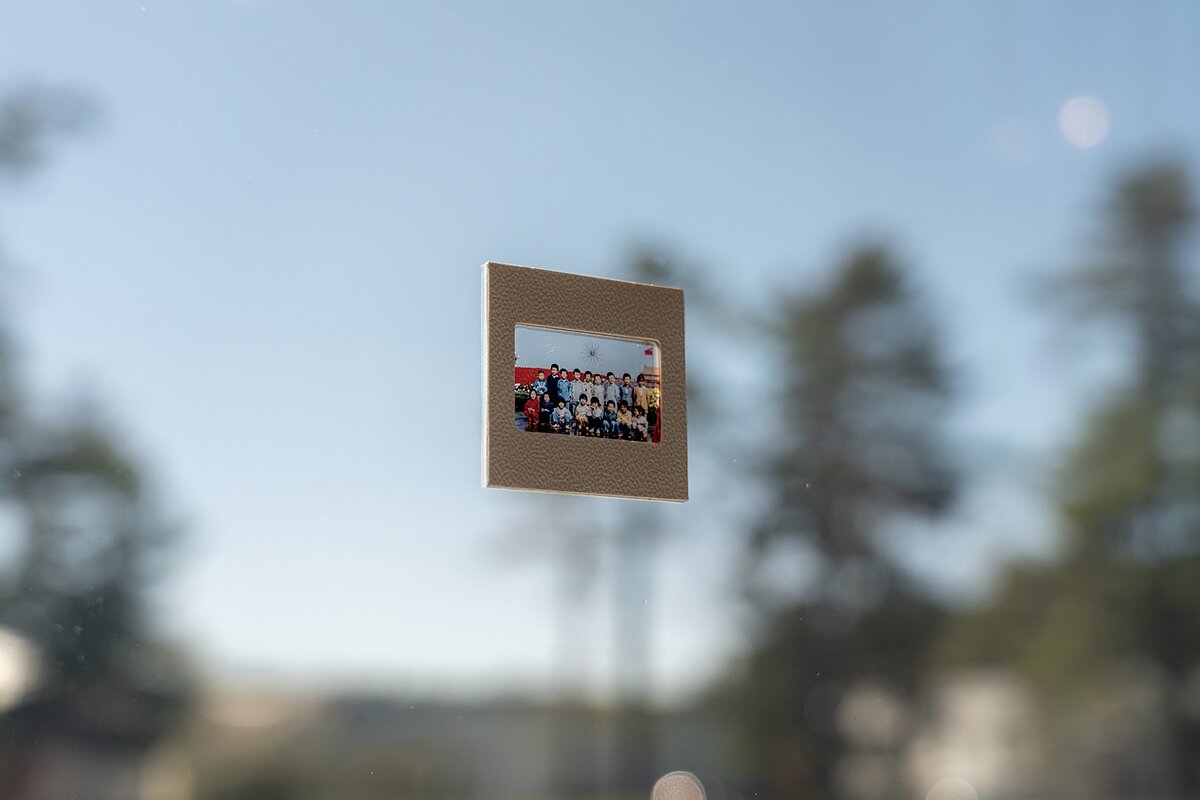
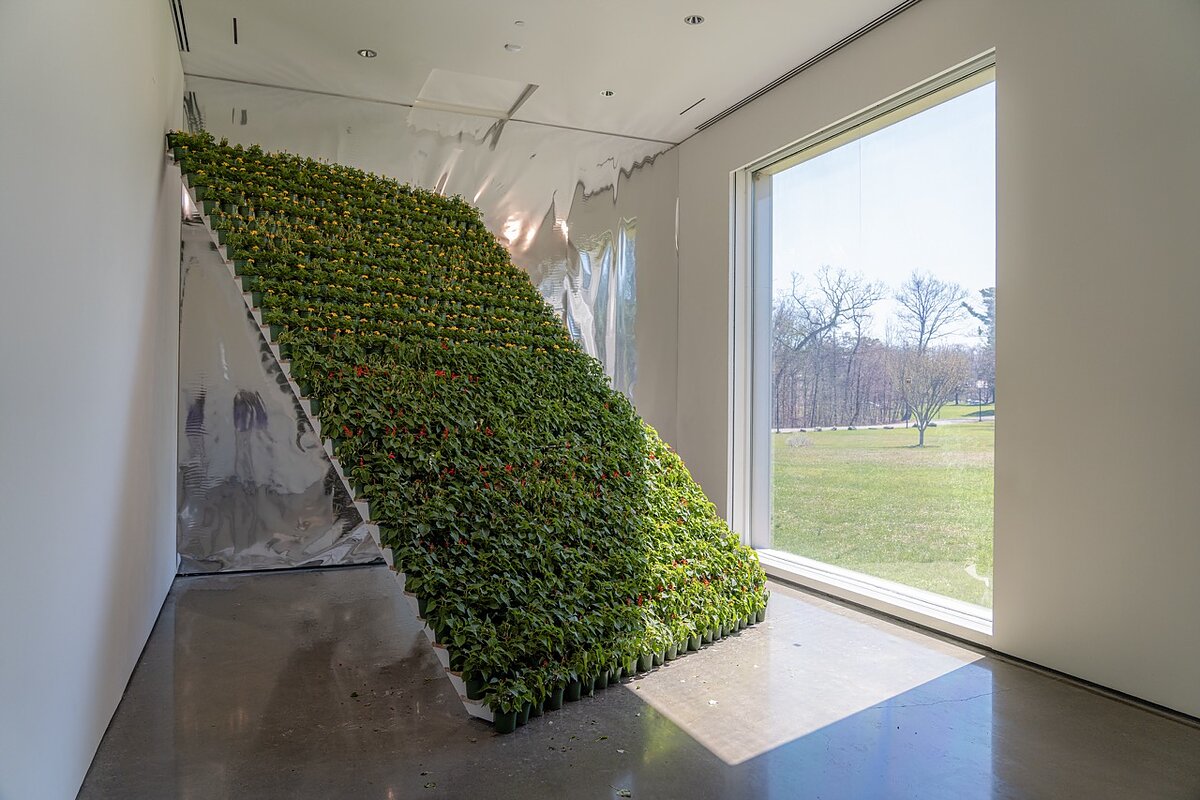
This familial trace carries into Ma Qiusha’s installation. In Salvia splendens and Tagetes erecta (2025), Ma reconstructs a field of red salvia and yellow marigold flowers in order to feel closer to her grandfather’s life in 1950s Beijing, a time marked by the spectacle of national celebration commemorating the founding of the People’s Republic of China. A large photo portrait of a young man, who presumably reminds the artist of her grandfather, encircles the towering flower stack. On a nearby window, almost invisible, a tiny film slide shows the artist as a child in a group photograph in front of a similar sea of flowers.


Both works are tinged with a melancholic undertone—a cloudy city without signal, a sea of celebratory flowers without celebrants—but neither settles into nostalgia alone. In fog-heavy Guiyang, the driver and passenger are both disoriented and guided by their hazy memories. Yet they kept driving. Although Ma’s monumental flowers are built to commemorate, their fleeting bloom means they will soon be dismantled. The flowers are set up to remember, but not to last. Rather than mourn the inevitable fade of memories, the artists instead propose memory and its degradations as an active process, renavigated and remade. Still, just as Ma’s flowers will eventually wither, how long can an actively sought memory endure? Does it wither with the flowers?
The archival photographs provide clues that prompt me to explore their connections to the works and their emotional core. The portrait of the young couple, the young man in a Chinese Red Army outfit, all drive my instant wonder about who they are, and why they matter here. While these photographs balance the installations spatially and visually, they ultimately feel too chewed up—in works already saturated with familial memory, the addition of personal photographs may be too neat a pair that risks closing down rather than opening up interpretation.
That said, the tiny film slide on the window, easily overlooked, holds. This small act of discovery not only illuminates how I interpret the exhibition as active navigation, but it also recalls a curatorial gesture familiar in Qian’s 2025 exhibition at Brooklyn’s Tutu Gallery “Growth Postures,” where a performance-video installation was hidden inside a closet, waiting to be found.
The artworks travelled to the Hudson Valley, away from the East Asian contexts where they previously appeared (at Cai Jin Space, the Shanghai Biennale, and the Taipei Biennial). This displacement too becomes part of the labor of remembering. The resulting unfamiliarity becomes productive, provoking the viewer to ask why and how these intimate memories of China arrived here. The works, like the viewers encountering them, must navigate outside the familiar.
Against my habit of following navigation, often half-asleep during long drives, the artists offer ways to (re)live memory without a map. In a time of cognitive offloading, where navigation and recall are delegated to devices, this urge for active searching feels unexpectedly thrilling. It keeps me awake. On this unfamiliar road, the artists uncomfortably make up the memory to remember.
“Everything That Happens Will Happen Today” is on view at the Hessel Museum of Art at Bard College through May 24, 2026
—Rosaline Dou is an artist and curator based in New York.