Artist Maia Chao’s Anthropological Performances
In January 2025, Maia Chao received an email from the Whitney Museum. “It said, these curators want to meet with you,” she recalled. “It didn’t say it was for the biennial.” The curators, Drew Sawyer and Marcela Guerrero, were traveling from New York to Philadelphia, where Chao is based, but she was away installing Waste Scenes: Maia Chao & Fred Schmidt-Arenales at the Boston Center for the Arts. They agreed to meet later at the Whitney. On the day of their meeting, the conference room was double-booked, so they squeezed into a tiny office with no projector. Chao showed documentation of her performances, videos, sculptures, and public practice on her laptop. “I forgot to turn up the brightness,” she said, “and the screen was covered in fingerprints.” A month later, in spite of all the technical mishaps, she was invited to participate in the 2026 Whitney Biennial.
In an artworld that often avoids discussing its less-than-romantic realities—messy behind-the-scenes labor, the uncertainty and precarity that underpin every polished presentation—Chao stands out for her refreshing candor. In The Performance of Making Art (2021), she used her iPhone to document the material and economic conditions of sustaining her practice: her annual income, studio rent, the ramen and canned soup she eats, the grant applications she files, her CV.
When we met on a recent April afternoon at the Whitney, she spoke just as openly about what has and hasn’t changed since the biennial invitation: with no gallery representation, despite increasing pressure to “make work that can sell,” she is able to maintain a critical distance from the art market, supporting herself instead by teaching full time at the Maryland Institute College of Art in Baltimore.
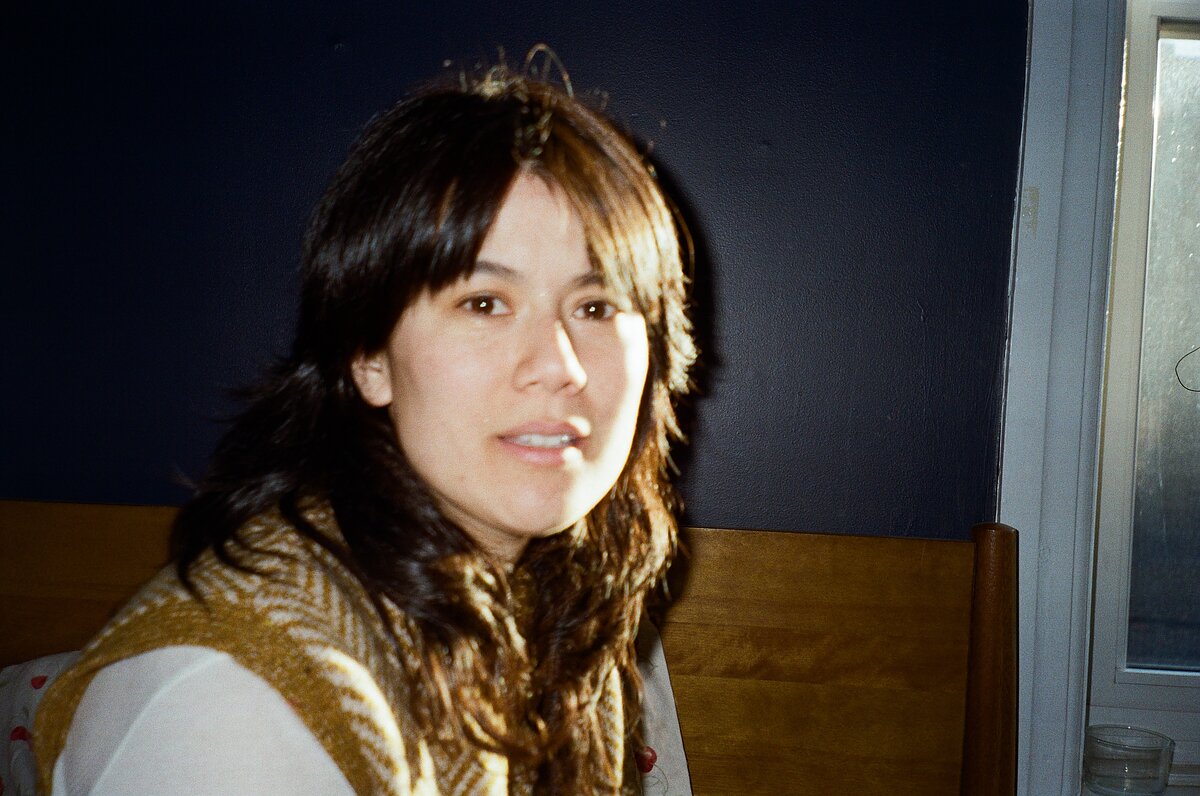


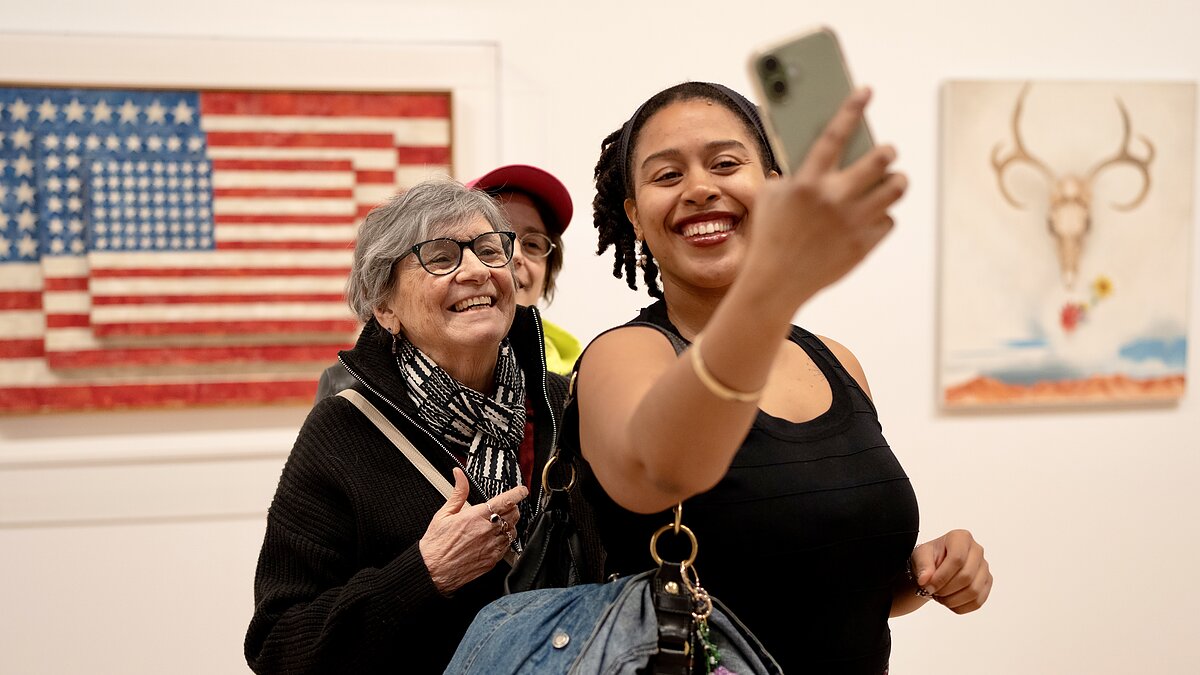
Chao has a background in anthropology, and one sees that training in her work. In American Idle (2025), created with choreography by Lena Engelstein based on field observations in Times Square, performers mime the everyday behaviors of NYC’s tourists, taking selfies, spraying on sunscreen, counting down the new year. In museums, Chao turns this anthropological eye on institutional infrastructure, examining how subtle choices in architecture, signage, and crowd control systems shape visitors’ experience. Often, these works reveal uncomfortable discrepancies between how museums treat their holdings versus how they treat visitors.
The Whitney, she noted, uses stanchions like the one that surrounds her biennial commission Scores for the Museum Visitor (2026)—an empty rectangle printed on the wall next to a set of event scores—in lieu of alarms. No sirens wail when a visitor leans too close to an artwork here, unlike at the Hirshhorn Museum, where she presented Agents of Deterioration (2024) with collaborator Ethan Philbrick and the Children’s Chorus of Washington, a choral performance that addressed the challenges of conserving museum collections.
With collaborator Josephine Devanbu, she devised LOOK AT ART. GET PAID. (2015–20), a participatory program in which individuals who do not frequent museums were invited to visit and give feedback to institutions such as the Rhode Island School of Design Museum, the University Museum of Contemporary Art at UMass Amherst, Toledo Opera, and Montclair State University Galleries. The project was designed to help narrow the gap between museums’ accessibility-centered mission statements and the often alienating reality of their galleries.
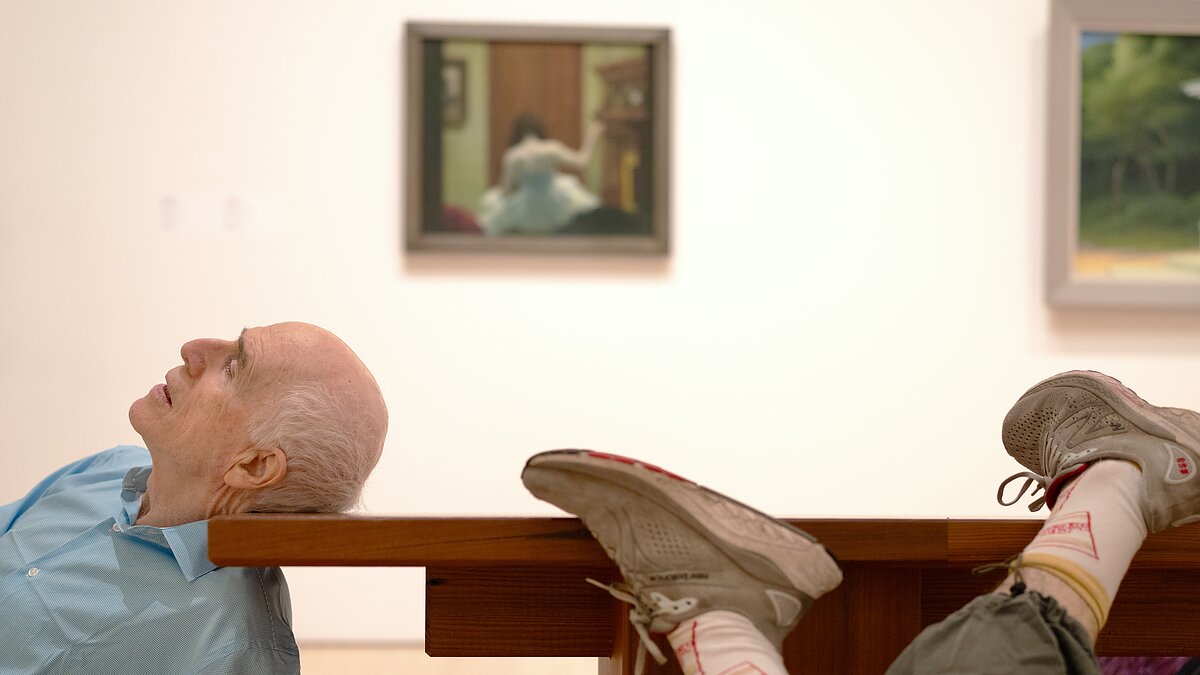
For the Whitney Biennial, Chao presented the aforementioned Scores for the Museum Visitor, which instruct viewers to, in a sense, misbehave by touching the museum wall or repeatedly dropping museum brochures. An accompanying performance, BEING MOVED (2026), also created with choreography by Engelstein, will take place in the Whitney’s seventh-floor permanent collection exhibition “Untitled” (America) on May 14, 16, and 17. The work grew out of extemporaneous voice memos that eight of Chao’s friends made while roaming through the same galleries. Their streams of consciousness became the basis for a collaborative rehearsal process with an intergenerational group of performers. With this work, Chao hopes to draw attention to the tension between museums’ dueling priorities, on one hand, to increase visitor numbers by appealing to a broader audience and, on the other hand, to safeguard their artworks (read: financial assets) in perpetuity, which very often means shielding them from the public’s unruly hands and flashing cameras.
If there’s a lesson to be learned from Chao’s decade-long practice, it’s the importance of artists and arts workers advocating for each other in various institutional contexts. Agents of Deterioration, she explained, emerged from a series of fortunate encounters catalyzed by A4’s Van Lier Fellowship, which she described as “transformative” in providing her not only with necessary funding but also with a mentor—artist Nina Katchadourian—who became a good friend and later introduced her to Hirshhorn curator Betsy Johnson. “Having done so many residencies and fellowships,” Chao said, “I feel that [the impact of the Van Lier Fellowship] is really traceable.” Now that her work is scaling up and becoming more resource-intensive, Chao is also rethinking how she collaborates. “I’m used to being really scrappy,” she said, “but that scrappiness then asks other people to be scrappy. I’m learning to shift from that.” Her goal moving forward is to foster “great conditions for the work to take place, for everyone involved.”