Remembering Christine Choy, Groundbreaking Documentarian
Christine Choy, a prolific filmmaker and dedicated educator whose work and outspoken advocacy paved the way for Asian American and BIPOC art and expression, died peacefully on Sunday, December 7, 2025. She was 73.
Choy is best known for her groundbreaking documentary, Who Killed Vincent Chin? (1987). Directed alongside Renee Tajima-Pena, the film chronicled the murder of Vincent Chin, a Chinese American autoworker in Detroit, and how his death helped shape Asian American identity as a political force. The film was nominated for an Academy Award for Best Documentary in 1988, making Choy one of the first Asian American directors to be nominated for an Oscar. The film was inducted into the Library of Congress National Film Registry in 2021. “For a long time, I was a loner,” said Choy at a 2021 Town Hall hosted by Asian American Arts Alliance on film and media. “I’d really consider myself one of the earliest Asian American filmmakers.”
Those close to her called her “Chris” and knew her fondly as lightning incarnate. She electrified every room she was in with her booming rasp of a voice, always with a lit cigarette in a wildly gesticulating hand, always dressed in Issey Miyake pleats. Like lightning, she was beautiful, brilliant, awe-inspiring, illuminating, faster than anything, shocking, and sometimes dangerous. Even her hair appeared as if it was radiating electric currents out of its ends, conducted by her wiry frame and generated by the enormous battery of her heart.
I was lucky to know Chris as a close family friend and unofficial godmother (despite her adamant rejection of any form of organized religion). My dad first met her in Detroit when she was working on Who Killed Vincent Chin? “I found an article about her in the local Korean language newspaper and called her to meet for lunch,” he remembers. “She kept me as a close friend for the last 40 years.”
Chris was funnier than anything and afraid of no one. A longtime member of the Black Panther Party, Chris’s passion for interracial solidarity and justice was steadfast. “I started filmmaking because I was very frustrated,” she told A4’s audience in 2021. “I was frustrated about the representation of Asians—especially women—in mass media. We were either prostitutes or beggars. I became a filmmaker out of anger.” “Christine was a radical humanist at heart that did all she could to bring her projects into the world,” shared recent collaborator Peter Kim.
Born in Shanghai to a Korean father and Chinese mother, Chris moved to New York City when she was 14 to attend Manhattanville College where she studied architecture. It was here that she first became involved in advocating for civil rights after covering the Black Panthers as a student volunteer for WBAI, a local public radio station. From there, she earned a Master’s degree in architecture from Columbia University before attending American Film Institute in Los Angeles.
In a career that spanned over half a decade, Chris made over 80 films including From Spikes to Spindles (1976), Mississippi Triangle (1983), Sa-I-Gu (1993), and A Litany for Survival: The Life and Work of Audre Lorde (1995). She also helped found the filmmaking collective Third World Newsreel in 1967, as well as AsianCinevision in 1975 alongside Peter Chow, Danny Yung, and Thomas Tam. “Christine Choy was outspoken, incredibly creative, controversial, and dedicated to making films that addressed our histories and struggles,” shared longtime collaborator and executive director of Third World Newsreel JT Takagi. “She leaves a legacy not only of important films, but an ethos of social justice filmmaking that has helped to spur generations of activist filmmakers, including so many of us.” In 2023, Chris was awarded the Outstanding Achievement Award from HotDocs.
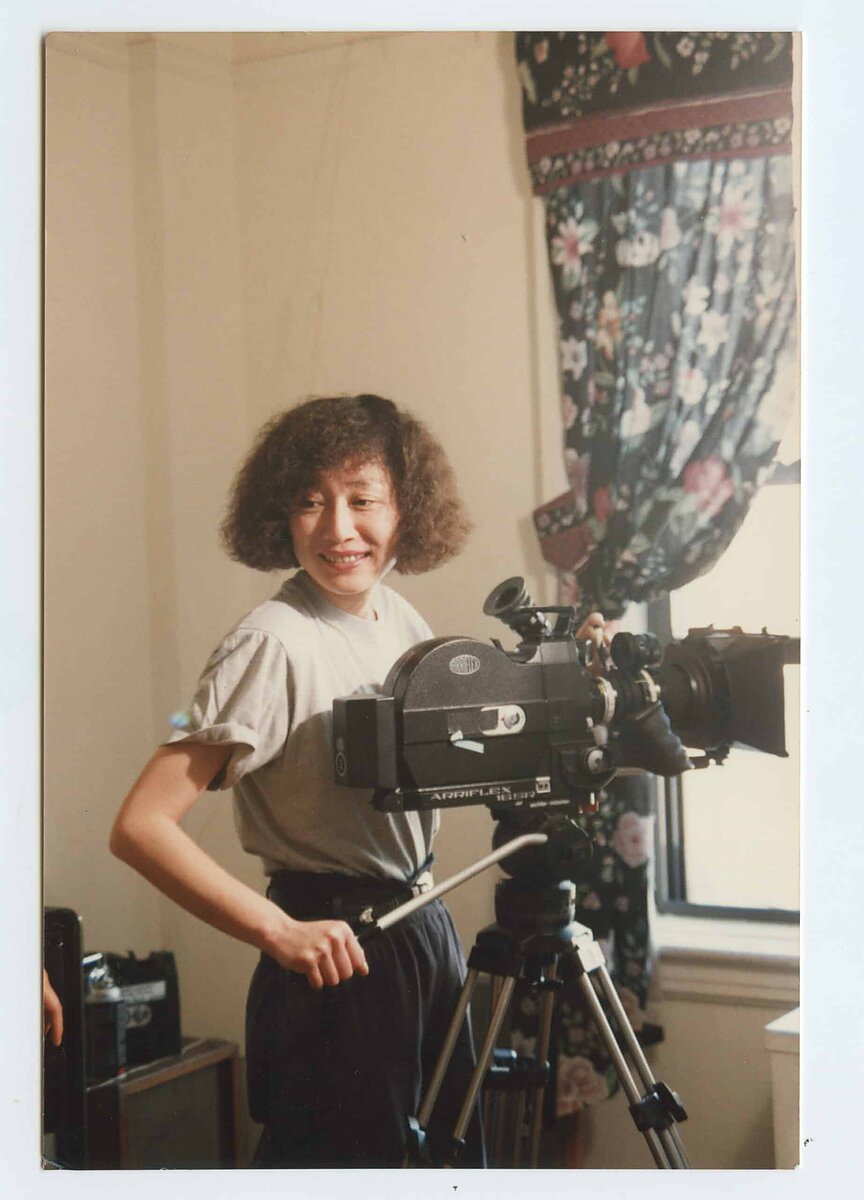


Through her years in the industry, Chris accumulated many stories, which she loved to tell with dazzling, invective-filled panache. One of her favorites was about the first time she attended Sundance Festival, then US Film, in 1987. “I was the only person of color there,” she recalled. During lunch, she turned to actor, director, and festival founder Robert Redford and told him that he should consider changing the festival’s name to “White People’s Film Festival.” “Just look at it—white snow, white audience, white jury members, white films…” The next year, she was invited to be the festival’s first non-white jury member. According to Chris, this incident was also responsible for the festival’s name change.
Ever the trailblazer, Chris was also the first nonwhite professor to be hired by Tisch School of the Arts. She taught there for 35 years and served as the chair of its graduate school. Chris also taught at Yale, Cornell, and SUNY Buffalo, and was a visiting scholar at Evergreen State College, as well as the Oslo and Volda Film Institute in Norway. As a professor, Chris was known for her edgy, often controversial candor and the endless generosity and care she had for students. “You can always find me at NYU,” she told A4’s audience. “If you want any help, come find me.”
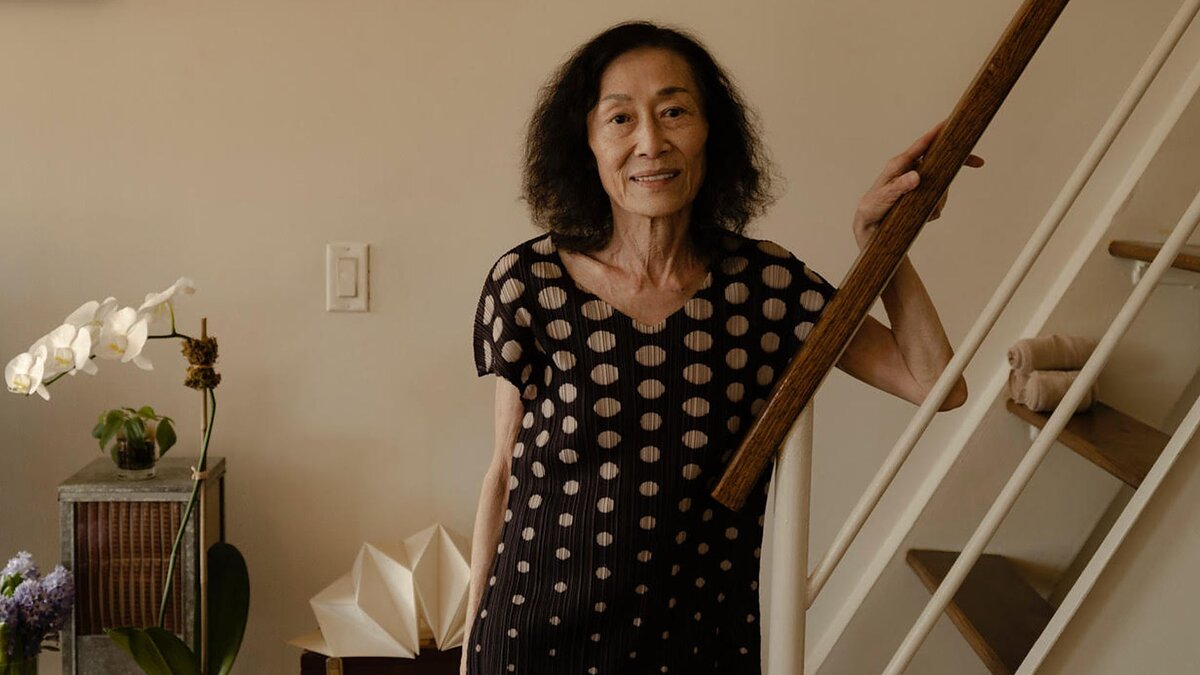
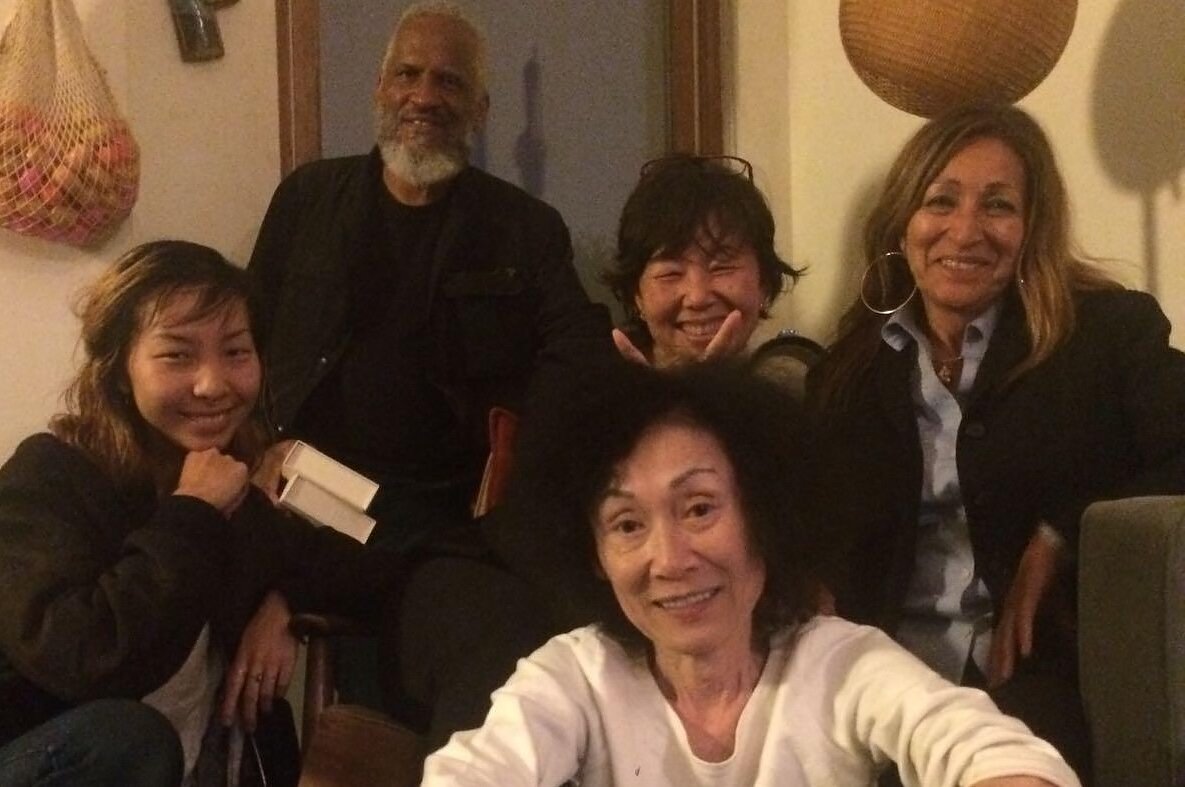
As A4’s executive director Lisa Gold thanked Chris at the close of her Town Hall pitch, which was conducted via Zoom due to COVID-19 lockdowns, Chris could be seen leaning back in her chair to light a cigarette, waving off compliments like they were the cloud of smoke that was forming around her.
I’ll miss the way Chris’s light ripped its way through reality, showing us all something wild and true. I am so grateful to have known this uniquely electric person for so much of my life—what a privilege to have caught a spark.
Christine Choy is survived by her daughter Ku-Ling and her sons Fleeta and Tatanka. A memorial service is planned after the New Year.