Lee Sung Jin on Season Two of “Beef”
Meaner and more expansive than its predecessor, the second season of Lee Sung Jin’s Beef mines disquieting and all-too-relatable thrills from the discordance between (and within) its characters. It once again focuses on how, under capitalism, misgivings become an opportunity to exploit, reframing the context of our relationships. Through this consuming lens, we start to view people only in terms of how we can use them. These emotional truths anchor the story even as it enters into trippier, more surreal territory.
While the show’s first season focused on how a road rage altercation between two people dangerously spirals into mutual doom, this follow-up is less about overt rage and more about the passive-aggressive anger we have to keep under niceties and pleasantries. It focuses on two couples: Josh Martin (Oscar Isaac) and Lindsay (Carey Mulligan), and Austin (Charles Melton) and Ashley (Cailee Spaeny).
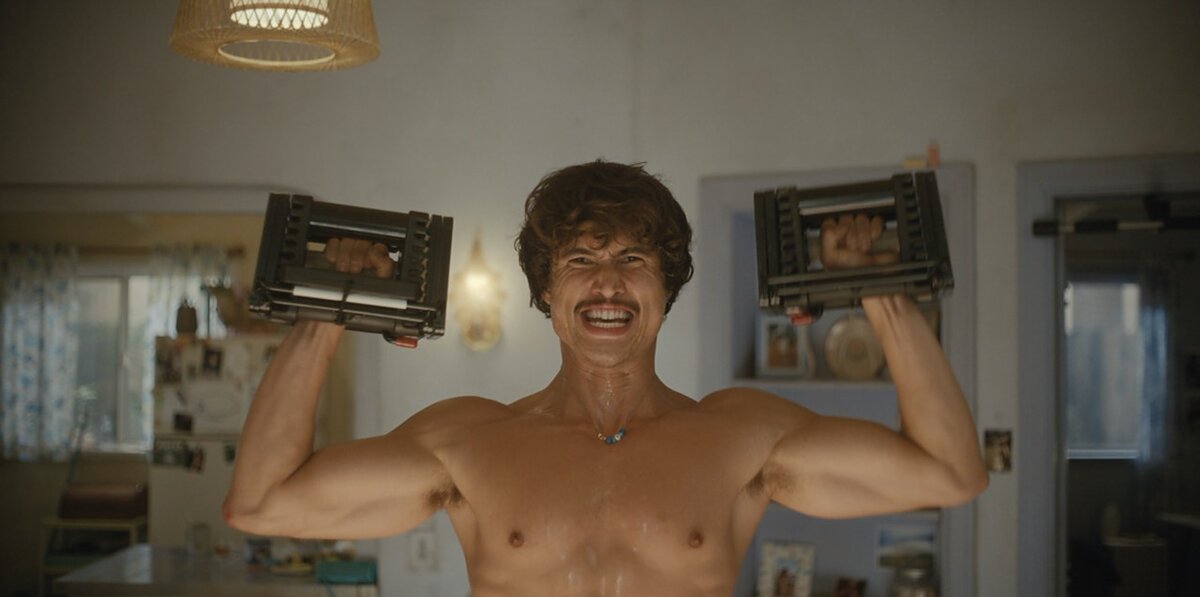


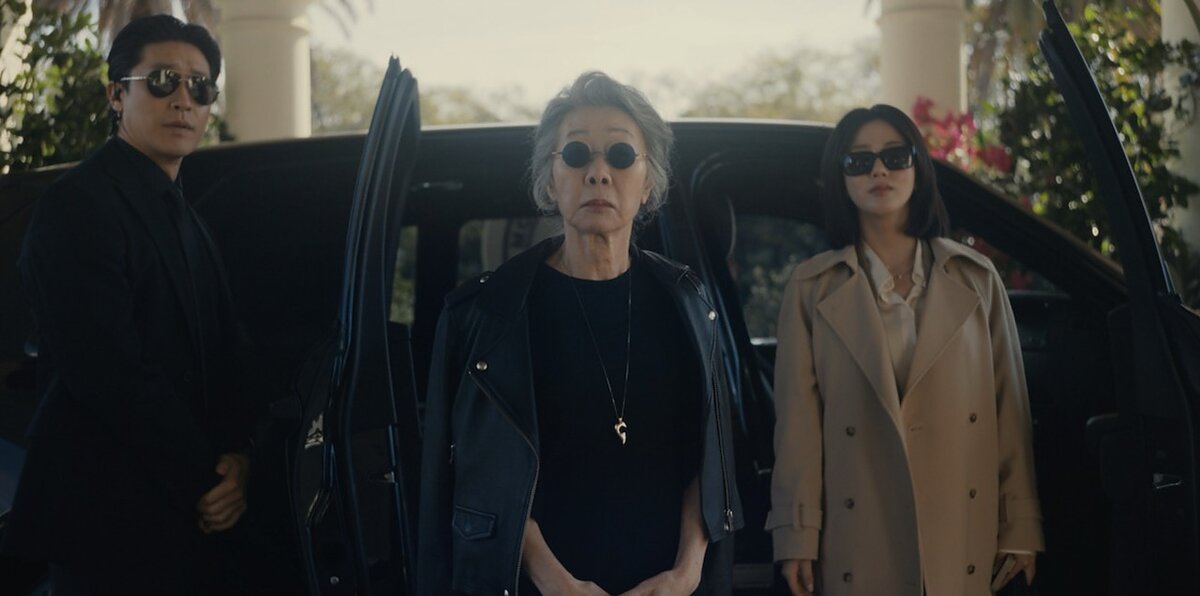
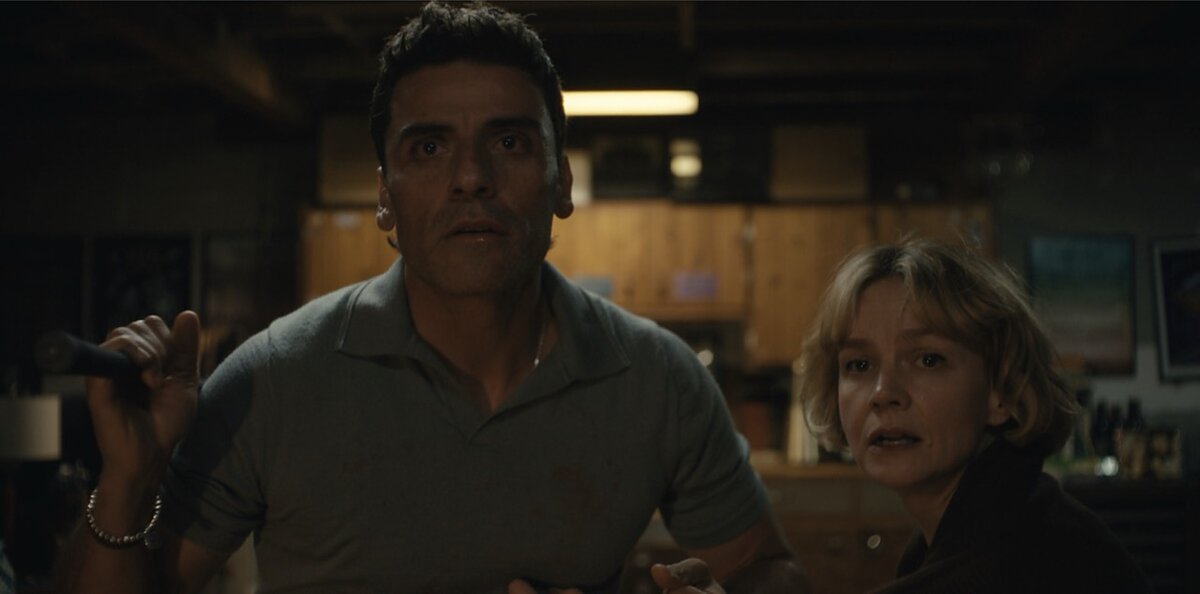
Austin and Ashley are employees at the country club that Josh is the general manager of. The catalyzing titular beef of this season ensues in episode one when Austin and Ashley witness Josh and Lindsay get into a violent argument. Capturing the interaction on their phone, Austin and Ashley attempt to use the footage as leverage to gain a better life for themselves. Critically, the demands the young couple make aren’t histrionic: they simply want health insurance and a salary that will offer them security. Josh and Lindsay begrudgingly agree, but begin to get an idea about the ways they might exploit the people above them as well. The steaks [sic] of the film escalate from there, growing to encompass the new club owner, Chairwoman Park (Youn Yuh-jung), her second husband (Song Kang-ho), and their coterie, Eunice (Seoyeon Jang), Park’s translator and assistant, and Woosh (Matthew Kim), a tennis trainer at the club.
The first season of Beef focused on the specifics of the Asian American experience in a California community. There are more inclusive aspirations for this second season, focusing not just on biracial identity but also the cultural differences between Koreans who come from Korea (“Korean Koreans”) and Korean Americans. For Jin, the work he’s done across these two seasons is indicative of his philosophy as a whole: “The Asian American experience is that we contain multitudes. There isn’t even enough time or real estate for us to cover all of it. So my hope is I get to keep finding new slices of our experience to highlight.”
This season is nominated for a whopping 16 Emmies. Ahead of its premier on Netflix in April, Jin spoke with me about the Jungian philosophy that undergirds the film’s exploration of self, the throughline of utilizing body fluids to enact revenge, and how he sees the show’s explorations of Buddhist themes relate to his Christian background.
Minor spoilers for Beef follow.
LSJ: I think because season one covers so much of the full Korean American diaspora, we wanted to make sure we didn’t repeat ourselves or cover territories we’ve already gone through. It made sense for me to explore a character who’s half Korean, as a lot of the writers are half Asian or half Korean. It felt like very fertile ground, especially after Alex said that.
I also recently watched May December and was really blown away by Charles Melton’s performance in it. In reaching out to him and talking to him about this story, it was very clear that there was also so much inside Charles that he hadn’t gotten to express through his work. It was really fun having these very honest conversations and exploring that tug of war that a lot of—not just half Asians—but anyone who’s of half any ethnicity goes through.
I’m hoping that throughout my work in the future, I continue to explore new dimensions like this. I think what’s lovely about the Asian American experience, and definitely the Korean or Korean American experience, is that we contain multitudes, as everyone does. There isn’t even enough time or real estate for us to cover all of it. So my hope is that I get to keep finding new slices of our experience to highlight.


LSJ: I wish I had an answer that I could say that would solve so many things, so many people’s lives, including my own. I think it is a question that we all individually should be grappling with, and maybe the answer even changes over time. That’s really what the season is about, too—how our perspectives change as life changes and as our hurdles change. Regardless of what the answer is, I think the fact remains that we are in a capitalistic system, and even if we were to demolish capitalism and replace it with communism or something, we are still trapped in bodies where the body houses a sense of self.
When you’re trapped in this body, how do you navigate cultivating a two-way street with another person that is not you? The fact that one asks the question, hopefully, is step one of trying to figure out what the answer is. As far as I can tell—and I’ve read a lot of self-help books and listened to a lot of Esther Perel—it seems like it’s the ebb and flow between the two points of the individual versus the collective, whether that collective is two people or larger. I think that ebb and flow between the two points is the journey, and maybe it isn’t one thing, maybe it’s this constant flowing between the two that is ultimately the point.

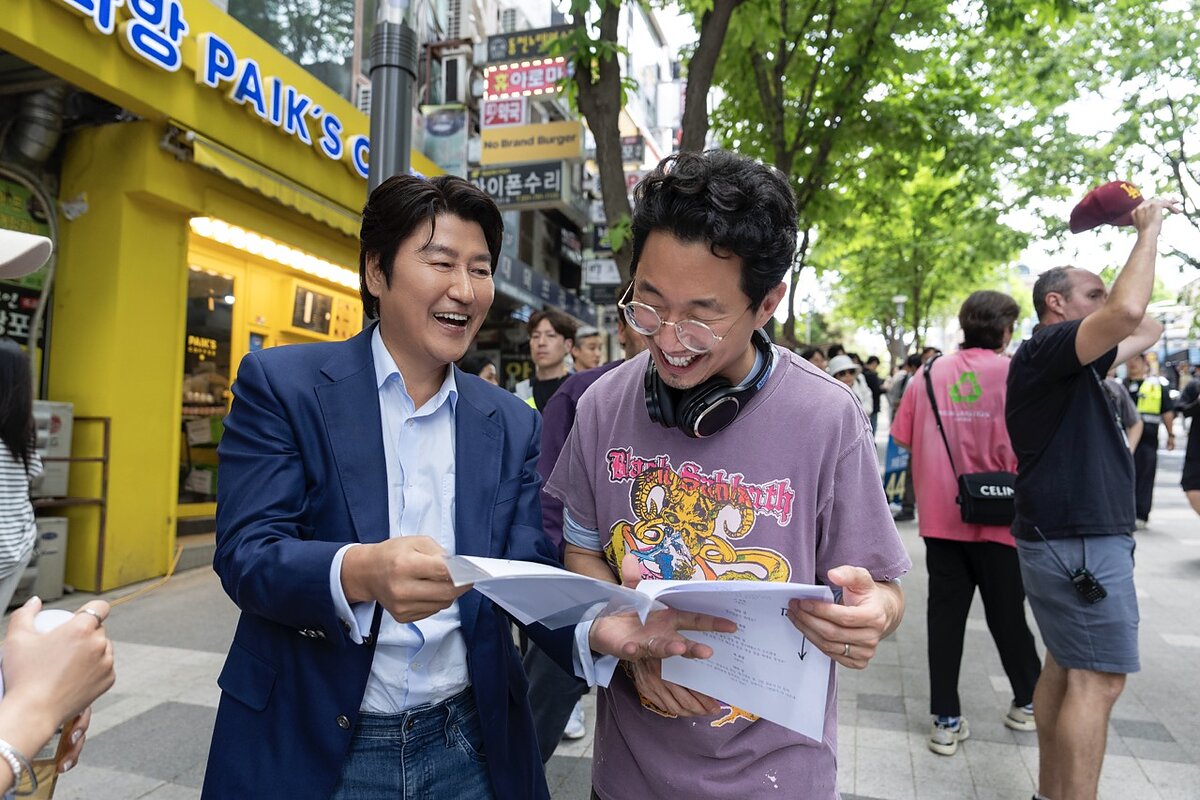
LSJ: There’s medical evidence to support that when the heart stops, your brain continues for ten minutes. There’s anecdotal evidence that during those ten minutes, your body and brain flood with a naturally occurring molecule found in DMT. DMT is also the psychoactive ingredient in ayahuasca. So if that is true, then we kind of can get a sense of what the afterlife is like, which is you going on the craziest ayahuasca trip of all time.
If you’ve done ayahuasca, you know that the element of time goes away, and it feels like you are in this internal space. So even if it’s objectively ten minutes of your brain just staying alive as you die, to you, the individual, it’s the subjective experience of eternity. If you’ve also done any psychedelics, you know that if you’re holding a lot of baggage, that can be hell. I think different religions are trying to prepare you for what to do with your baggage. Buddhism is about spending your entire life getting rid of all attachments so that when you have your last ayahuasca trip, you can be zen.
The smart approach in Christianity is saying, “Okay, you didn’t clear all your baggage, and you’re having this eternal, horrible trip? Well, here’s this guy, Jesus Christ, who can immediately take all your baggage for you so that you can turn this hell into a heaven.” If you genuinely believe that as you die or go into death, you can be free of that. So I think these are all different ways that people try to grapple with this moment of death. You see some of this at play in the show’s end.