Johanna Hedva’s Delicious Decay
I don’t think I’ve ever spoken to anyone who enjoys titling their artworks, aside from Johanna Hedva—they describe the process as delicious as “dessert” and their favorite part of making something. But perhaps it’s not a surprise that Hedva, a prolific writer and artist whose practice in language unfurls across disciplines, would take delight in nominal gestures like the forward slash that appears as a poetic break in the title of their current solo presentation “Gravity, My / Favorite Enemy” at Center for Art, Research and Alliances (CARA) through December 18, 2026.
Language, as it is heard, felt, seen, held, and lived, is an important part of Hedva’s artmaking, allowing them to remain alert and curious in their search for form. The current exhibition centers on the death of Hedva’s Korean grandmother, their halmoni, who passed away in October 2023. Concurrent with the show, Sming Sming Books is releasing Hedva’s self-proclaimed grimoire My Knife Collection and Other Subjects of Desire, which anthologizes the artist’s writings—spells, fables, litanies, inheritances, and dialogues with ghosts—from 2012 to 2026.
Together, these works mark a kind of coda to an intense period of mourning: Not only Hedva’s personal loss (that coincided with the end of their marriage and their time living in Berlin), but also the ongoing genocide in Palestine, likewise marked by that particular date, and other overlapping cycles of death. Of this extended wake, Hedva observes, “Versions of myself were dying, which meant that I was also being reborn. I felt stuck in the birth canal for a minute, but I was learning in my blood that death is also magnificently fertile, that the ligature of endings wrapped around beginnings has an undeniable propulsion and even beauty; it keeps happening no matter what.”
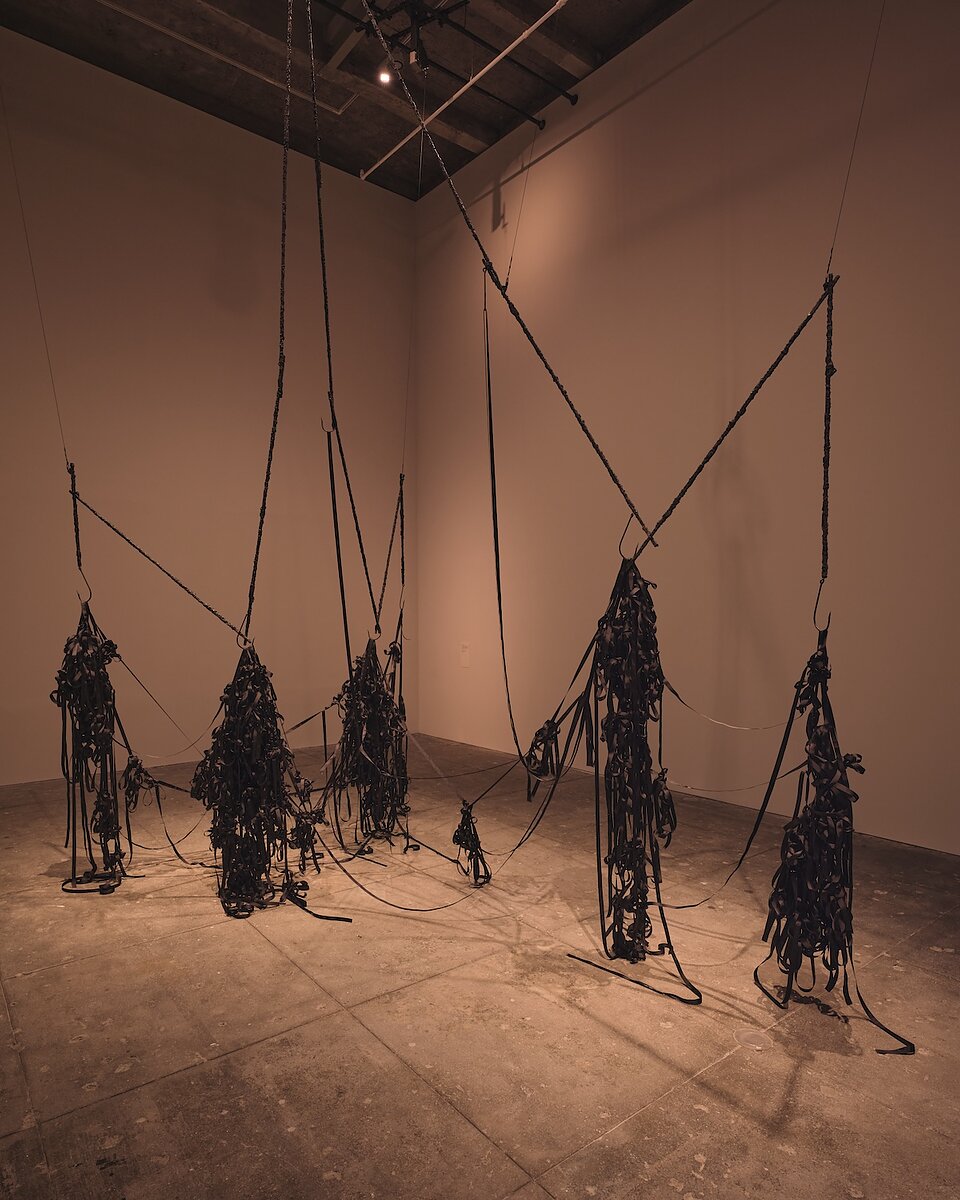
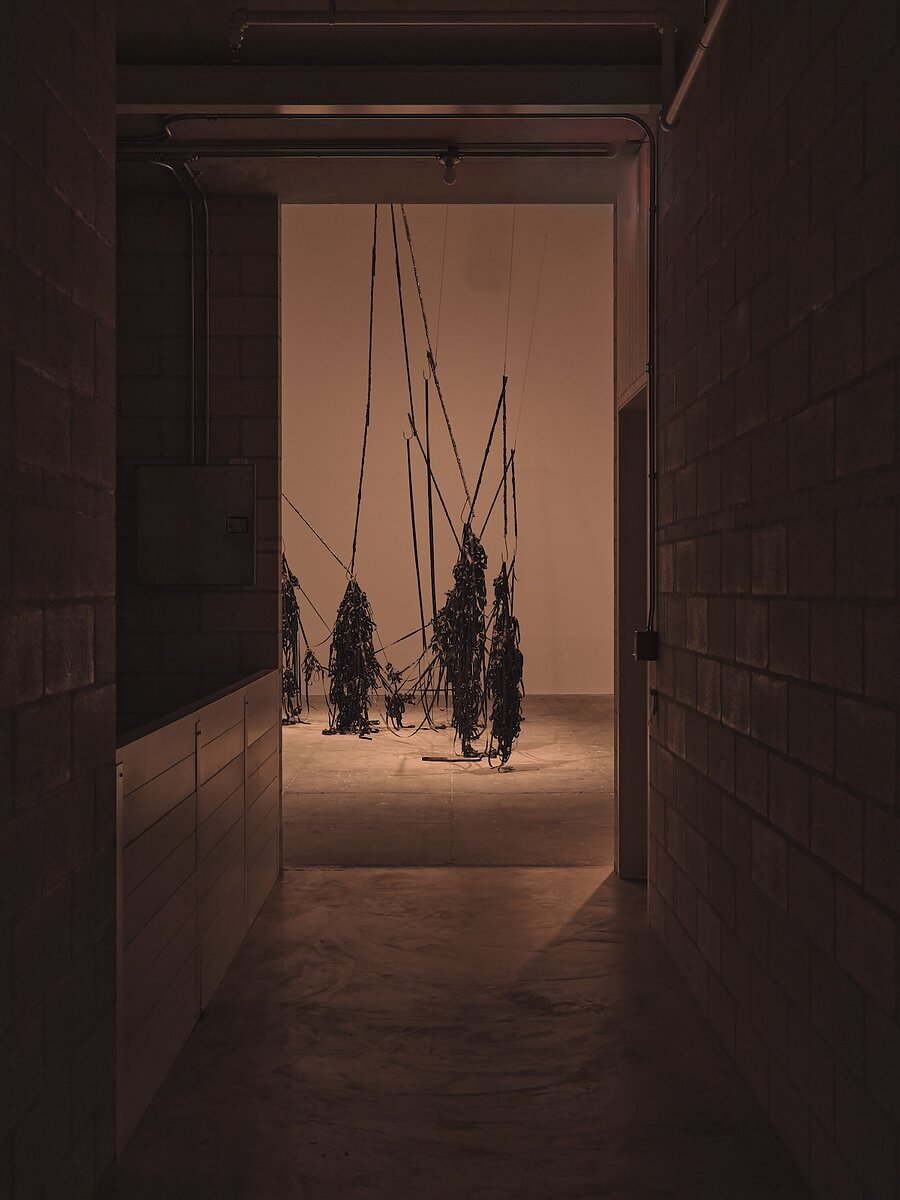
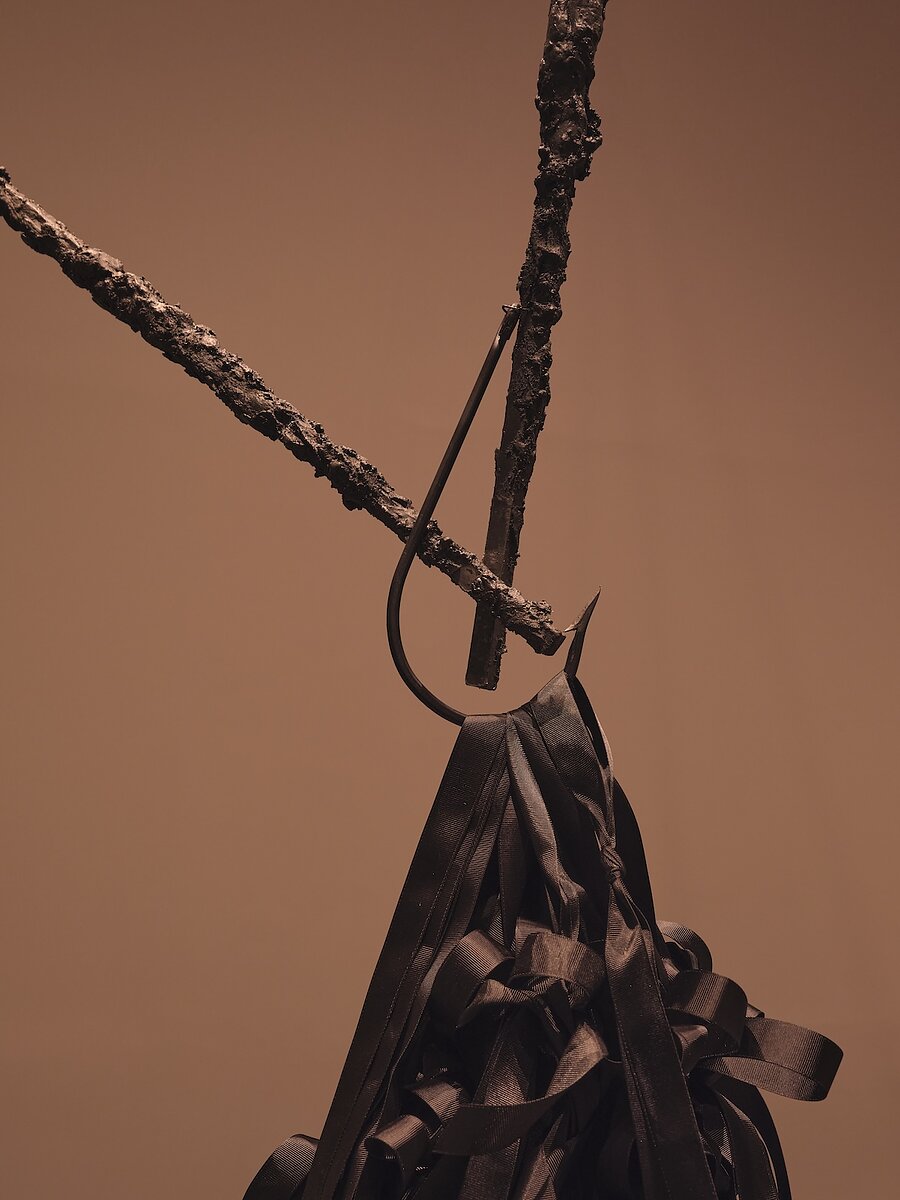
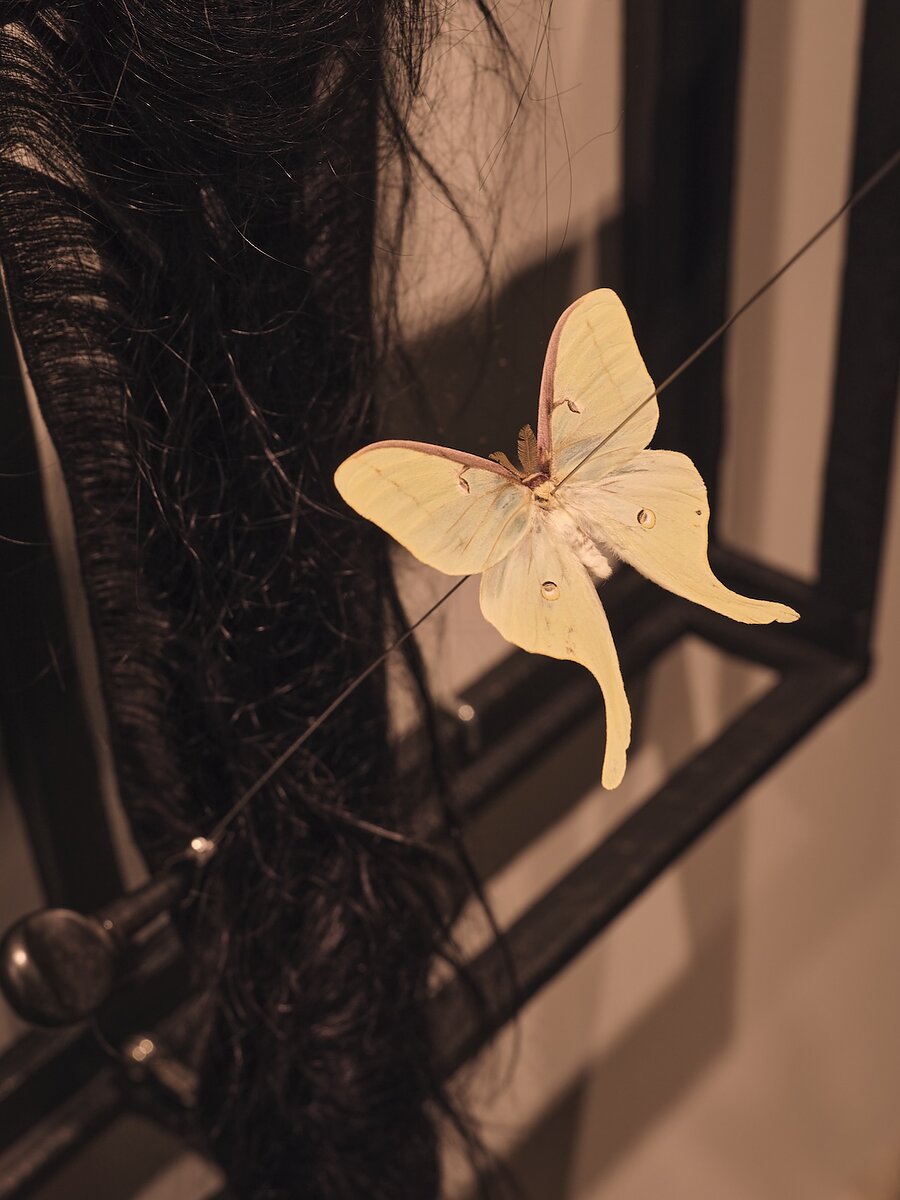
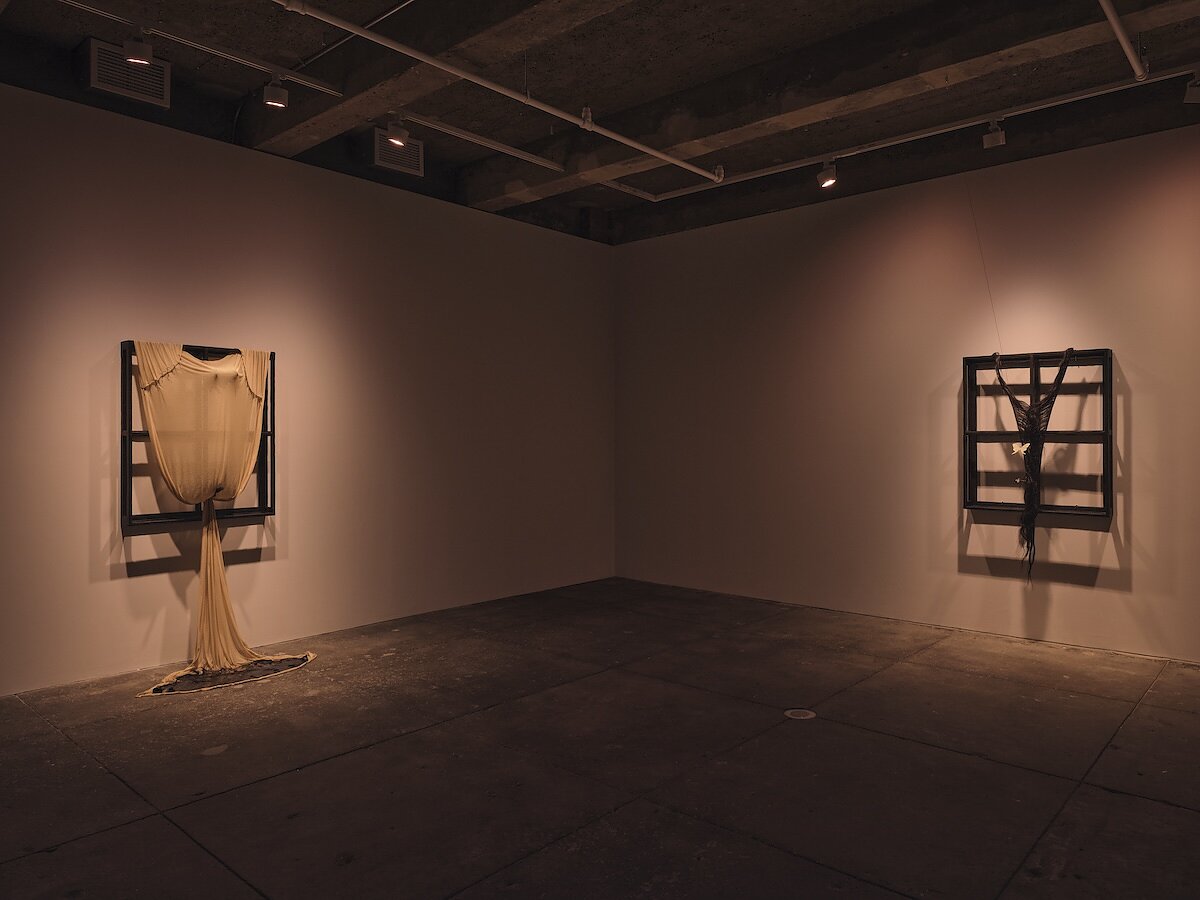
“In many ways, I simply had to surrender,” they continued. “To face that permanence was an expensive delusion to keep. I realized I could no longer outfox decay.” This acknowledgement of death and the powers beyond our control is threaded throughout Hedva’s work at CARA. The monumental kinetic sculpture Soft Death Mommy (2026) dominates “Gravity, My / Favorite Enemy,” chugging slowly and fluttering, its three wings hung with 2,000 yards of hanging black grosgrain ribbon and redolent of ink on paper.
This image first appeared to the artist through their halmoni in a dream; her spectral presence intimately suffuses the entirety of Hedva’s exhibition. I was taken with Untitled (Somebody Cheating Me) (2019), a video that records Hedva’s halmoni’s years living with Alzheimer’s disease, during a time in which the artist was working with a mudang to facilitate communication with her. It documents the tedious and important work of caring for an aging family member in a stage of decline, whose command of language can falter, words and phrases stuck in a loop. “When I say I think her spirit made these works, I don’t mean that metaphorically, although I’m happy for someone else to receive it as metaphor,” said Hedva. “After she died, the work began arriving with a force and specificity I didn’t recognize as mine. I felt less that I was inventing it than being instructed toward it. The dead can become very bossy once they no longer have bodies to slow them down.”
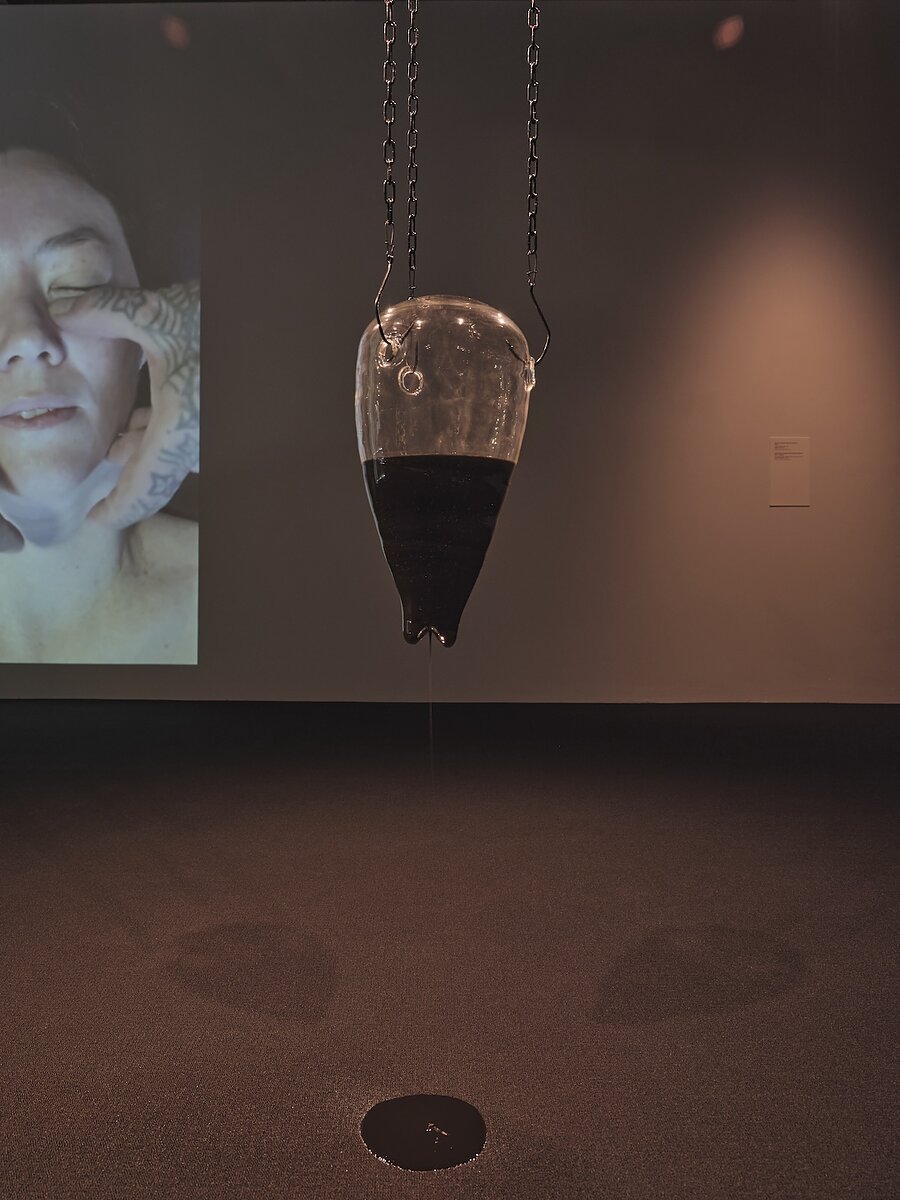
Hedva’s spiritual communion with the dead also extends in their collaborations with the living. The performance artist Ron Athey massages Hedva’s face, filmed in close-up, in All Fear Is Erotic (with Ron Athey) (2024), which is a meditation on their shared practices of ritual and pain. As a disabled artist, Hedva uses their collaborators, like language, as material, particularly as it exercises and reveals power dynamics that exist naturally between all relations. Interdependence, not codependence, allows them and their practice to flourish: “My life is held up by other people. I like seeing the beams. Dependence has given me some of the most beautiful relationships of my life: the peculiar intimacies that form when people allow themselves to need and be needed, when one person’s capacity becomes available to another, the exchange of that and what it produces.”
To make their presentations accessible, Hedva pens audio descriptions that are made available to visitors as a guide for the visually impaired and hard of hearing communities. Beyond languaged resources such as press releases, wall texts, or educational didactics sometimes provided by cultural institutions, Hedva’s texts aim to forge proximity between the artist and visitors, to provide an entry into their expansive thought process and choices. “What I love about methods of access is how they open different entry points to the work for everyone,” they said. “What a cool thing to have: the artist, in their own words, with their own voice, guiding you through the show.” For Hedva, writing these audio descriptions is an act of necessity but also one of generosity, inviting audience members to approach the work through different channels and to contemplate difficult themes like grief and fear over longer spans of time.
Here, the artist establishes a new “erotics of gravity” and a “cosmology of endurance” that unravel beauty’s pleasing exterior. Much of the work in “Gravity, My / Favorite Enemy” is time-based, exposing materials to the centripetal force to which we are all subject. Contemplating the elegance of destruction and, conversely, the degeneration of beauty, Hedva’s forms quiver, bulge, sag, ooze, and leak in a resilient display. “I became interested in beauty’s more perverse and unsentimental methods, and I found that for me they included things like debility, deterioration, and ruin, as much as a patient but ferocious tenacity of refusing to disappear,” they said. “I think [my halmoni] wanted me to viscerally learn what a thing might become after it has survived becoming something else—how gorgeous that is.”
“Johanna Hedva: Gravity, My / Favorite Enemy” is on view at Center for Art, Research and Alliances (CARA) through December 18, 2026.
—Hyunjee Nicole Kim is a writer, editor, and researcher based in New York and not on social media.