Jean Shin’s Ritual Communions
Jean Shin’s philosophy as an artist is simple yet instructive: create with what you have. Over the course of the last 30 years, the Brooklyn-based artist has mapped connections with yarn from donated sweaters (Unraveling (2006–2009)), conjured farmscapes using plastic soda bottles (MAiZE (2017)), and erected monuments to technological obsolescence out of discarded cell phones (Huddled Masses (2020)).
Shin maintained her pragmatic approach when scouting Brooklyn’s Green-Wood Cemetery, where she noticed two displaced trees—a pin oak and a red oak. Both had lived almost a century before their decline necessitated their removal, and had been sitting off to the side, unceremoniously, for years.
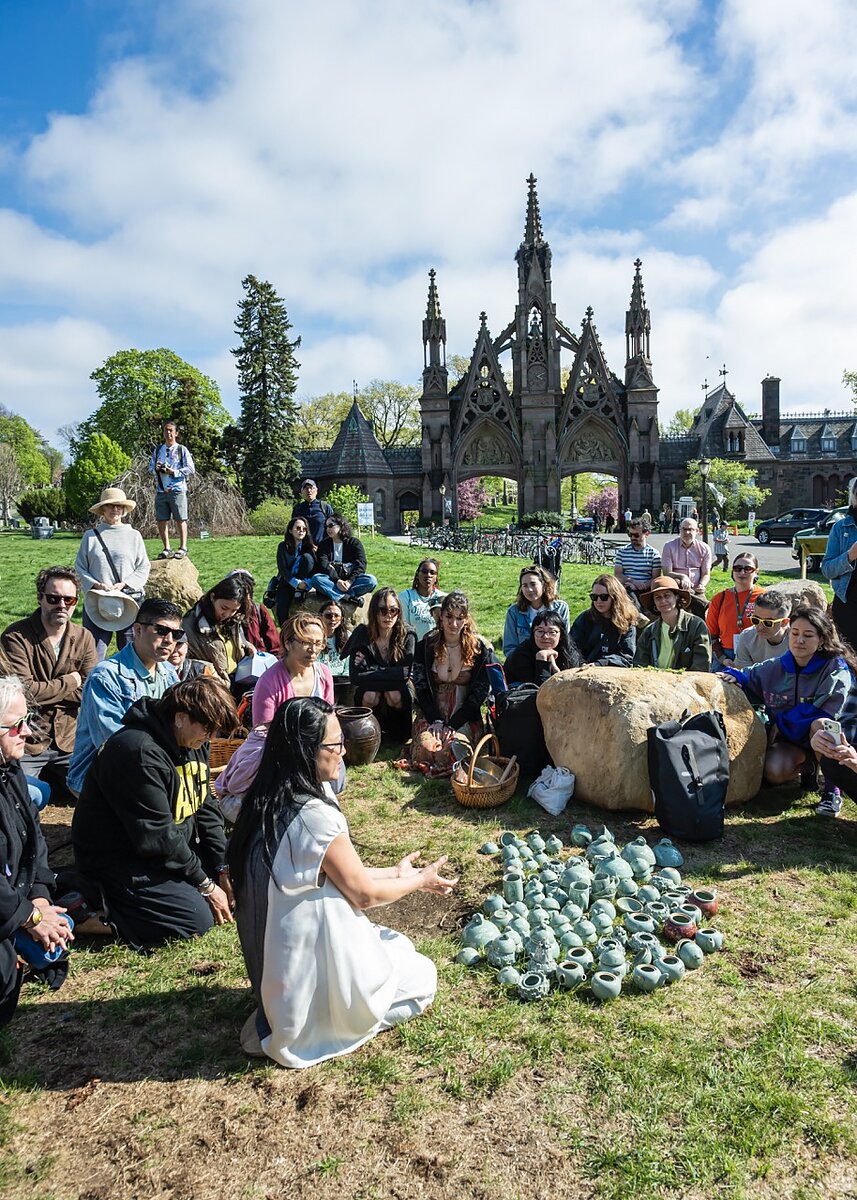
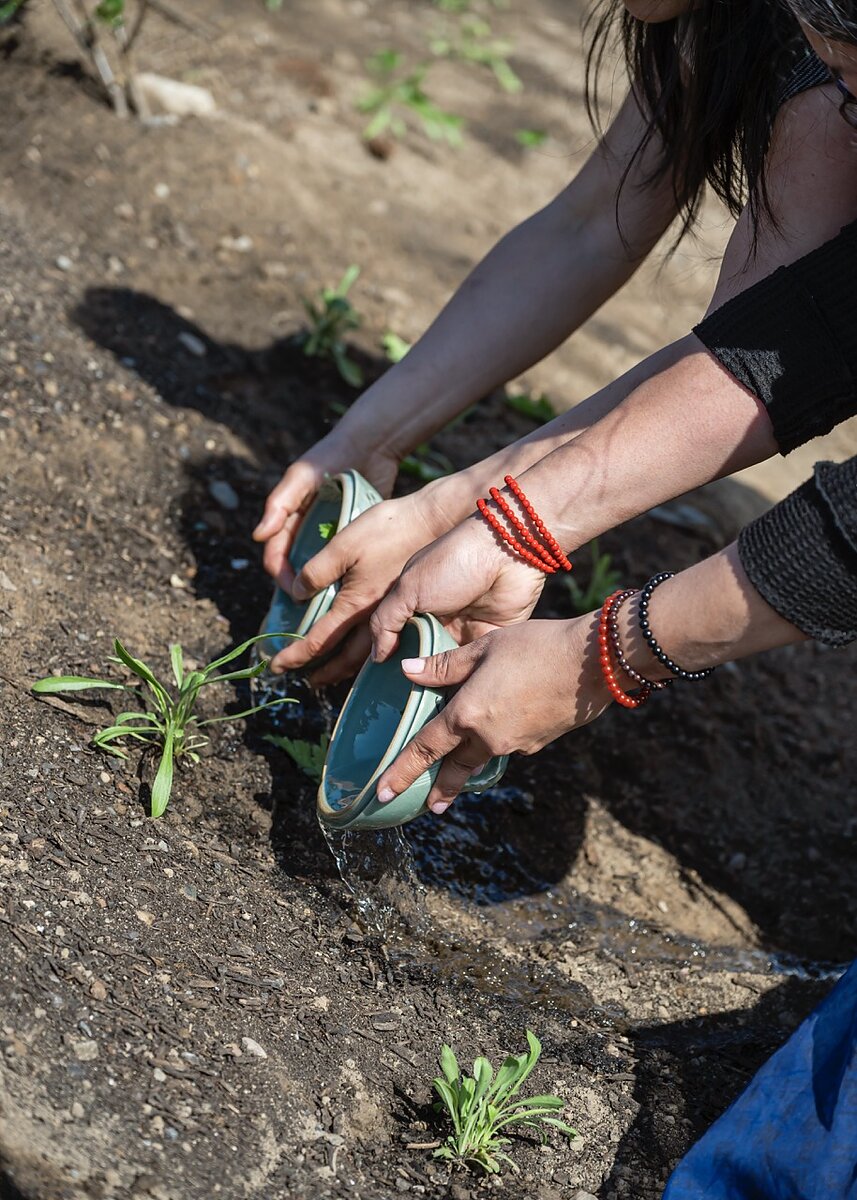
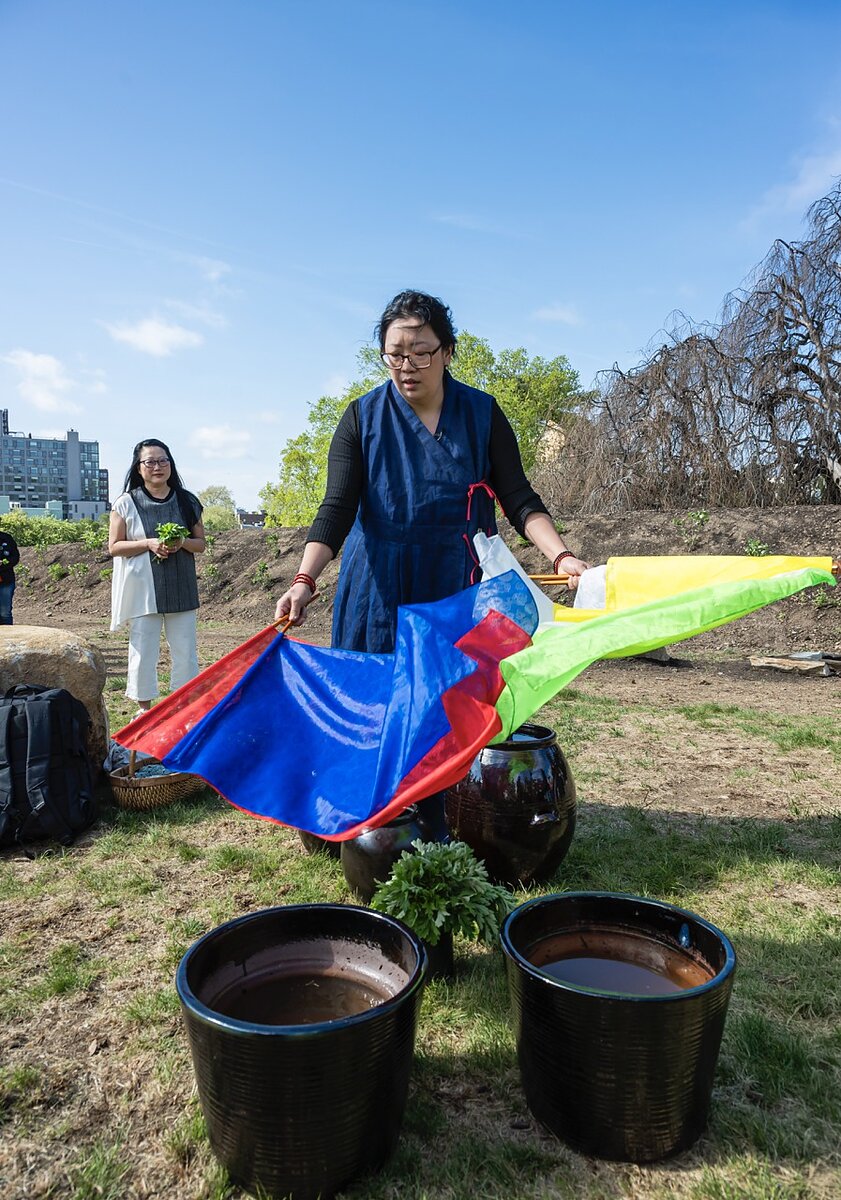
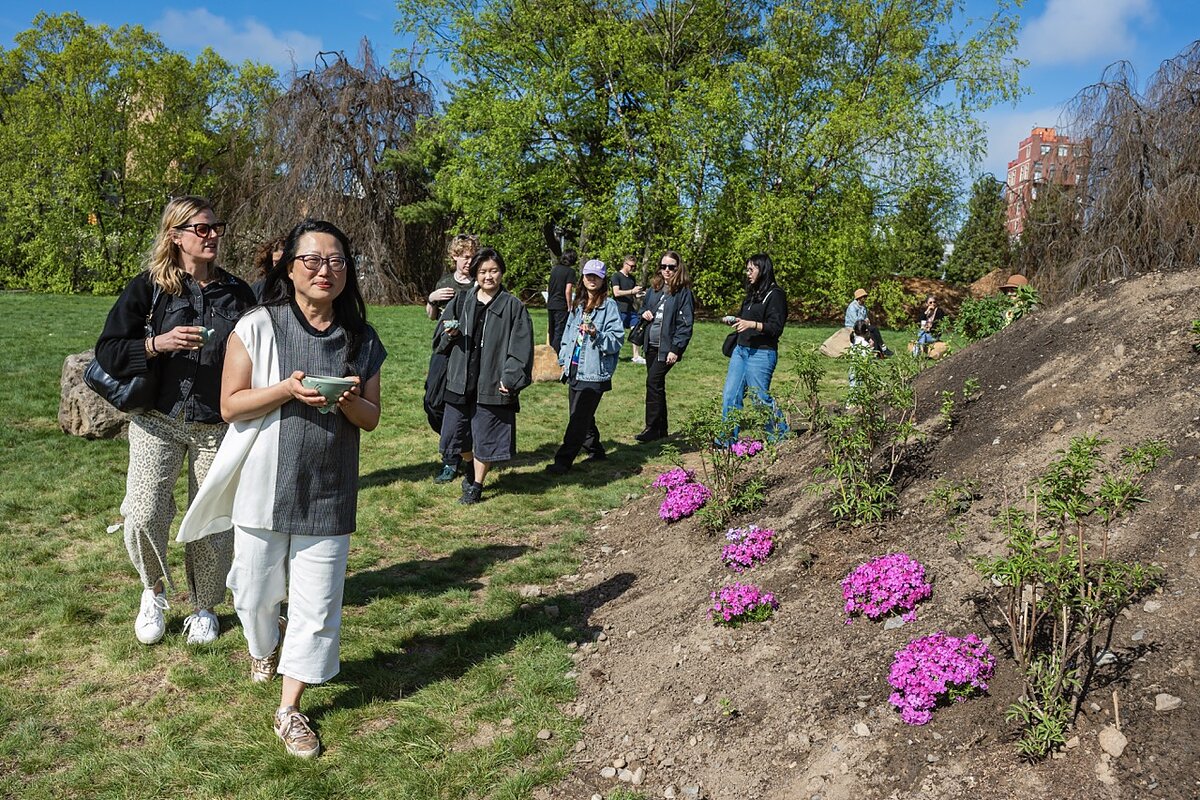
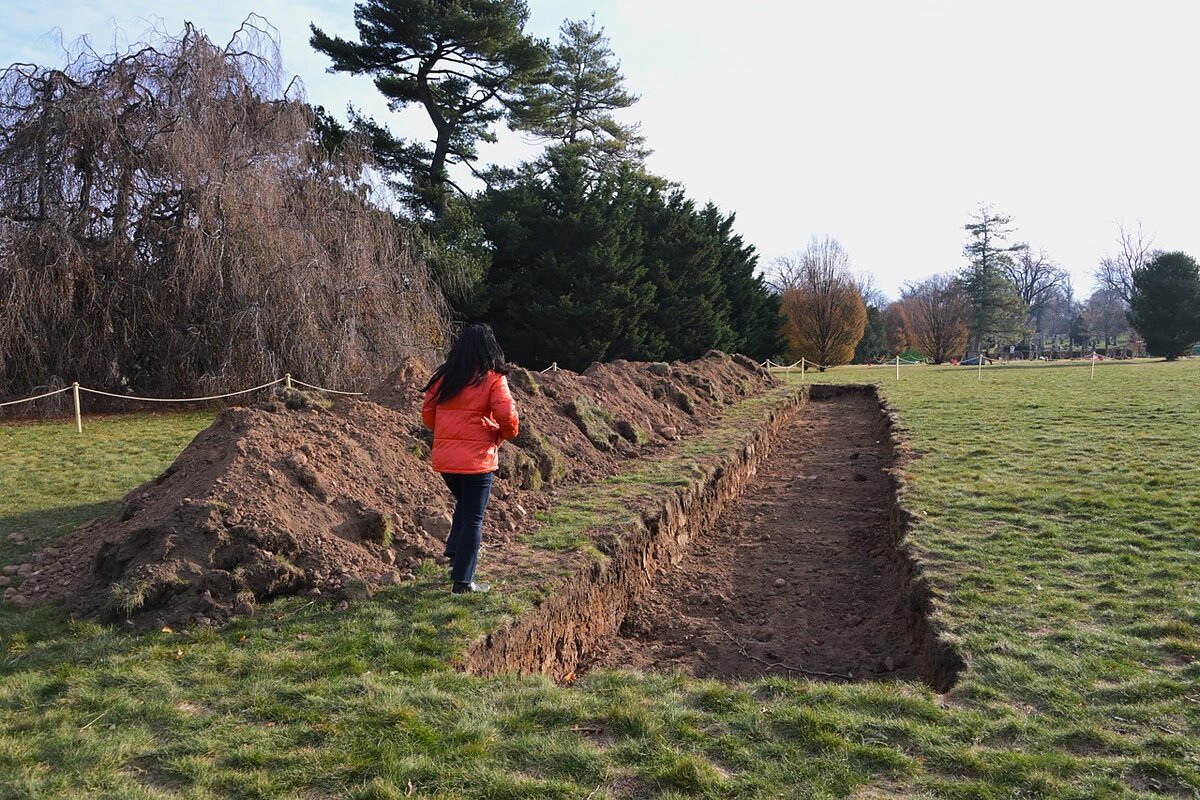
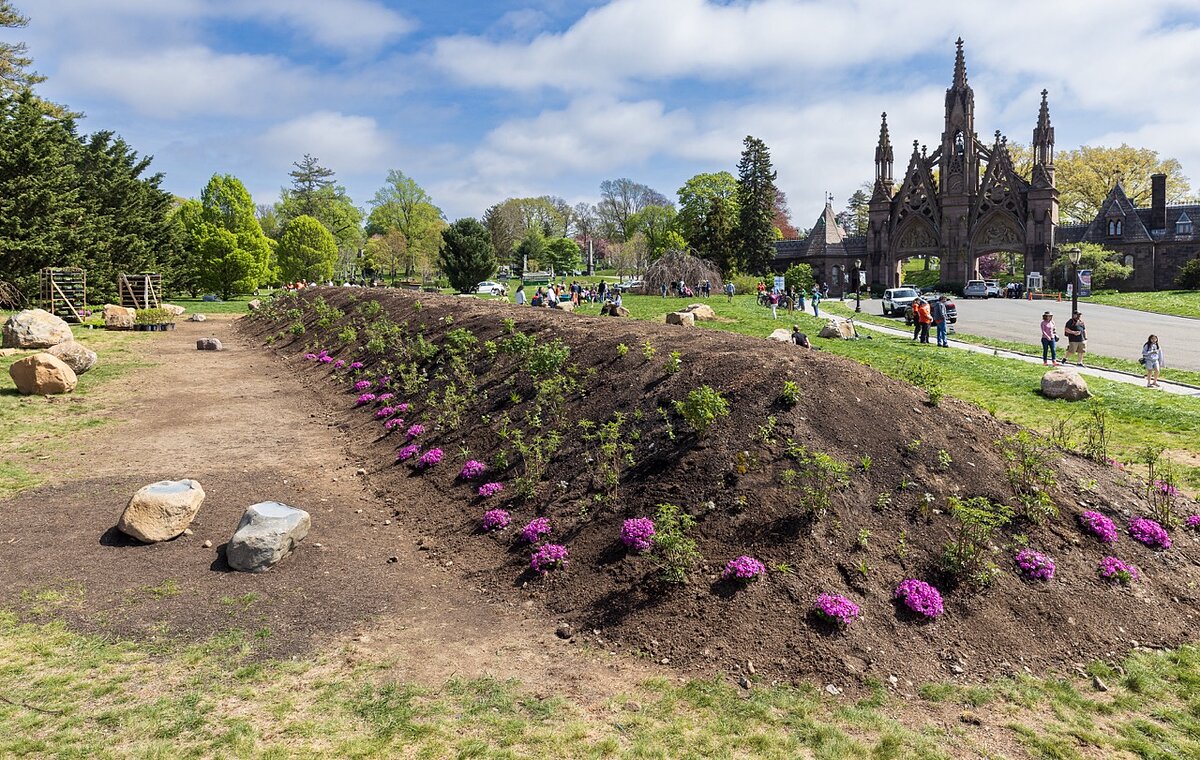
Shin proposed Offering (2026) as a way to give the elderly trees a proper burial and honor the history of where they were rooted. In the winter, the grave was dug. Along with Dannielle Tegeder from the feminist artist collective Hilma’s Ghost, Shin led a procession to the open grave ringing bells. In the spring, the site was transformed into a Korean-inspired tumuli mound planted with native wildflowers. Mudang Jenn, a Korean shaman, blessed water with mugwort, a traditional medicinal herb, which was then ceremonially poured onto the mound. Both occasions were open to the public, and those in attendance participated in the rituals.
“I was wanting to continue my practice and projects of mourning trees,” Shin told me, as we circled the buried oaks.
Offering represents a continuation of earlier works such as Allée Gathering (2019), in which Shin reclaimed dying maple trees at Storm King Art Center and repurposed the timber into a communal table and benches. By then, the artist had relocated her studio from Red Hook, Brooklyn, to New York’s Hudson Valley, where she splits her time. Further north, her subsequent commission Fallen (2021), installed at Olana State Historic Site, the former estate of Hudson River School artist Frederic Church, commemorated a local species—a deceased eastern hemlock, its trunk enshrouded in leather and laid out for visitors to come pay their respects.
For Shin, each work builds on what came before. “Every project seems to teach me something that the next project leads to, and then I understand better what the last project was,” she said.
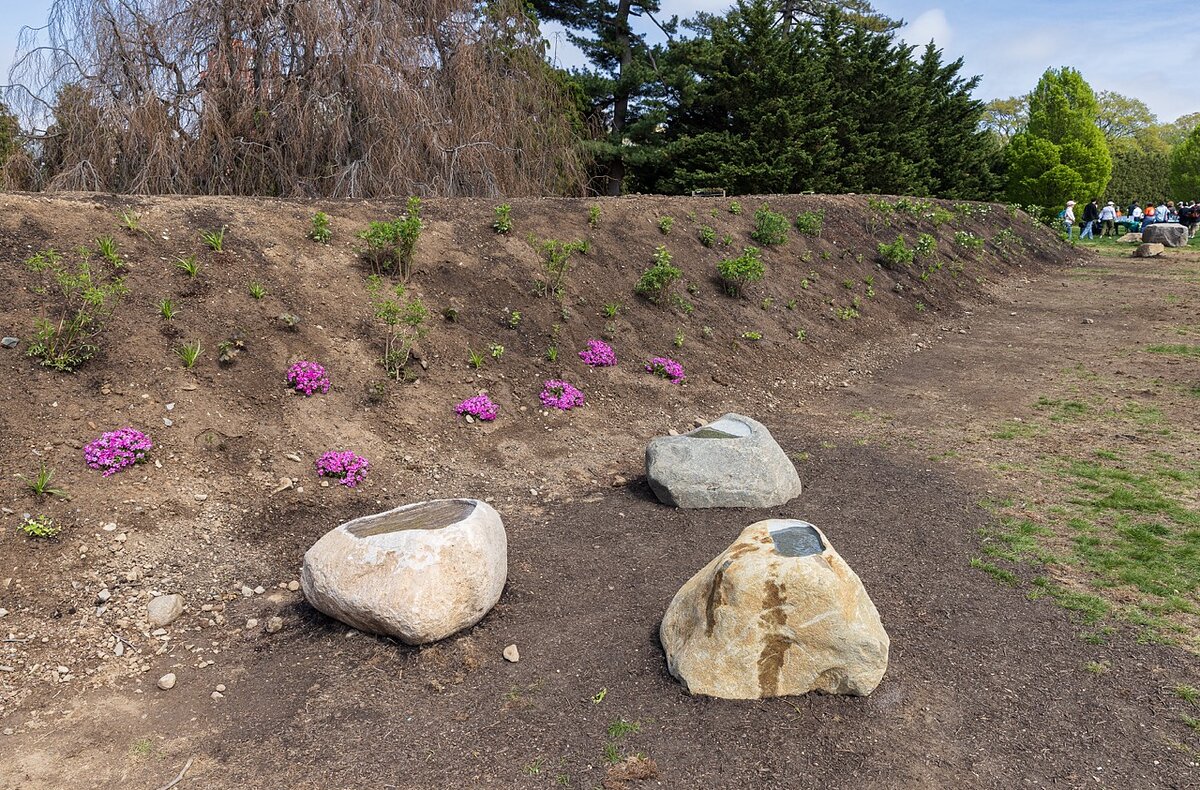
At Green-Wood, the two of us sat on one of the many stones intentionally placed around the mound. Their invitation for quiet reflection reminded me of the scholar’s rocks evoked in Huddled Masses, the statuesque forms covered by the black mirrored surface of cell phone screens. On some of the other stones unearthed at the cemetery, Shin had carved shallow basins to provide birdbaths, and I thought of her assembling sculptural branches from fallen trees and salvaged copper to create Perch (2024) for bobolinks, a migratory songbird found at Appleton Farms in Massachusetts. Whether addressing e-waste or outdoor environments, she views each seemingly discrete undertaking as merely “a genre within this larger, interconnected conversation.”


In the same breath, Shin acknowledged the difficulty of navigating an industry that prefers artists to have a “signature style” or to stay in their lane. “I don’t have lanes,” she insisted, describing her journey as one that she’s “learning from and unlearning from every day.”
Shin earned a degree in art history and initially studied painting, focusing on portraiture and the figure. She found herself invested in not just what people looked like but their interiority, including that of her own family, and what it means to really represent this. Her work can be viewed as an expansion of her formal training, while her instincts remain deeply rooted in her cultural heritage as a Korean American. She remembers spending hours with her grandmother preparing and folding dumplings—“That felt to me like the most beautiful, early memory of making.” It’s a tradition Shin has carried into her annual Lunar New Year celebrations, which she generously opens up to not just family but also friends. She is well-known for giving people a reason to gather, and that spirit of collectivity also reverberates in her work.
The greater diaspora—Korean and Asian American—lies at the heart of Celadon Landscapes, an accompanying installation at Green-Wood’s recently unveiled welcome center and exhibition space. In the gallery, what appear to be two oversized vases, tipped over amid piles of ceramic shards, are in fact illusory reconstructions made from the broken pieces. Just as Offering harkens back to ancient tombs, Celadon Landscapes allows Shin to imagine “as if I discovered a monumental treasure that was in a burial.”
The work revisits a mosaic by Shin commissioned by the MTA in 2008. Located at the Long Island Railroad’s Broadway Station in Flushing, Queens, the mosaic utilizes the same pottery remnants used in Celadon Landscapes, which were donated by the city of Icheon in South Korea. These castoffs, sourced from studios where ceramic artists break their work rather than sell pieces with slight imperfections, serve as a metaphor for Shin’s diasporic identity:
“I was never going to be the perfect Korean. All the flaws were my lived experience, and our realities that constantly feel fragmented. And yet, we’re connected to long history and connected to our ancestral places.”
Shin recounted that the ceramic shards were designated as waste when shipped to the U.S.—yet another metaphor, perhaps, about the perception of immigrants. But of course, Shin sees only their beauty and possibilities.
“This desire to maybe find the perfect puzzle piece, that’s really not how I feel like diasporas work. The sense of fracture is what brings us together.”
Put another way, Shin believes our sense of belonging exists because we have built our own community—something she’s been doing all along in both art and life—creating with what she has. Again, she traces this impulse back to her grandmother, who survived war.
“Everything was like, ‘Just in case you need that,’ she saved it. And she repurposed everything,” Shin recalled. “Material resources are things that she always found a way to provide for her family. She didn’t have much, but she used whatever was around her. I think these kinds of war experiences are really telling us when everything’s destroyed, what do you do? You still make stuff. You still forage and find things just right there.”
—Mimi Wong is a writer based in New York. For her work engaging with contemporary art by artists from the Asian diaspora, she was awarded the Andy Warhol Foundation Arts Writers Grant. She is a part-time assistant professor at Parsons School of Design.
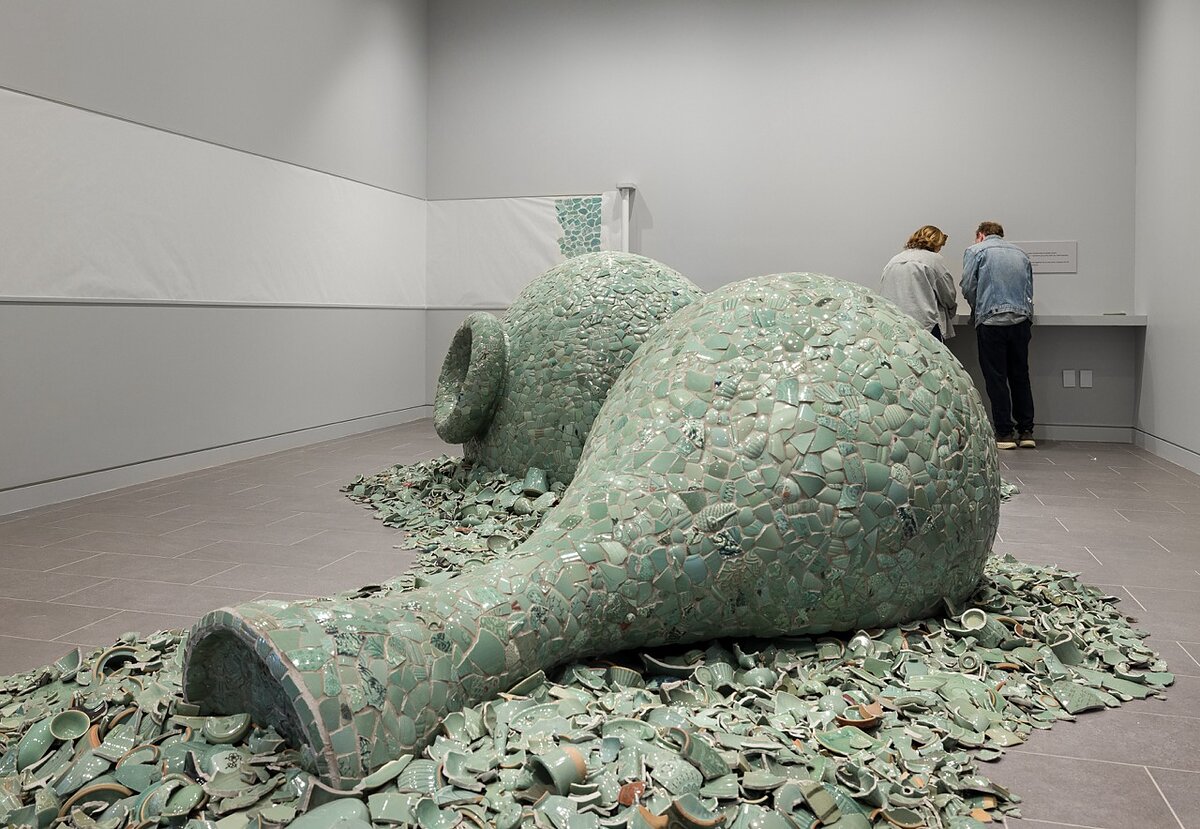
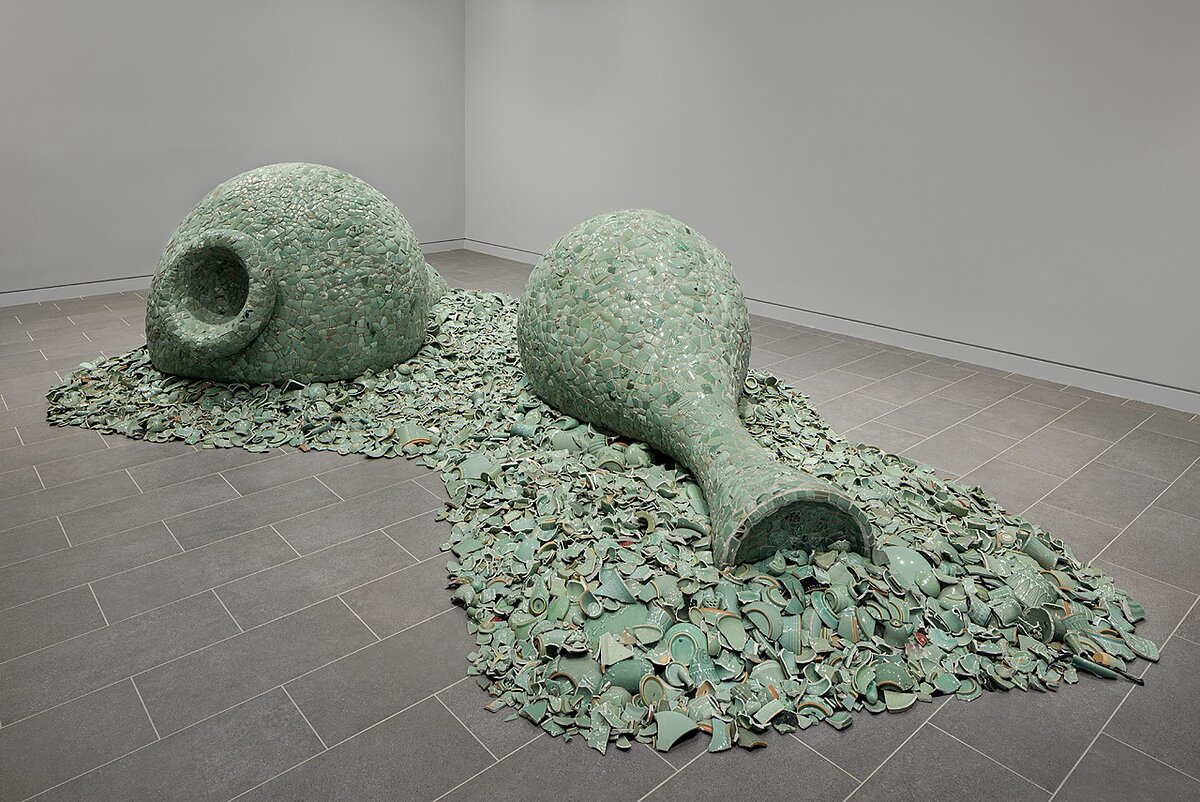
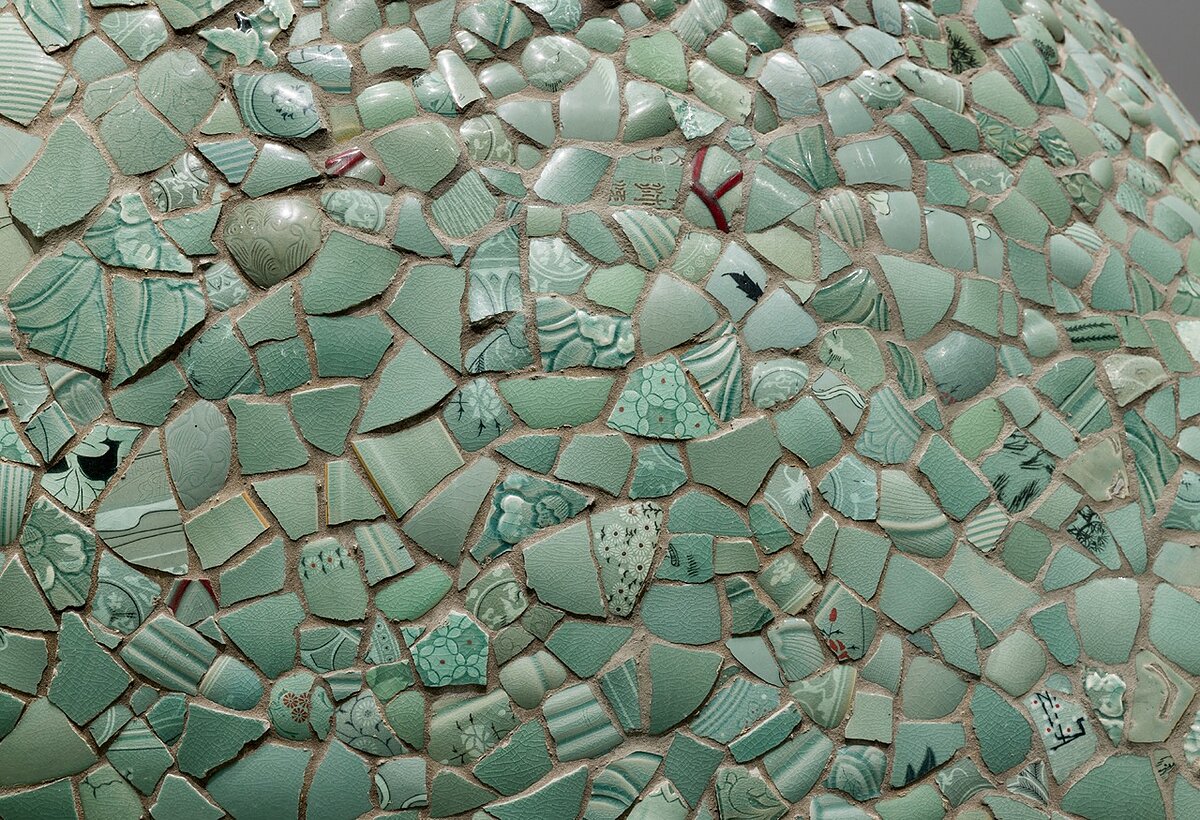
Photo credit: Etienne Frossard