Filmmaker and Artist Shu Lea Cheang on Pioneering Queer Sci-Fi
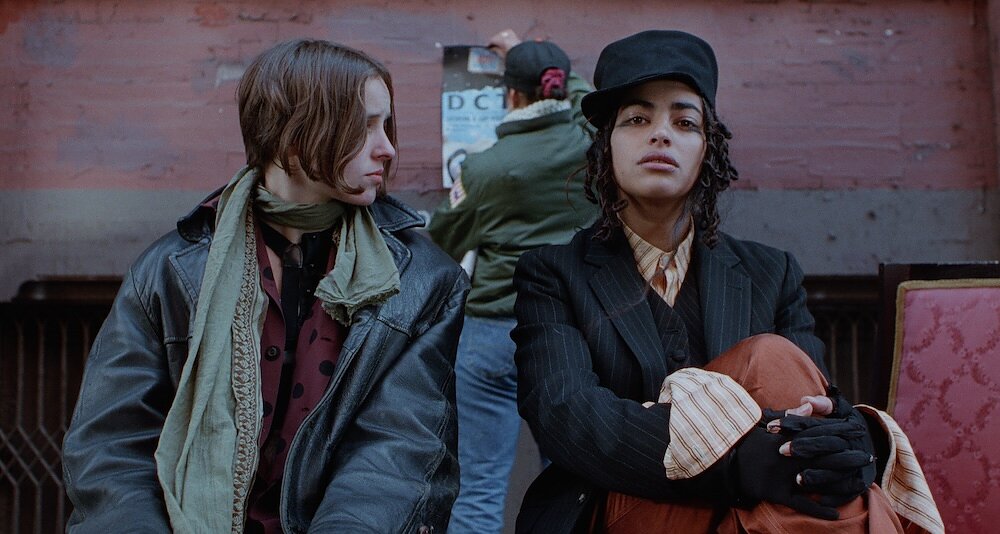
This past May, artist and filmmaker Shu Lea Cheang’s 1994 debut feature film Fresh Kill was released for the first time on Blu-ray by the Criterion Collection. Over three decades after its original release, the timing feels less like nostalgia and more like a reckoning.
Set in dystopian New York City, Cheang’s debut is described by the Criterion Collection as “an ecofeminist parable and a brain-wave-scrambling cyberpunk fantasia.” The film follows a lesbian couple—played by Sarita Choudhury and Erin McMurtry—who turn to the hacker underground after their daughter disappears, uncovering and maneuvering a corporate conspiracy of contaminated fish, disappearing cats, and massive environmental cover-up.
Opening on Orchid Island in Taiwan, where the government had secretly buried nuclear waste, and cutting between that and Staten Island’s Fresh Kills landfill, the film maps environmental violence as a global system. Made with a predominantly women and a racially diverse crew, featuring a multiracial queer family presented without explanation or apology, and coining the term “eco-cybernoia” to describe a culture drowning in corporate waste both materially and in media, Fresh Kill arrived ahead of almost everything it was describing.
I spoke with Cheang over Zoom about the film’s production, what it means to name a genre before it exists, and how it feels to be canonized without ever quite settling in one medium.


Nimarta Narang: Fresh Kill opens on Orchid Island in Taiwan, and keeps returning to it as a counterpoint to Staten Island as two dumping grounds on opposite sides of the world.
How did your own experience of leaving Taiwan shape that choice, and did you see environmental violence as a global system, and did it help you see Fresh Kill as more than just an American story?
SLC: I had a producer at the time, Jennifer Fong. We really kind of pushed our way through because the decision to make it in 35mm pretty much doubled the whole budget. And at that time, in the ‘80s and‘ 90s in New York, most independent films were made in 16mm. Our decision to go for 35 had two reasons. One, for me, was for the content of the image and the frame. Second, of course, is the political statement of doing it in 35mm.
If you notice in the film, there’s this kind of recurring red sky [at the top of the frame]. And actually, that particular red sky was not done in the post-production with the CGI special effects. It was actually done during the filming, with the filter dropping into the lens.That particular physical act of the sky, the red sky, really dropping into your frame, into the film itself was a very important decision. Working with the cinematographer, Jane Castle, we were able to consider that possibility. In the beginning, it was like, oh, you should have done it in the post-production. Using the frame and the film medium itself to make this kind of statement was important for me.
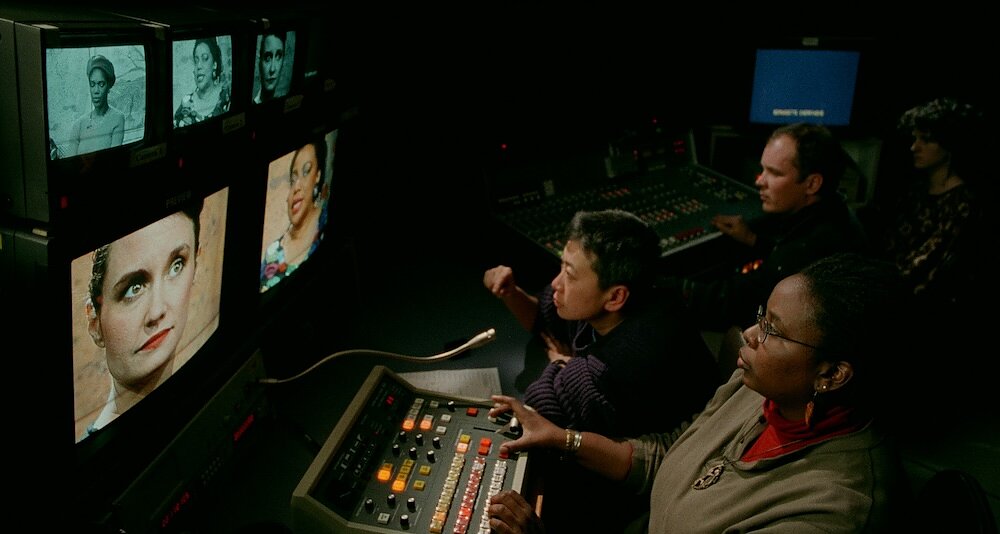
SLC: In the beginning, I actually had a male photographer-cinematographer. He kind of quit a few weeks before shooting. This put us in a crisis, but we were able to find Jane Castle whose assistant was also female. My associate producer, Shari Frilot, at the time was actually a new graduate—she is now the senior programmer for the Sundance Film Festival. I think at that time, I wouldn’t have dared to say I want to have an all-woman crew. Somehow it all came together as a predominantly women crew.
I don’t think it’s affected the story in the sense of going from the preconceived storyboard to the film. However, I think it did affect the whole set. On set, you just feel like the women really come together. And then, it’s almost like we start shooting and realize more and more how precious it is to have this woman crew.
SLC: That’s a good question. Yes, non-traditional casting, at the time, was like the first time [Hollywood] called out to say, “Okay, we should start including more colored people in the film. So, okay, maybe a secretary now can be played by an Asian woman.”
I think at the time, the so-called non-traditional casting was about giving us breadcrumbs. Like maybe the policeman can be a Black man or the nurse or the housewife… it’s still not a major creative character, but Hollywood thought maybe they could also play some extras.
In the ‘90s, I was more in the downtown New York performance scene. And so you do have all these different talented, colored theater performers around. I’m familiar with these people, and included many of them in the film. It’s very different coming from Hollywood saying, “ we want to do non-traditional casting.”
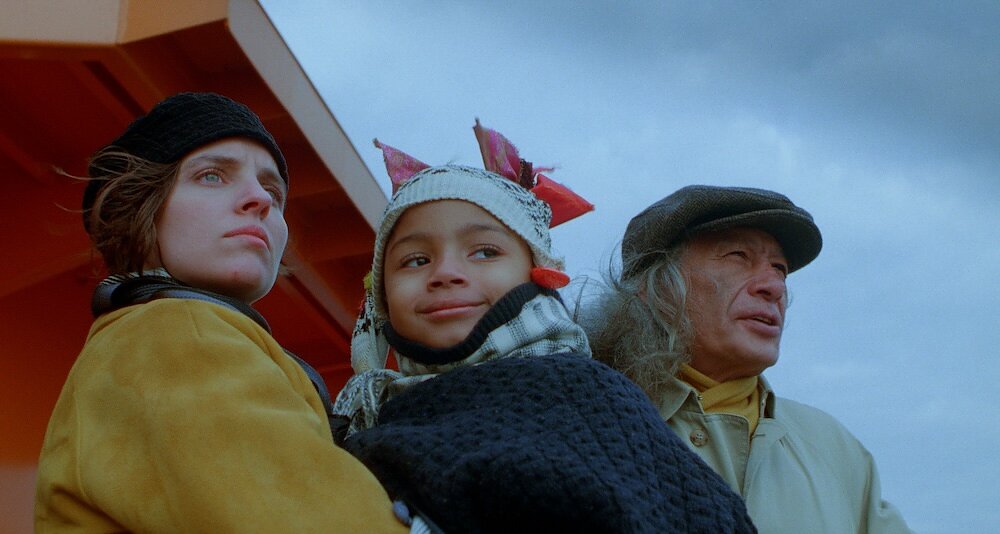
I wanted to subvert this concept of the non-traditional casting—play on it, and then push it. For example, I have the mother be African American and daughter be white without explaining how it happened. That became my way of answering, or my way of revoking, the non-traditional casting concept.
In recent years, even the Oscars have broadened to include more Asian American and African American filmmakers, and critics. That does affect some of the voting systems.
SLC: I think, for my films, I do feel like I’m sort of challenging the genre. I have this work that is genre-bending, or gender-hacking. In terms of genre-bending, it’s almost like if I don’t kind of come up with some new term to describe the film, it’ll easily just be labeled experimental cinema—and I really do not like being called experimental cinema.
In the end, I made four feature films, and for each I came up with a term to describe it. Fresh Kill was actually a pre-internet film. The internet, in terms of the web, didn’t really come into full swing until maybe around 1994. In the mid-’90s, it became a phenomenon, but before that, the internet existed but it wasn’t really publicly accessible. I sensed cyberspace was coming at us, paired that with ecology, and called it eco-cybernoia. This was my own kind of thinking about what was coming at us at the time. People say this film did preempt what was coming.
SLC: These are actually film cans. These days, when you have the 35mm, you actually have film cans inside the two kinds of metals, which we got on eBay. If you use 35mm film, you actually have five reels. Usually for the screening, in the cinema, you would need two projectors running one after the other to show the film.
It’s very interesting to visit these old cinemas still showing 35mm. The times have changed. But the medium is the same—so it makes you feel that you carry with you.
SLC: I have gone digital for sure. This idea of the Blu-ray is that it’s still a material copy. But I think this particular copy of Blu-ray could become more like a collector’s item.
In a certain way, I cherish this opportunity to distribute the film. Hopefully, people do feel by owning it and by having a copy, it means something.
SLC: At the moment, I feel quite comfortable swimming in between these two roles, being a filmmaker and being an artist. It took me a long time to come to this recognition, and to actually come to terms with my two roles. Who knows which one has more budget anymore? [laughs] At the moment, I’m making very low-budget films. The last film I made, Uki in 2023, was very, very, very low budget. I can’t seem to bring back any funding to sponsor the filmmaking [laughs]. As an artist, I mostly get commissioned to do my work now when it involves such a large-scale installation.
I would say I am an artist and a filmmaker—in the past, I’d say I’m an artist who also makes films. But that got confusing.