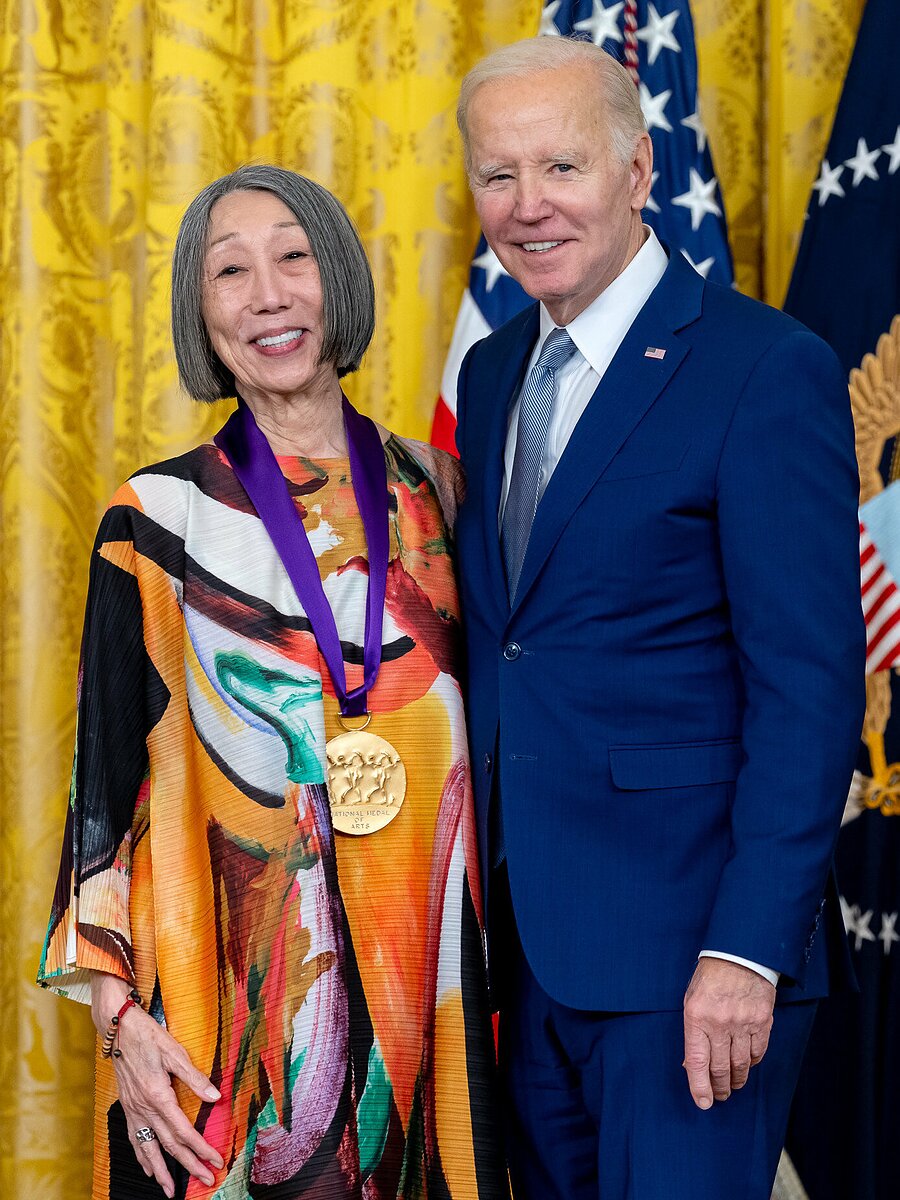
Joan Shigekawa and Dr. Mariko Silver on Legacy, Leadership, and the Arts
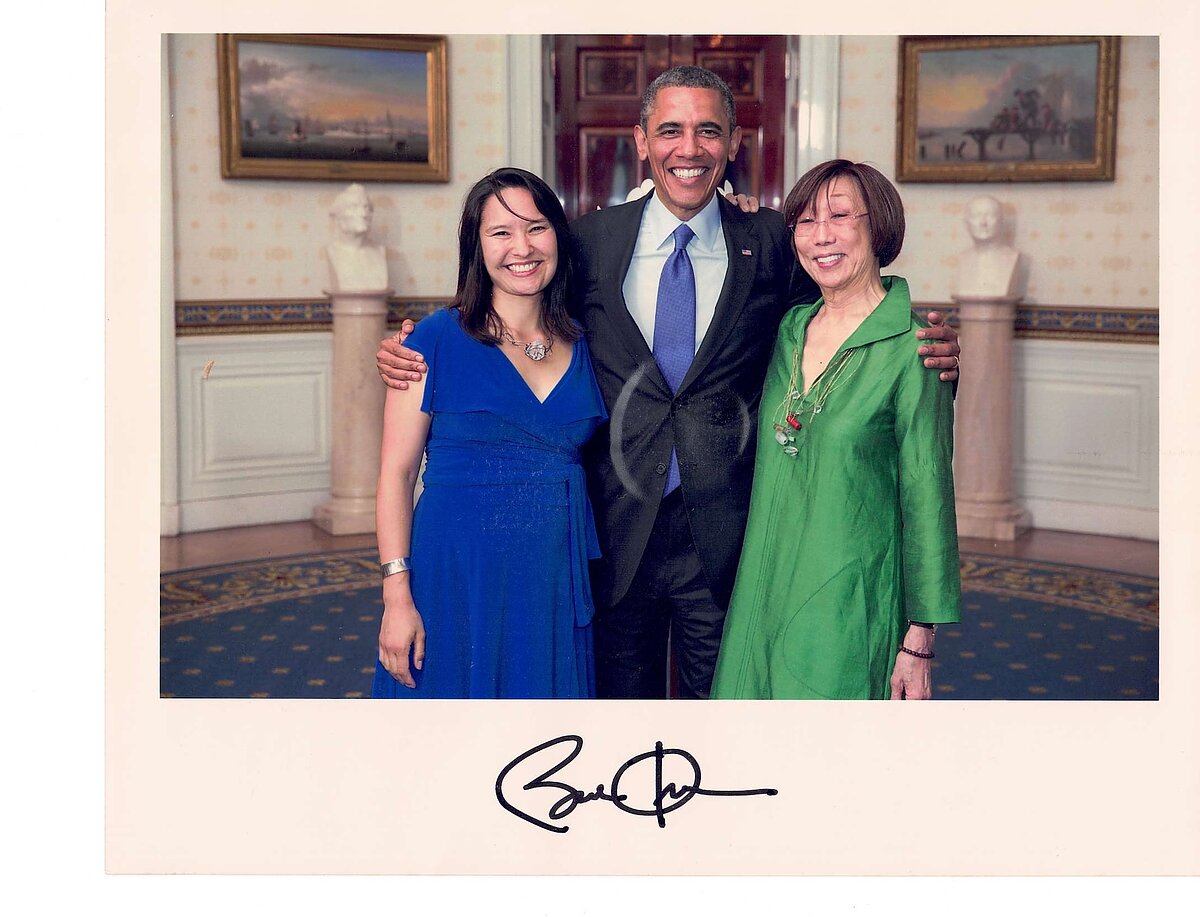
When it comes to leadership in the arts, very few people can claim the kind of enduring, steadfast impact had by Joan Shigekawa and Dr. Mariko Silver. For the better part of this century, Shigekawa and Dr. Silver have helped lead some of the nation’s most prominent cultural institutions—they also happen to be mother and daughter.
In addition to serving as acting chair of the National Endowment for the Arts (NEA) during the Obama administration, Shigekawa led domestic and international programs in the arts as an officer of the Rockefeller Foundation, and was the director of the International Production Laboratory at the Metropolitan Museum of Art. She is currently an emerita board member of the Smithsonian Asian Pacific American Center, a founding member of the Center for Asian American Media, and a trustee of United States Artists, which supports individual artists in the visual, performing, media and traditional arts.
Shigekawa has served as a mayoral appointee to the New York City Cultural Affairs Advisory Commission, and as a trustee of the New York State Council for the Humanities, the Independent Television Service, the New York Foundation for the Arts, Grantmakers in the Arts, and Grantmakers in Film and Electronic Media. She also celebrated her 90th birthday this spring.
The current president and CEO of Lincoln Center, Dr. Silver (Shigekawa’s daughter) has had a multi-faceted career that spans the arts, education, and government. Previously, Dr. Silver was president and CEO of the Henry Luce Foundation and president of Bennington College. She helped lead the transformation and expansion of Arizona State University and held positions in state and federal government advising on international policy, economic development, technology, innovation, and higher education.
Dr. Silver serves on the board of several organizations including Yale University, the American Academy of Arts and Sciences, the Council on Foreign Relations, MacArthur Foundation, and the Massachusetts Museum of Contemporary Art.
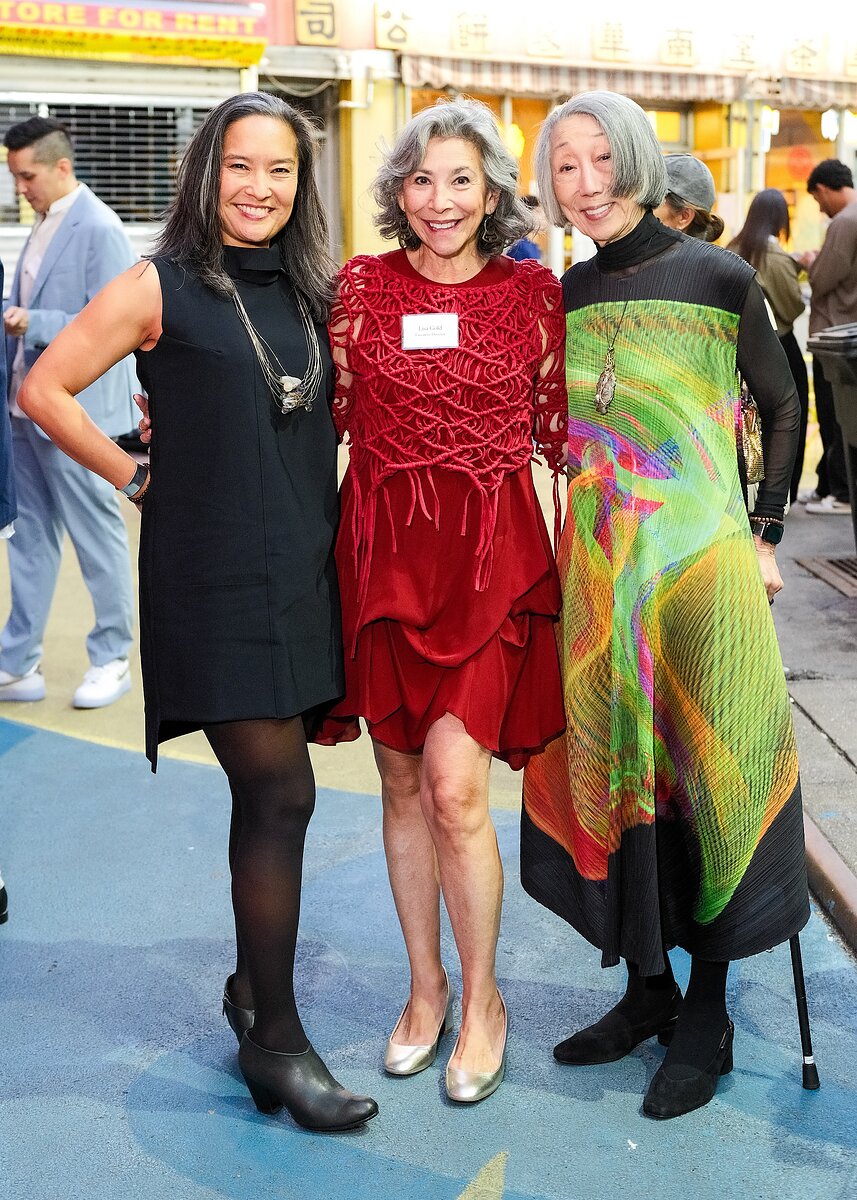
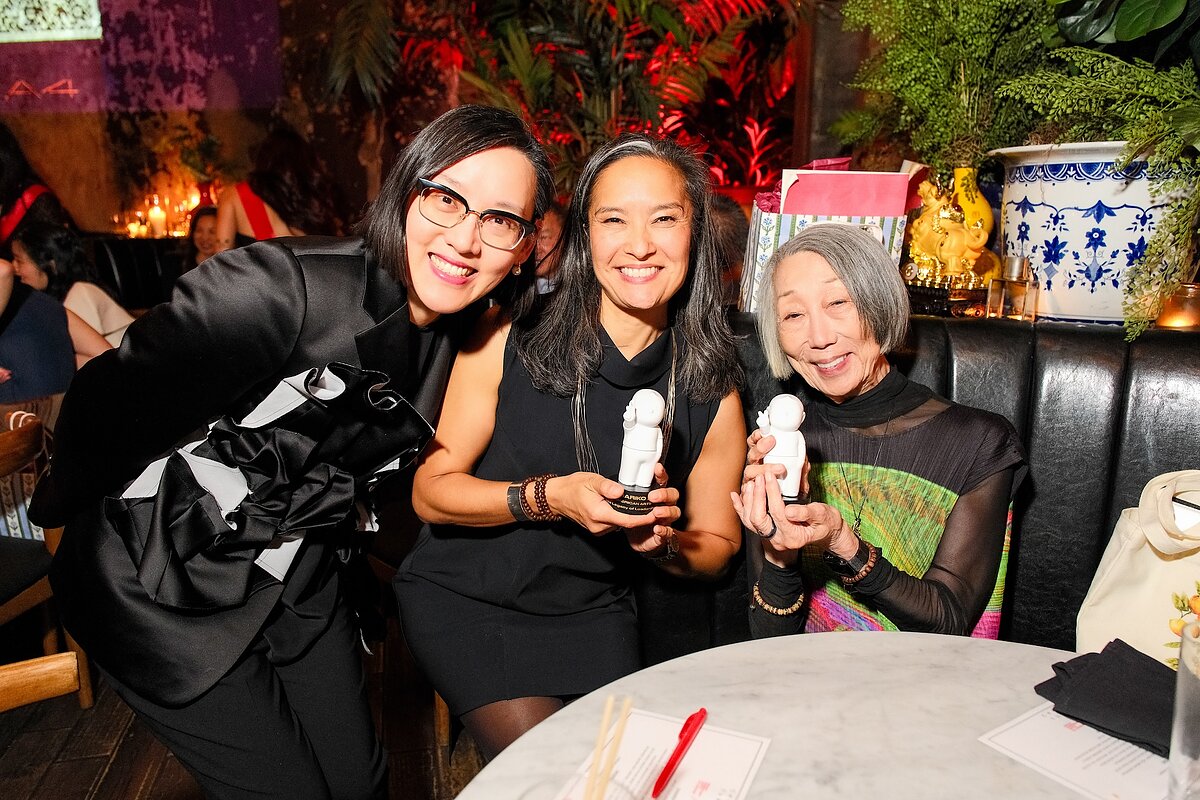
Earlier this week, both Dr. Silver and Shigekawa were honored at A4’s annual fundraiser alongside Padma Lakshmi and Yao King. Introduced by Christine Kuan, president & executive director of Creative Capital Foundation, Dr. Silver and Shigekawa were awarded the inaugural Legacy of Leadership Award, which recognizes their extraordinary contributions to the arts.
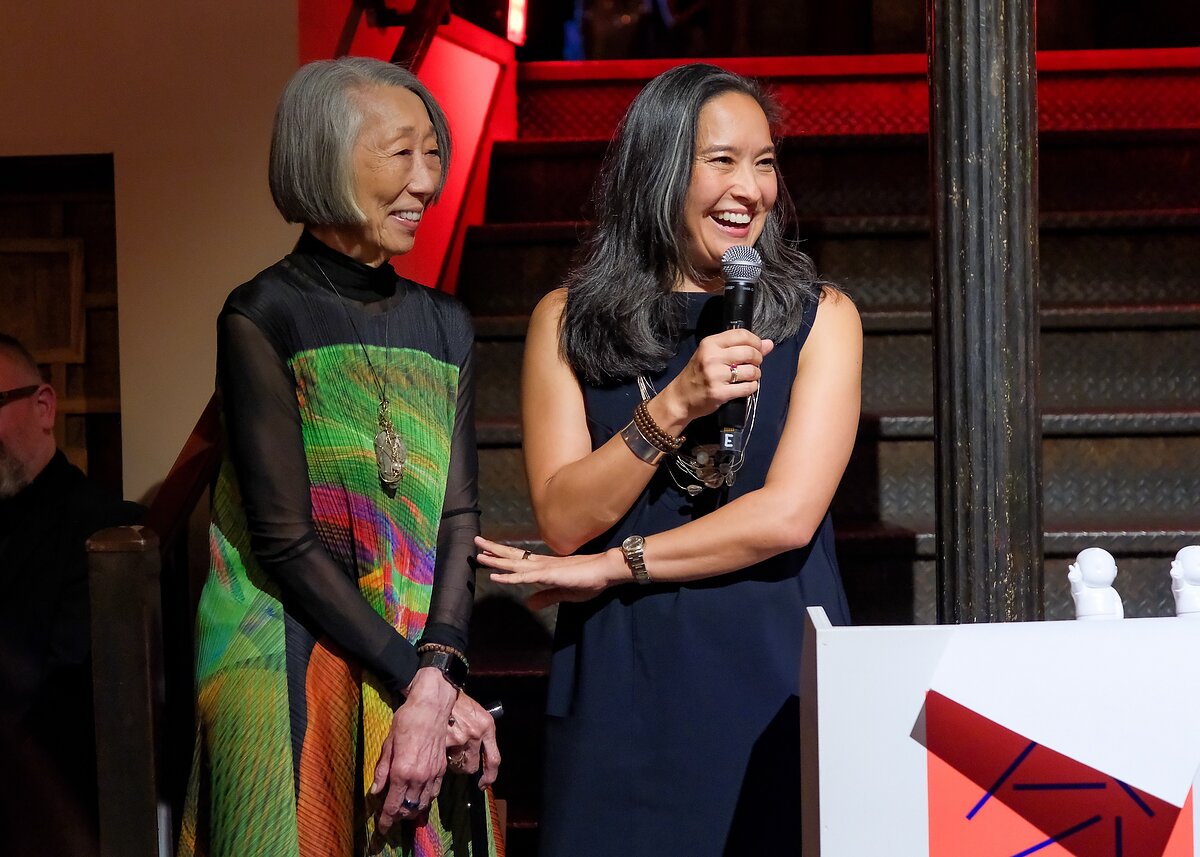
Amid a radiant audience at Chinatown’s Chinese Tuxedo, the two shared inspiring and moving remarks reflecting on the extraordinary occasion and the growing AAPI arts community. “When Mariko was growing up, like every Asian American mother, I had many wishes and hopes for her future, but I never imagined a moment as astonishing as this one!” said Shigekawa. “A moment when the two of us are standing together on a stage before a distinguished audience of creative artists and culture makers receiving this wonderful Legacy award together.”
Ahead of the event, Dr. Silver and Shigekawa spoke to the Amp’s editor, Shannon Lee, about their remarkable careers, how they think about leadership in the arts, and the future they hope to see for Asian American artists. Given the pair’s impossibly packed schedules, these conversations occurred separately and were edited together.


MS: There are so many! But first and foremost is my mother. Her engagement with the arts is so long and so deep—probably, in one way or another, anyone that’s connected to me is also connected to her.
But my time at Bennington and my connection to the Massachusetts Museum of Contemporary Art also opened up so many new avenues for me to be connected directly to artists and arts organizations and to really understand at a deeper level what it is that helps artists to thrive.
Before that, when I lived in Arizona, I was on the Arizona Commission for the Arts. Being involved really early in my career with that kind of ground view of grant making—that had an eye toward creating a real artist friendly community—definitely influenced my thinking about the role of the arts for its own sake and supporting artists for their own sake—but also for the rest of us.
JS: I’ve been truly fortunate to have had two separate but related careers: I spent 30 years (1960-1990) working in both network and independent film and television. And I spent the next 25 years working as a grantmaker in the arts at a national and international level. First as the Director of the Arts Program at the Nathan Cummings Foundation, then as an officer of the Rockefeller Foundation in the Arts and Humanities Division, and finally in the federal government as Senior Deputy Chair and Acting Chair of the National Endowment for the Arts.
My first job in television was as a secretary/researcher for primetime cultural specials at CBS Television which led to jobs at CBS News in the Public Affairs Division and at NBC on the Today Show. Network television was very different then and at CBS we travelled, with our host the American poet John Ciardi, and a 2” Quad videotape remote truck to capture America’s cultural expression in the performing and visual arts.
There were not many female producers at the national level, but when I left network television to work at National Educational Television, (the precursor to Public Television), I was lucky to be chosen as the Associate Producer for Channel 13’s New York Television Theater. We taped a new play in studio 55 of Channel 13 every three weeks with wonderful Broadway actors and musicians. The plays ranged from works by Samuel Beckett and Eugene Ionesco to emerging off-Broadway playwrights creating new work. These were the early days of Channel 13 so the budgets were very tight. The office manager would give you only one ballpoint pen and the station logo was a live owl on camera who just ruffled his feathers and blinked at you. Someone on the staff had to go in on weekends to feed the owl.
I went on to become a producer in the public television system and was honored to be part of the founding team of the Independent Television Service and the Center for Asian American Media, as well as the producer of the Ms. Magazine PBS special and series “Woman Alive,” which was a primetime national network series for, by and about women.
My last film job was at the Metropolitan Museum of Art. It was a partnership between the Met and the J. Paul Getty Trust to make American films about the visual arts as interesting as French or British or German films about art. My job was to executive produce 15 partnerships between filmmakers and artists or art experts to create experimental films. This was one of my favorite jobs, partly because I had a number one key to the Met—that’s the key that unlocks all the doors, so you could shortcut through the museum.
All that to say, I think longevity counts. If you keep expanding your experience and you make sure you get the proper show credit in the crawl at the end of the show, you will move up. Just remember that the credit isn’t always offered in the initial job conversation. If you want to move from researcher to producer you have to make sure you ask for it. That’s just a digression about progression. It was all a fabulous adventure, which almost always revolved around art and culture.
MS: I think there are the baseline elements of ensuring that artists can afford to live in a place and make work and be connected to one another. When you look back in contemporary art history and engage with communities today, so much of any kind of creative practice is also community practice.
And so ensuring that there are those places and spaces, as well as the other kinds of support that are needed to build community, is incredibly important. That, and support for individual artists, which my mother has been involved with for a long time through United States Artists and other organizations. It’s also support for institutions and infrastructure that make the arts possible.
MS: [Laughs] I’m not sure I think very much about legacy at this time. My mom can answer that one. That having been said, here at Lincoln Center, we are in the process of rethinking the campus. Originally, it was built to face what was the wealthy east side and to cut off the poor, non-white west side of the campus. The Lincoln Center was conceived of in large part by Robert Moses as part of his “slum clearance initiative.” In that process, a vibrant, artistic neighborhood was razed in order to build Lincoln Center.
We have been engaged in a multi-year body of work together with the community—as well as those who used to live in the community—to bring that incredible history to the forefront of other people’s consciousness, but also to who we are and what we do.
There are many manifestations of that. Named after the old neighborhood, the San Juan Hill Project will include a film commission by Stanley Nelson. On September 28th we are going to be hosting and recording for the first time a production of “Shuffle Along”, which was the first all-Black Broadway hit musical by Flournoy Miller and Aubrey Lyles, with music and lyrics by Eubie Blake and Noble Sissle.
The most tangible manifestation of the San Juan Hill initiative will be the creation of the new Service New Yorkers Foundation Gardens at Lincoln Center. We are taking down the wall that separates us from the west side and building an 1800-person amphitheater and nearly four-acre park. Somebody came up to me from the neighborhood at the groundbreaking for that project and said, “You know, your children and your children’s children will know that you built this park.” I had never really thought about it that way but that’s quite an extraordinary thing to have the incredible privilege and honor to be able to do.
I think if my own legacy is helping other people’s incredible creativity and artistry shine and be known, that is a legacy in and of itself. I think that’s a lot of what my mother has done too. Sometimes I say I’m the administrator’s administrator—my job is to make it possible.
JS: To me, leadership and legacy mean service—to try to find answers to the question of why the arts matter. Why do we value the arts? Who are the arts for? And to answer that question in the most holistic and inclusive way possible.
To give you an example, one of the programs we launched is called Blue Star Museums. A blue star means you have active duty military in your family. Very early on in the Obama administration, Michelle Obama asked every federal agency to see what they could do for active duty military—especially their families.
When she sent out that call, I reached out to a former colleague from the Nathan Cummings Foundation. Her name is Kathy Roth Douquet and she is the military wife who founded an organization called Blue Star Families to help families handle the challenges of life as an active duty military family-everything from helping spouses find a job to finding housing when you have to move so often, to access to childcare. I asked what she thought might be helpful and she said that military families often can’t take their children to museums because they are too expensive. I said suppose they were free?
She said how could we do that. And I replied, why don’t we just ask them. So the NEA called our friends and colleagues who were museum leaders, many of whom immediately said yes and we reached out through AAM and other associations to the art museums, natural history museums, children’s museums, and historic home museum sites and asked if they might join our program, Blue Star Museums, and offer free admission to active duty military and their families every summer. Now there are more than 2,000 museums and historic homes from coast to coast that participate in this program and more than eight million military family members have been welcomed as friends by American museums.
MS: My mother is a pretty extraordinary and trenchant observer of people; as her only child, I often felt very observed. [Laughs] That having been said, it has all been to my benefit. When I take a new job, I’ll often tell my team that my love language is constructive criticism. They don’t believe me, but then they meet my mother and they understand that really is true. The way we’re forged at home has so much to do with the way that we move in the world.
The thing that makes my mother such a trenchant observer is she is really an extraordinary listener and is deeply curious about the world—about how it works, and about other people. I don’t think I know anybody—except maybe journalists—who ask as many questions as she does. She genuinely wants to know what is underneath. That enables her to see patterns and see connections where other people don’t. I think that is definitely one of the things that I learned by watching and listening to and being listened to by her.
JS: I think one of Mariko’s great assets is that she’s cheerful. You can throw any challenge at her and she will take it on seriously. And cheerfully! That has really served her well, speaking as her mother.
No task is too small or unworthy. She’ll take on the whole thing, from getting the Xerox paper to grabbing you a coffee to getting your grant to build the theater outside Lincoln Center. She genuinely cares about and is interested in people. I think that’s a great asset.
The other thing is, she’s not afraid so when doors open to unknown experiences in her life she almost always walks through. That’s always happened. She has a really wide range of interests and a lot of curiosity, and she’s confident enough to step into any situation and try to make it work. She’s always been that way.
MS: There are certainly barriers that still remain. I can speak more directly to the Asian American experience rather than the Pacific Islander experience—I think it’s important to acknowledge that while we are hopefully in coalition, the experiences are not the same.
My mother will talk to you about this, but I grew up with the knowledge before I can remember that my mother and my uncle and my grandmother were incarcerated during World War II because they were of Japanese ancestry. My mother, my uncle, and my grandparents were all born here; not that those who have immigrated should be incarcerated either. But I say that to emphasize that incarceration had nothing to do with nationality—it was all about race.
Knowing that absolutely formed my view and understanding of the future that we need to try to create. When my mother started her career, she was contending with the intersection of being both Asian American and a woman. So I think it’s hard in some ways to look at her career and know which of the things were thrown in her path because she’s a woman or because she’s Asian American.
It certainly has changed dramatically from the time when she was a child and I have benefited from those changes, which only came through hard fighting. I think it’s incumbent on us to remember that those changes only come through hard fighting and to remember that the way to win is through solidarity—not division. If we let prejudice thrive against one “minority,” it leaves the seeds in the ground for prejudice against everyone.
JS: It has shifted dramatically! My arc is from 1954, when I graduated high school, to now. That’s a pretty big span of years. When I was in college, there were very few novels by Asian American authors. That’s why Maxine Hong Kingston’s The Woman Warrior was so huge when it came out. The fact that it wasn’t just written by an Asian American, but an Asian American woman was astonishing.
Now we have a wonderful ocean of writers! And in film, there’s been a huge shift in who makes up the Academy. You have so many more Asian and Pacific Islanders represented. And look at all the listings at Asian American Arts Alliance! Think about doing that in 1954! You couldn’t! The culture wasn’t there yet. My grandparents came to the US from Japan in the 1890s. It took many, many generations of Asian Americans to step up.
To answer your question about barriers, one is the model minority myth. For one, it reinforces conformity which doesn’t lead to creativity. But it also obscures the fact that one in two Asian American kids live in or on the edge of poverty in New York City. That’s according to Apex for Youth, an amazing NYC organization working to support AAPI youth. But ultimately, to me, the barriers can be as much in your mind as they are in the world and I think A4 is doing an important job in knocking down the barriers of what’s possible.
JS: I think we have a way to go before we even achieve sustained visibility. If you were to go on the street and ask passersby about an AAPI play they’d want to see or what AAPI book they’ve read, most people won’t have an answer. In fact, if you bring your children to visit the Smithsonian you will find that, except for the occasional temporary exhibition, we are basically invisible.
So I think visibility is still the key and the fact that it’s central to your mission is great—I wouldn’t for a minute take any juice away from that.
PS: I am hoping that the current effort to establish a permanent gallery at the Smithsonian to represent the complex Asian American experience and capture the people, events, ideas and achievements that have contributed to shaping our nation, can move forward quickly and I think this is an opportunity where philanthropy can play a significant role.
MS: I think every community needs investment in community building. Sometimes you have some extraordinary leaders who, through sheer force of will, build community—but sustained community requires investment.
We all carry with us so many different identities that being able to have multiple communities is an essential part of being human. That’s not just true for AAPI people or for artists. We all have so many sides to us—the beauty of being human is that we can be so many things. It’s incumbent on us all to invest in that beauty of being human and not to forget that.