Unpacking Asian/American Athleticism at “Legends”
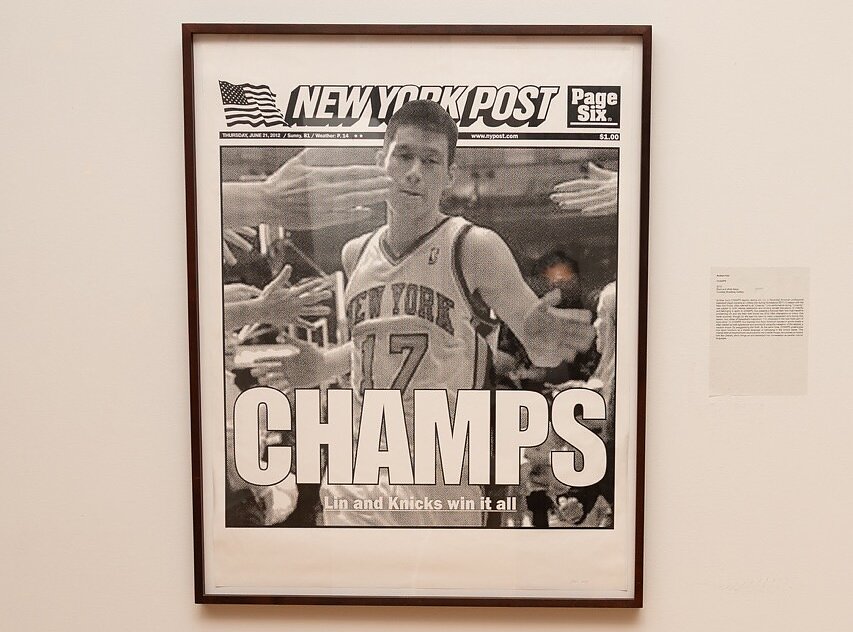
In the last 30 years, Asian American athletes like Michelle Kwon, Kristi Yamaguchi, Tiger Woods, and Jeremy Lin have become household names. More recently, athletes like Naomi Osaka and Olympic gold medalists Eileen Gu, Sunni Lee, Chloe Kim, and Alyssa Liu have joined this growing canon, adding their own nuance by spotlighting the complexities of Asian American visibility in spaces where recognition has historically been limited. At “Legends: Athleticism in Asian/American Art,” a group exhibition at the Godwin-Ternbach Museum at Queens College in Flushing (February 10—May 14, 2026), celebrated these legacies, inviting storytelling and community connection beyond the individual icon.
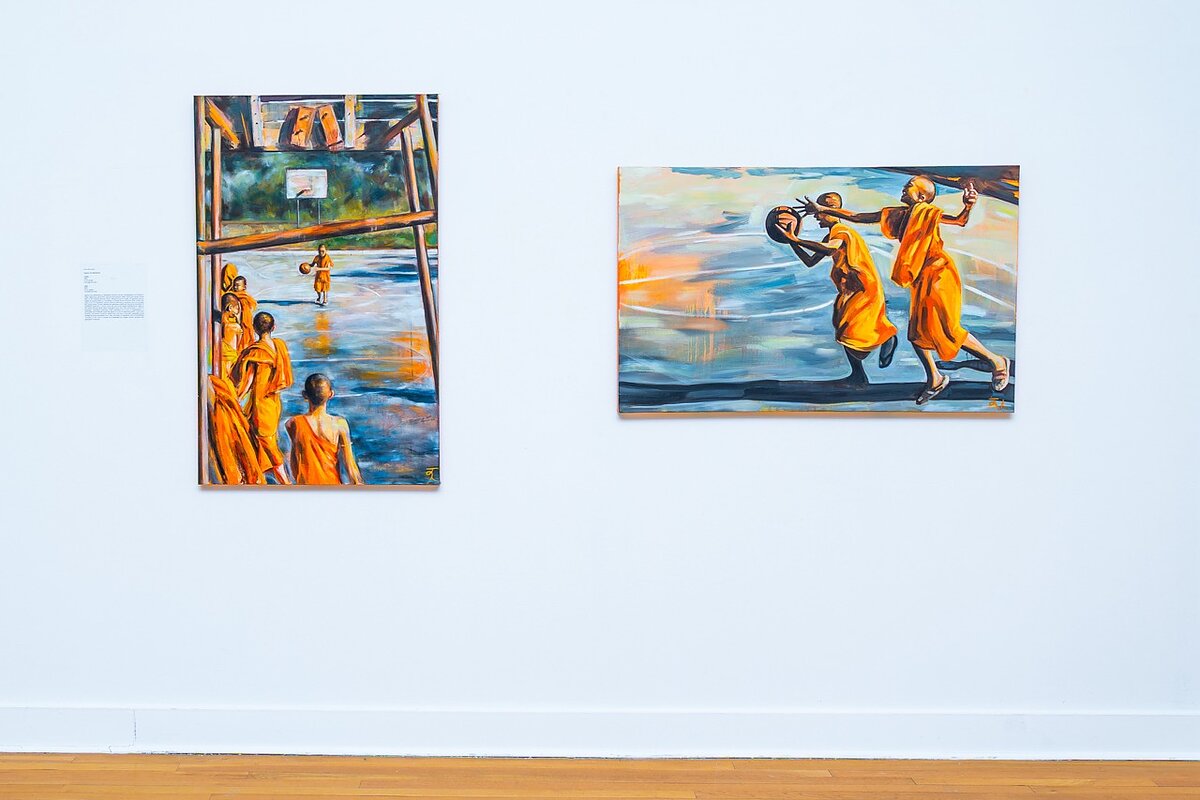
Throughout the show, the term athleticism itself became deliberately elastic, allowing for interpretations that transcend American sports and engage embodiment, cultural expression, and everyday practice, proposing a more expansive framework for what athleticism can signify within Asian/American identity.
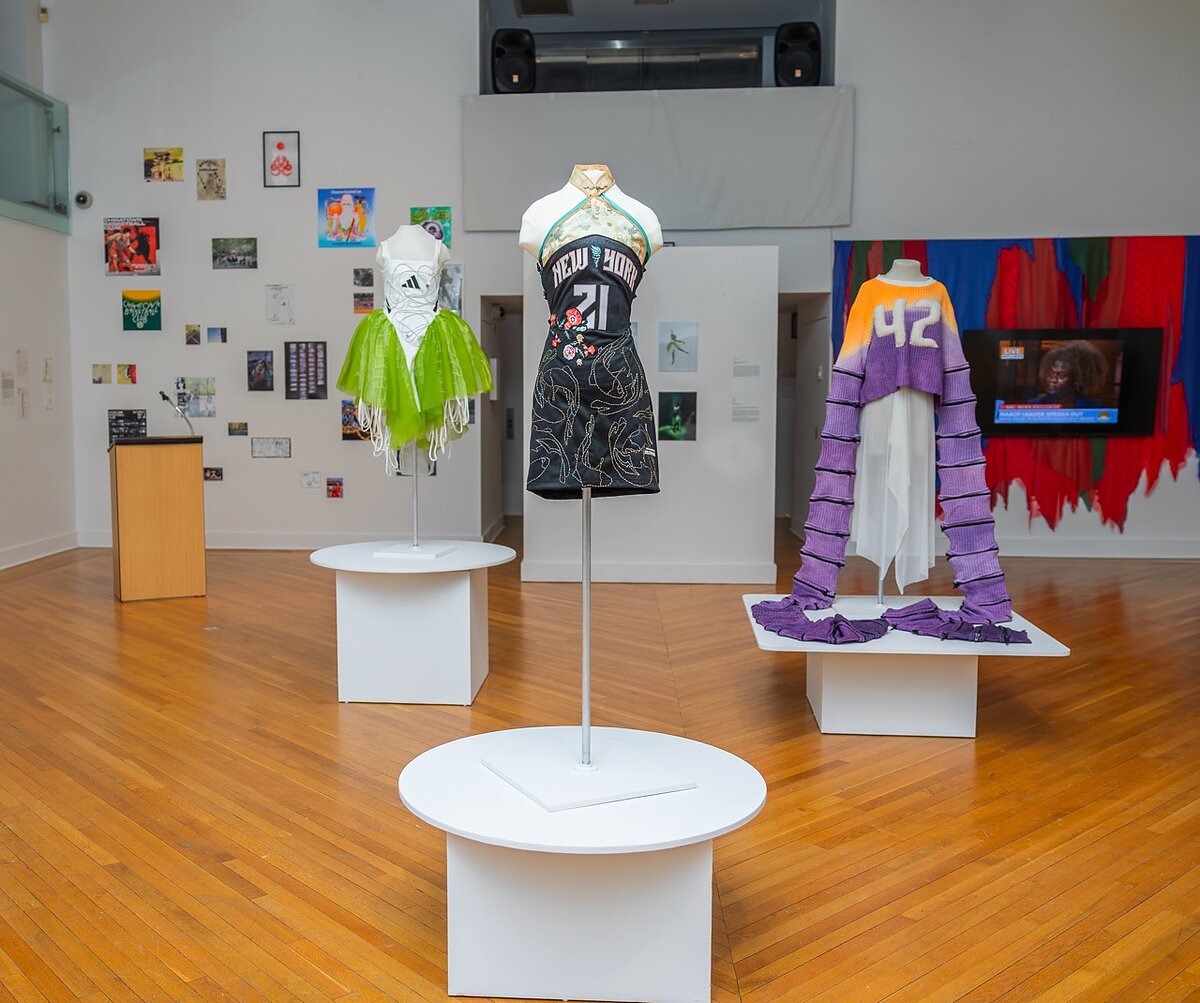
Thoughtfully curated by Jayne Cole Southard, the exhibition opened with three striking costumes by Jocelyn Hu that intersect fashion, sport, and performance, revealing athleticism as a constructed and highly visible identity. Hu’s work complicates the relationship between visibility and recognition by foregrounding the labor and vulnerability behind the spectacle of sport. In 42 Weeks (2023), Hu’s tribute to WNBA star Brittney Griner, 42 zippered sleeve sections refer both to Griner’s jersey number and the number of weeks she spent detained in Russia.
Through this costume, Hu transforms the body into a site where athletic achievement and geopolitical constraints and politics collide. The phrase “she matters” is emblazoned on the jersey, resisting the conditional visibility often afforded to female athletes, particularly those navigating racialized and national scrutiny. Rather than simply celebrating athleticism, Hu reframes it as an embodied condition shaped by political forces, aligning with the exhibition’s broader effort to expose how visibility is produced and contested.
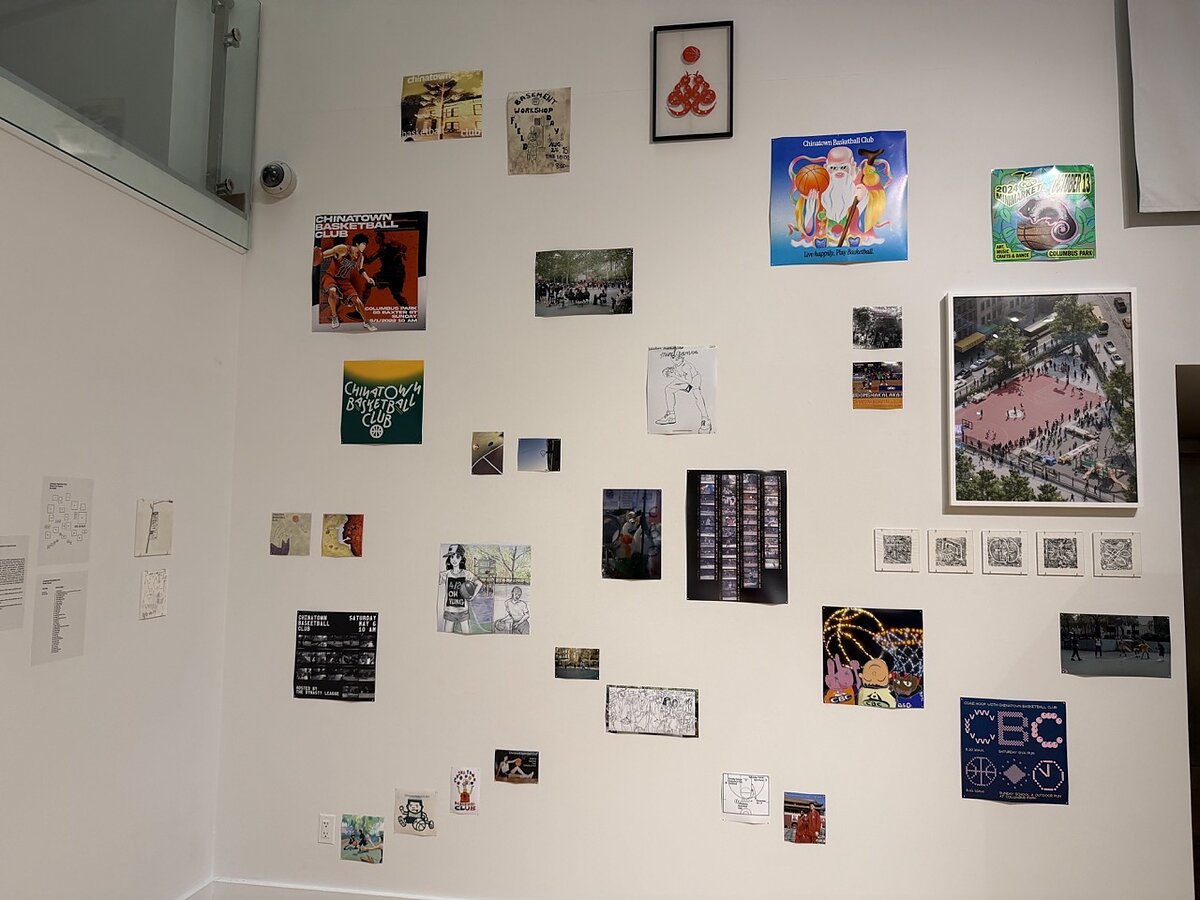
On the back wall, a series of posters, prints, illustrations, and photos of the Chinatown Basketball Club (CBC) traced what the group describes as “Immigrant Basketball" (aka positionless basketball), in which players “float around, blend in, fill in, and take on whatever job is necessary.” Founded by Lu Zhang and Herb Tam in 2019-2025, CBC offers a compelling counterpoint to the mythology of the singular sports hero by foregrounding adaptability, interdependence, and collective movement within an Asian American community that has historically navigated marginalization in sport.
The collection of posters by multiple contributing artists further questions authorship as a fixed or individual act, mirroring the fluid, collaborative ethos of the game itself. In this context, athleticism is not defined by individual mastery or recognition but by responsiveness and participation, reframing it as a shared social practice rather than a spectacle of individual achievement. By centering this model of play, the installation reinforced the exhibition’s broader argument that Asian/Asian American visibility and value are produced through collective presence, not just through the elevation of iconic figures.
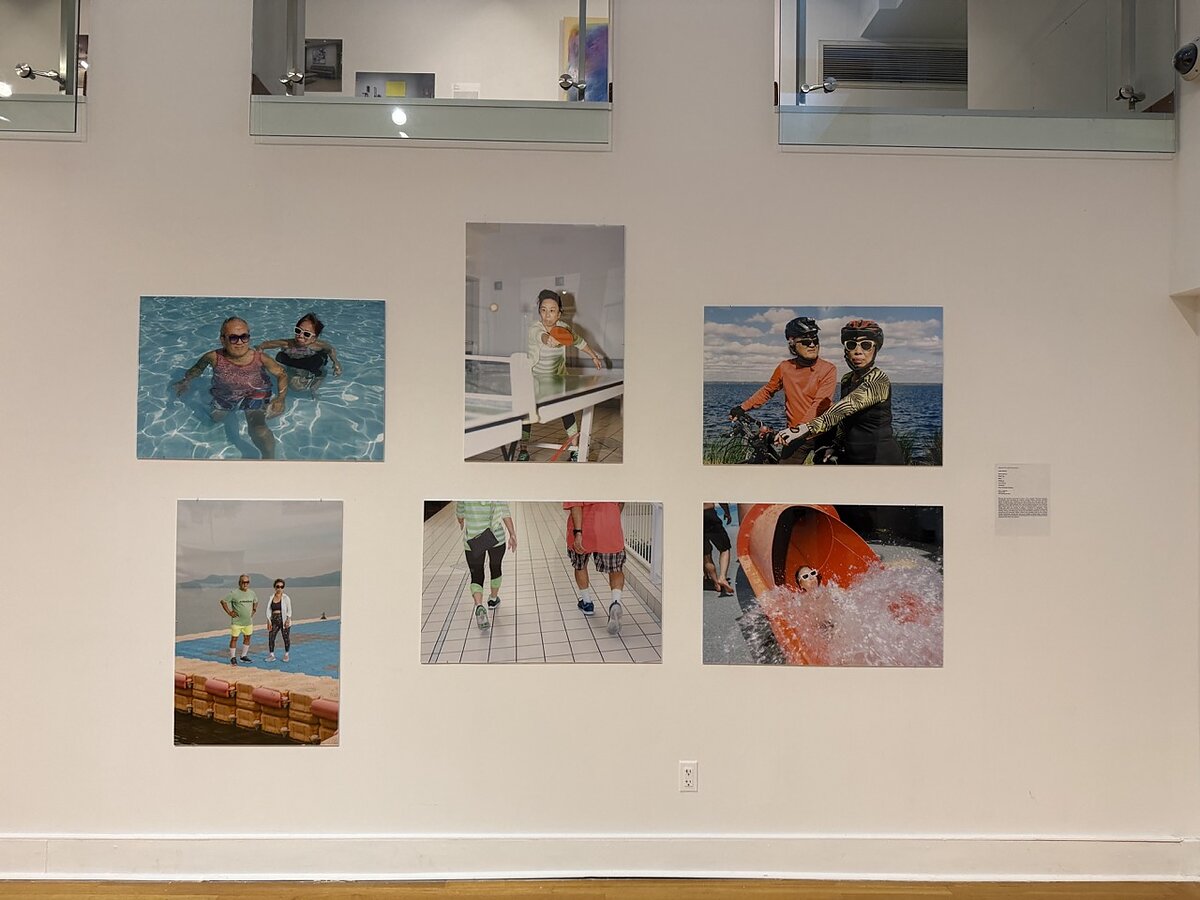
Greeting us on the first floor, Lanna Apisukh’s “Permanent Vacation” (2019-ongoing) photo series chronicles her parents’ vibrant athleticism in retirement, from table tennis to cycling and swimming, reminding us that athletic ability is not just for the young.
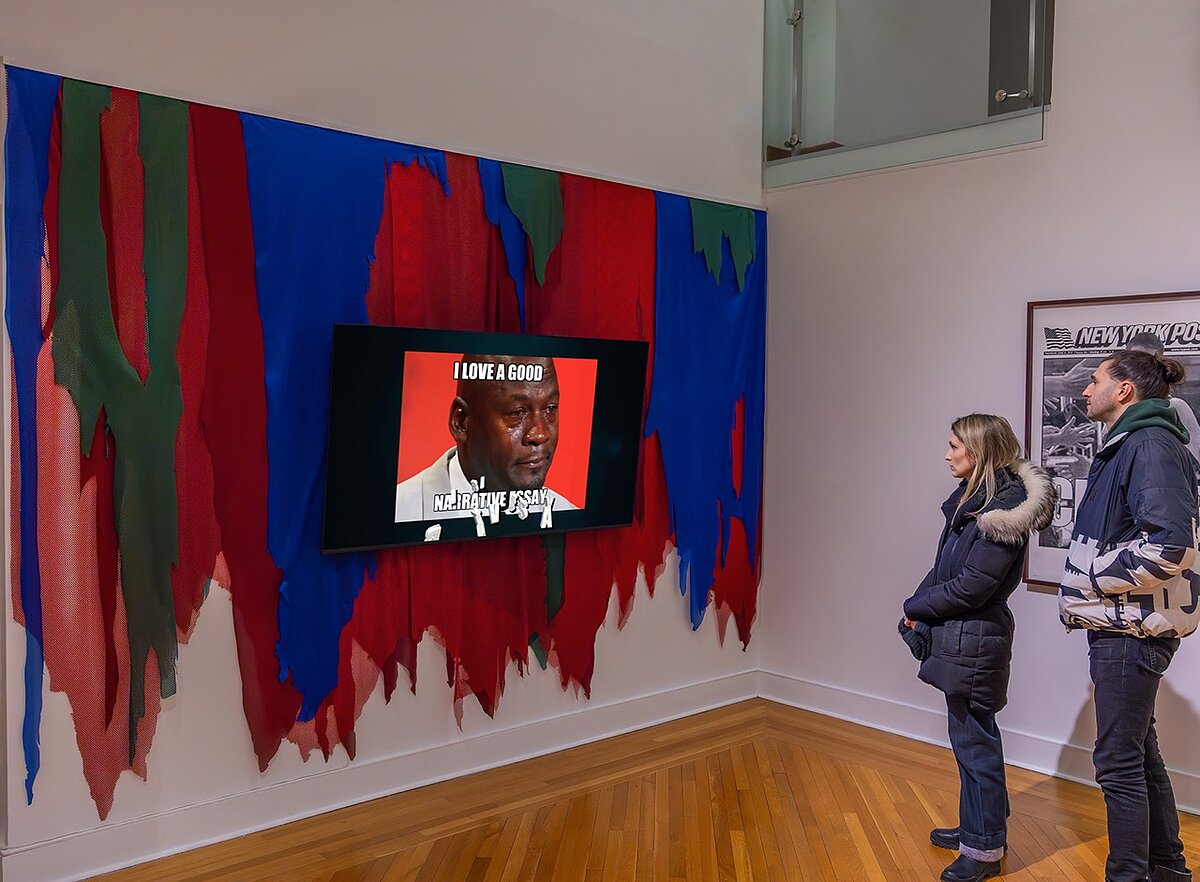
Video was featured throughout the exhibition, including Astria Suparak and Brett Kashmere’s Jordan Wept (2024), installed against Suparak’s Nothing but Nets (2026). Composed of looping iterations of the widely circulated meme of Michael Jordan crying, Jordan Wept underscores how athletic icons are endlessly reproduced through spectatorship and digital culture. Originating from a photograph of Jordan taken during his 2009 Basketball Hall of Fame induction, the image’s afterlife as a meme demonstrates how meaning detaches from the original context and is re-authored by the public. Within the exhibition, this work sharpened the argument that visibility is not simply earned but constructed—circulated, distorted, and sustained through media systems that both elevate and diminish their subjects. In doing so, the exhibition also gestured toward Asian/American athletes’ precarious visibility, showing how public perception, media narratives, and cultural stereotypes shape which bodies are recognized, celebrated, or overlooked in sport and society.
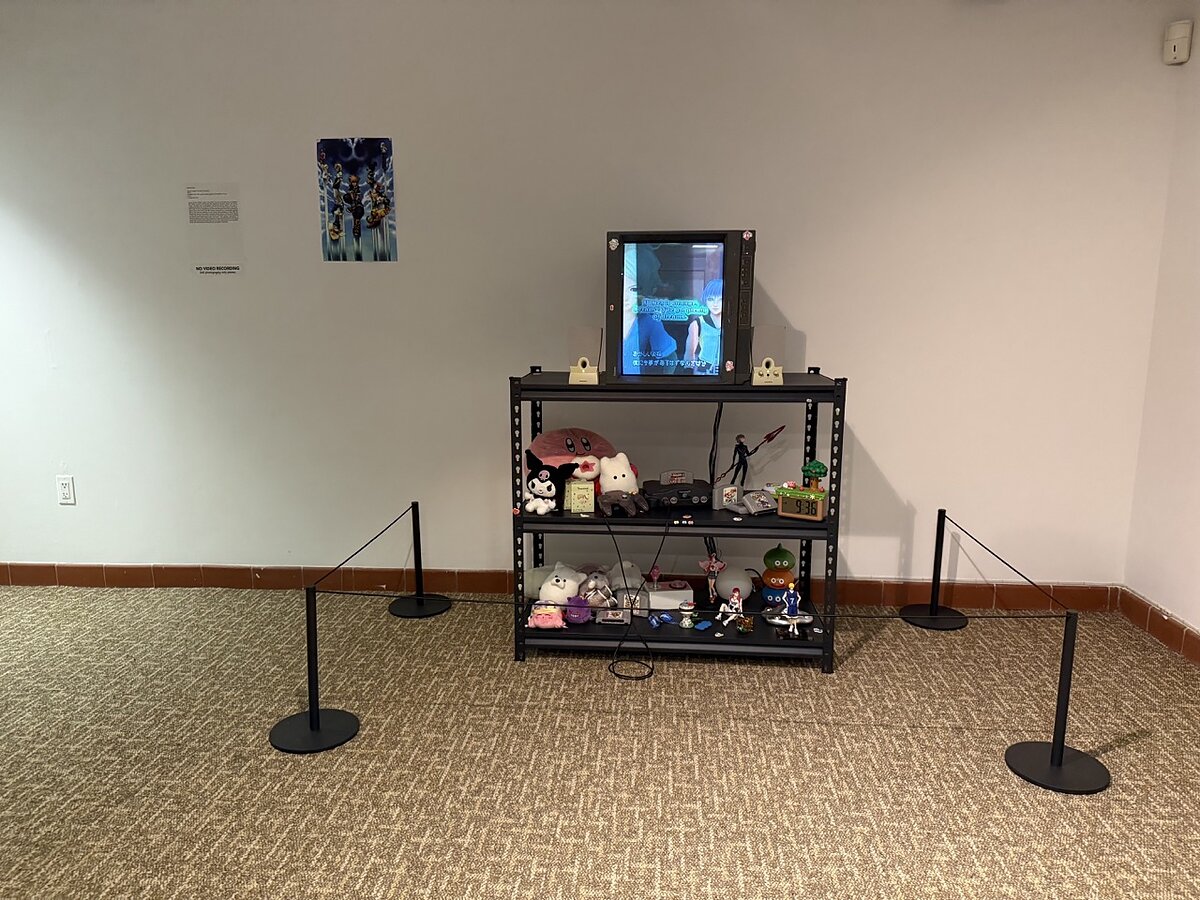
Upstairs, Johann Yamin’s video installation, esports, Angels, and other Tomodachi, (2020-2021) brought together game consoles, gaming memorabilia, and toys to trace the history of Christian missionaries in the 20th century and their role in introducing amateur sports to Asian countries along with contemporary international gaming culture. The monitor was turned on its side, like a portrait, reorienting the viewer as the work questions how capitalism, media, and cultural memory shape new forms of global competition.
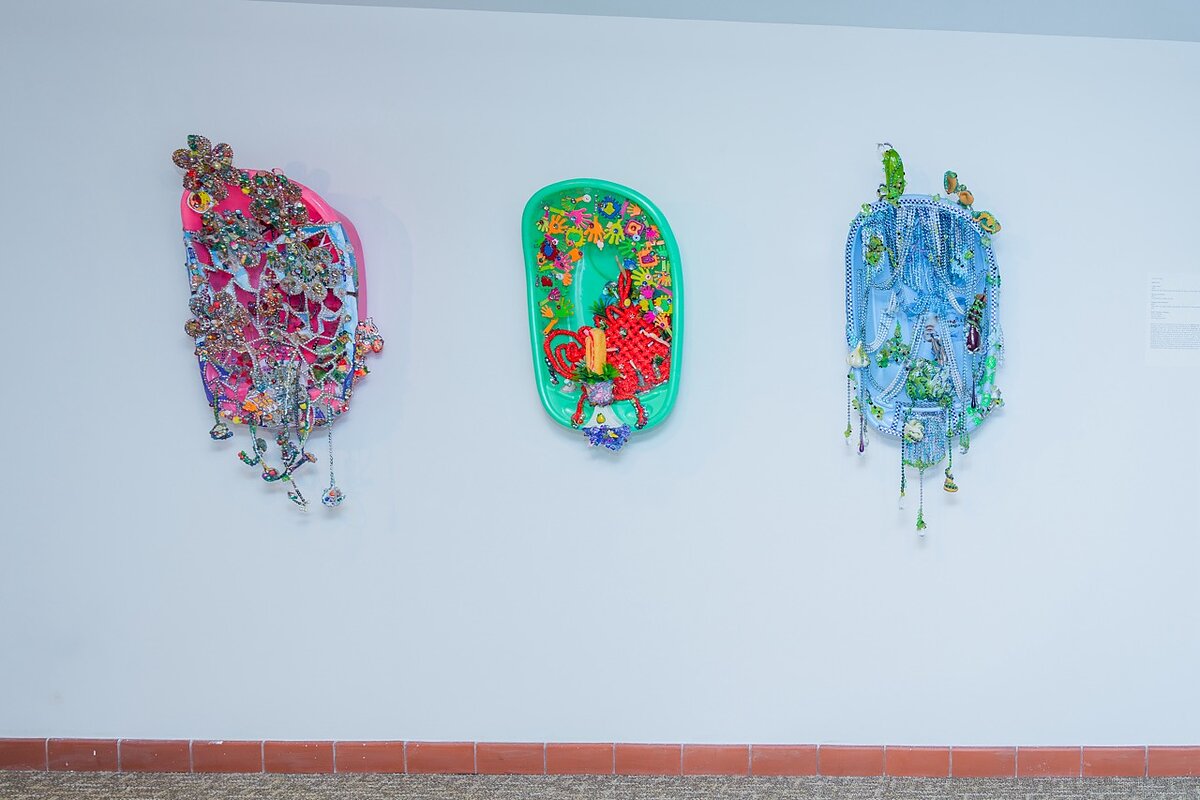
Adjacent to Yamin’s installation was Alison Kuo’s striking sculpture series, “From Trophies or Shrines” (2019-ongoing). A delightful surprise, these ostensible trophies consist of colorful plastic baby bathtubs assembled and baroquely adorned with beads, acrylic gemstones, ornaments, and other materials commonly found in dollar stores. Incorporating remnants of the artist’s failed works, the sculptures become an archive of process and persistence. As curator Cole Southard notes, “Kuo’s assemblages function as material evidence of embodied effort and time, revealing how both athletes and artists construct their own histories of achievement.”
Maia Chao’s photo documentation, A Picture of Health, (2022) presents her intervention of installing primary-colored minimalist paintings in vacated medical offices, redirecting decorative strategies meant to produce ease for patients. Bringing the exhibition full circle, the series foregrounds the stress and endurance placed on bodies by focusing on medical spaces without performers.
Through these works, “Legends” revealed visibility not as a natural outcome of achievement but as something constructed through media, politics, and public perception. The exhibition ultimately challenged viewers to reconsider the cultural forces that determine who is seen and how they are recognized.
—Chanika Svetvilas is an interdisciplinary artist based in Princeton Junction, NJ. Her writing has been published in Disability Studies Quarterly, Wordgathering, and ACES magazine. She has presented her research at the College Art Association Conference, the Society for Disability Studies Annual Conference, Pacific Rim Conference on Disability, and the Inter-Asia Cultural Studies Conference.