Art and Chinamaxxing: Stephanie H. Shih and Commodity Fetish
This essay is one of a two-part series that considers the viral trend of Chinamaxxing through the work of contemporary AAPI artists Astria Suparak and Stephanie H. Shih. Read the second essay, by artist and creative technologist Anna Zhang, here.
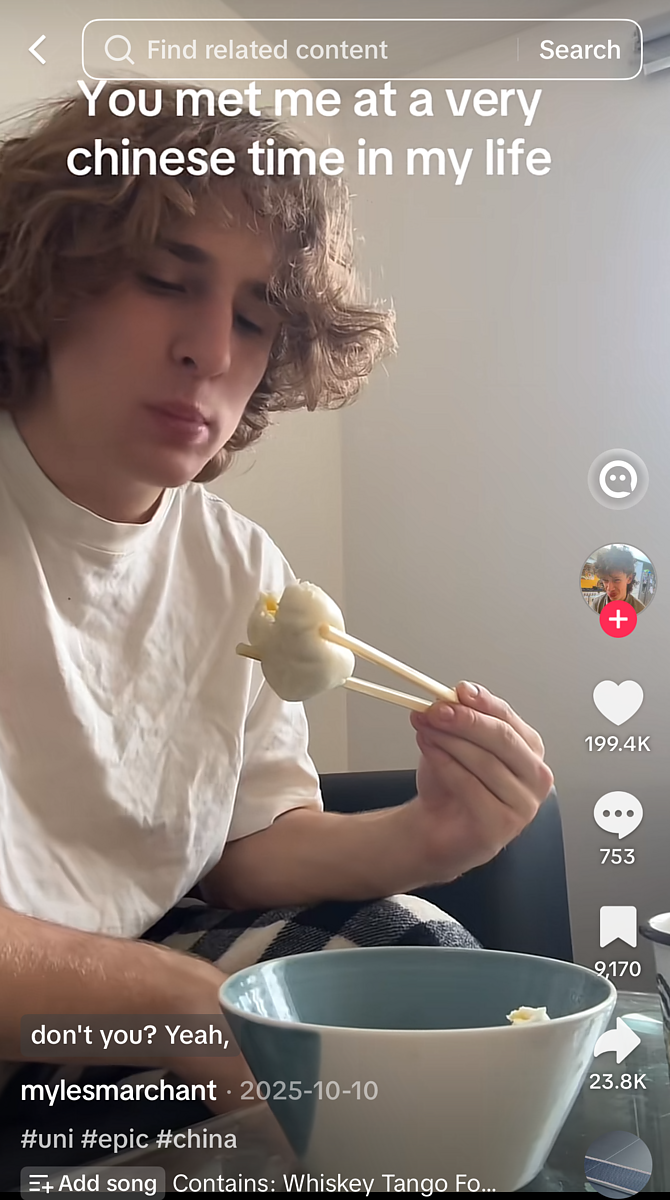
According to social media, drinking warm water, wearing slippers indoors, or consuming herbal teas are all indicators of “becoming Chinese”—“Chinamaxxing”, in TikTok parlance. In this viral trend, social media influencers in the United States adopt “Chinese” lifestyle aesthetics, declaring they are in “a very Chinese time” in their lives.
It is not insignificant that this trend is emerging in 2026, when much of American identity has become affiliated with deportations, war, tariffs, and the general loss of soft power in the arena of international politics. Within this context, the allure of “becoming Chinese” presents itself, however incorrectly, as an antithesis to being American. It is highlighted not by a wave of cultural appreciation but by positioning Chinese identity as an opposite or the “other” in relation to an American or Western identity. As some Americans attempt to distance themselves from and de-identify with the shame of Americanness in the current political moment, imaginary visions of a utopian East have begun to circulate online, producing a strange, contemporary wave of Orientalism.
Orientalism, as identified by cultural critic Edward Said, refers to the Western tradition of representing the cultures of the Middle East, North Africa, and Asia through a lens that emphasizes exoticism, difference, and inferiority. Said argued that these representations were not neutral descriptions but part of a broader system of knowledge tied to colonial power.
“Orientalism can be discussed and analyzed as the corporate institution for dealing with the Orient,” he writes. “Dealing with it by making statements about it, authorizing views of it, describing it, by teaching it, settling it, ruling over it: In short, Orientalism as a Western style for dominating, restructuring, and having authority over the Orient.” Thus, Orientalism functions as a mechanism of cultural domination, allowing Europeans not only to appropriate Eastern cultural practices but also to redefine and control them in ways that reinforce Western authority and superiority.
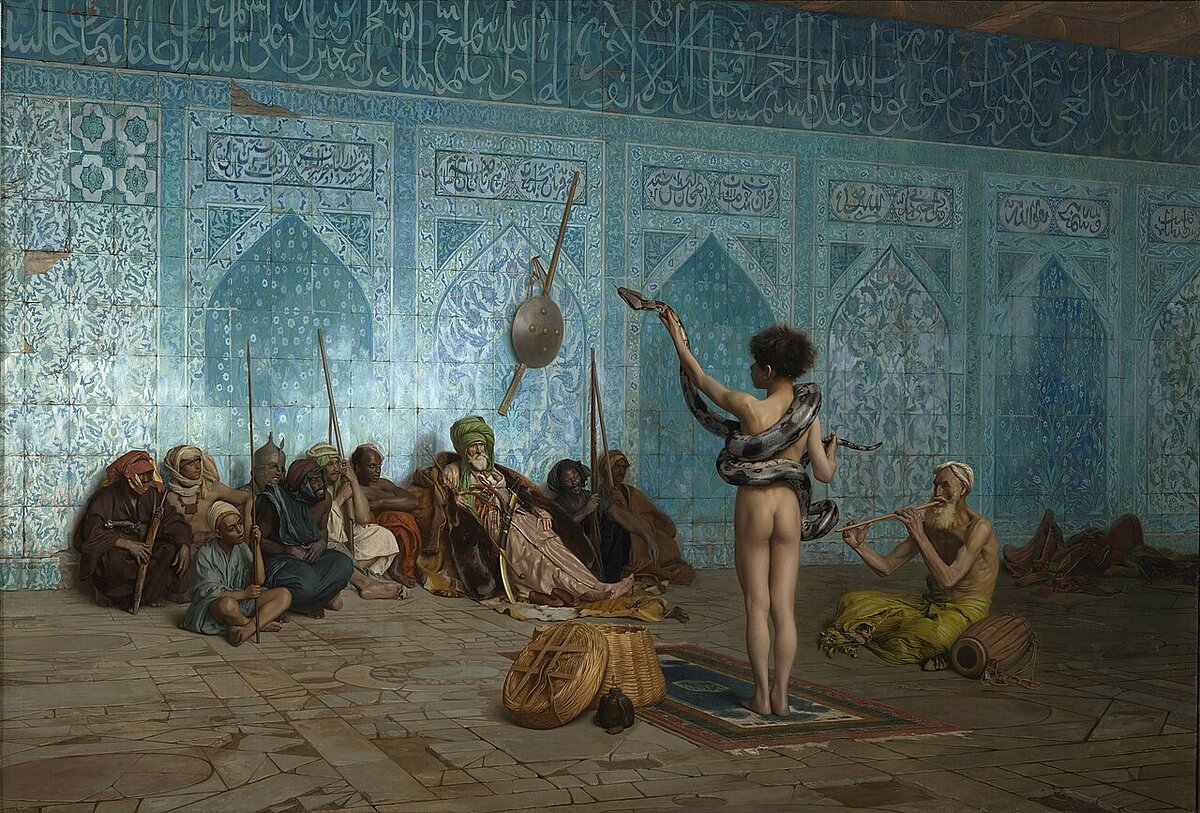
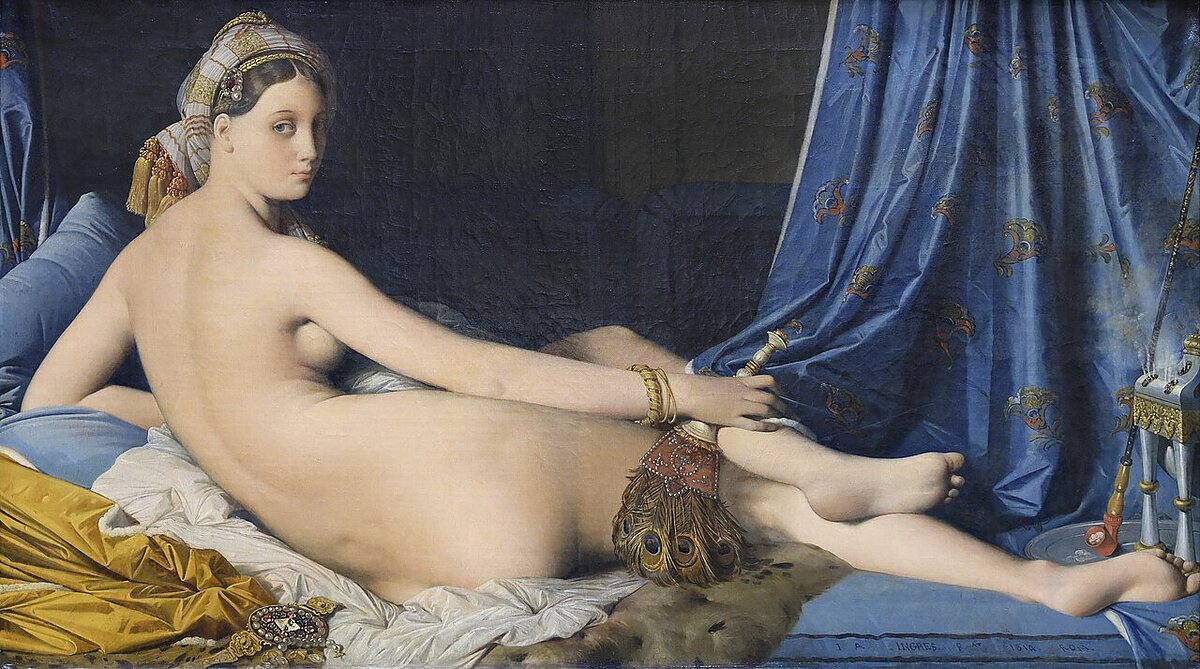
In art history, Orientalism often describes 19th-century European paintings depicting imagined or dramatized scenes from regions that Western artists associated with the Orient, or cultures existing to the East of Europe. Artists such as Jean‑Auguste‑Dominique Ingres and Jean‑Léon Gérôme created works that presented stylized visions of Middle Eastern and North African life. Ingres’s Grande Odalisque (1814) portrays an idealized harem figure, adorned with jewels, a turban, and reclining in a sensuous pose with a hookah nearby. Gérôme’s Snake Charmer (c. 1879) similarly depicts a young performer in an ornate interior surrounded by men dressed in clothes that come from a myriad of different cultures.
For many at the time, these depictions were the only portal into the neighboring continent of Asia. The images often relied on stereotypes and generalized depictions that flattened the regions they portrayed. In this sense, Orientalist imagery contributed to a broader cultural framework that positioned these societies as objects of curiosity, study, and inferiority, reinforcing narratives that accompanied European imperial expansion and economic control. Travel, made possible through growing globalization and imperial efforts, gave way to artists constructing an imagined Orient that reflected European fantasies more than the realities of the cultures being depicted.
The Orient is an aesthetic without specificity. The viral behaviors associated with Chinamaxxing have no intentions to root themselves in any specific cultural practice. The trend generalizes lifestyle habits that seem foreign to many Americans–exotic or strange even. In doing so, being Chinese becomes homogenized with every other Asian culture. Rather than appreciation or even appropriation, it becomes aestheticized. It is not specifically Chinese culture that people want but retaining the privileges of whiteness without the indictment or guilt of the American position in the international arena.




These performances of Asian culture are merely a simulacrum, but for centuries, Asian artists have been asked to represent the “Asian-ness” of their identity in their work–forced, explicitly and implicitly, to produce work representative of their racial trauma for the consumption of Western audiences.
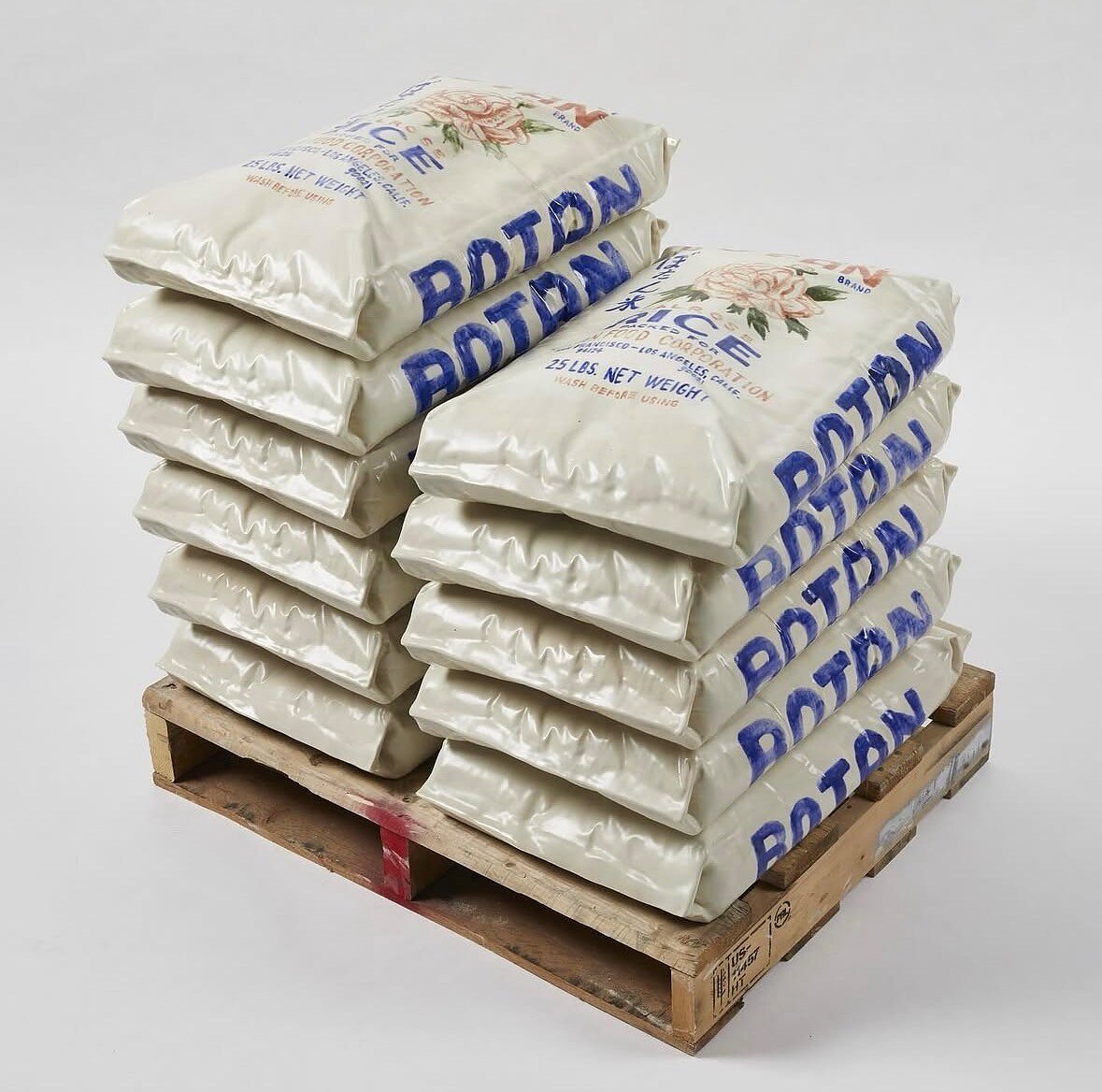
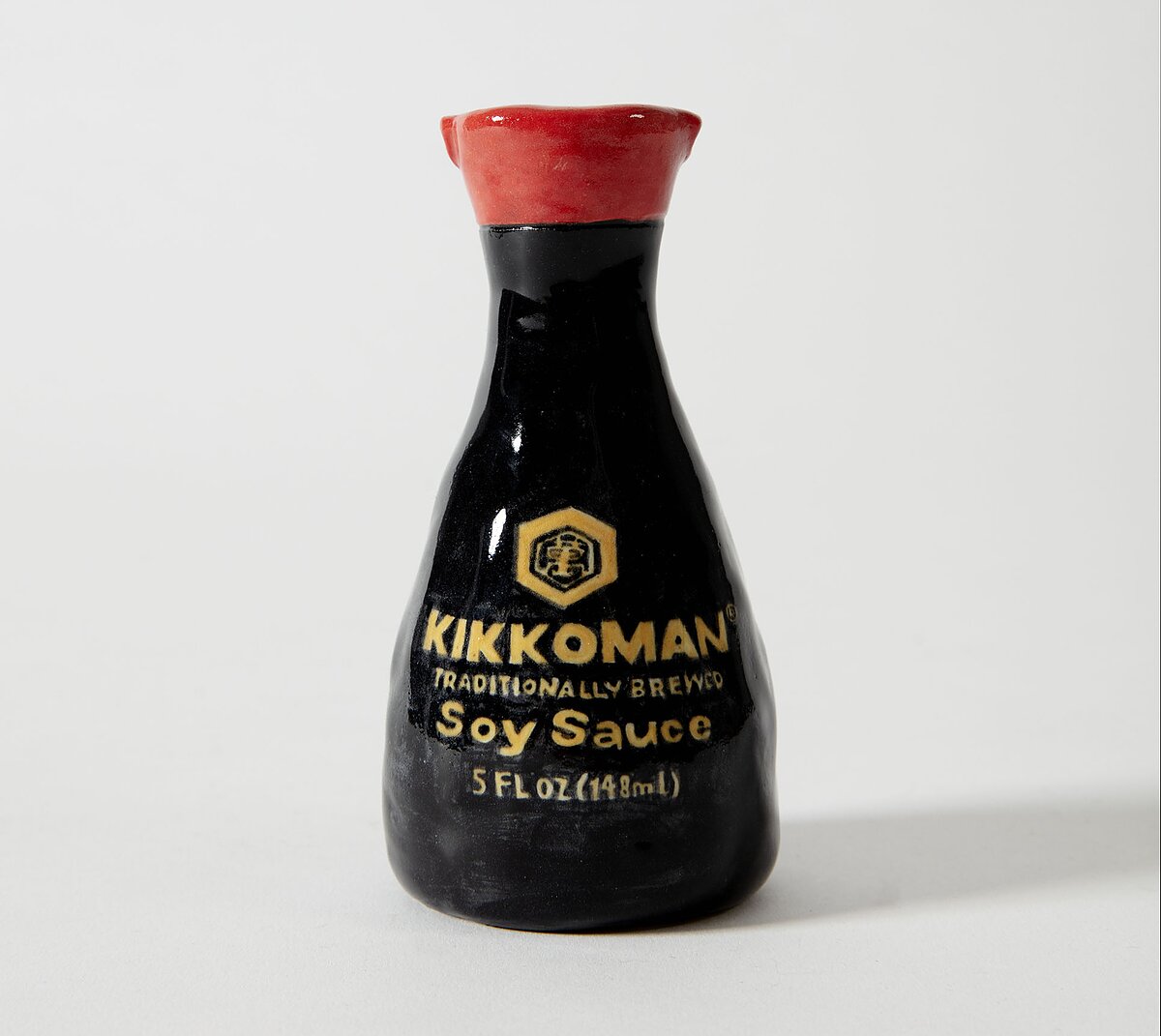
In turn, artists have also confronted Oriental aesthetics and their appropriation. Brooklyn-based artist Stephanie H. Shih addresses Orientalism through the reproduction of everyday Asian grocery goods. From Kikkoman-brand soy sauce to Botan Calrose rice, Shih reconstructs life size ceramics of these household Asian American staples, often modeling them by hand and meticulously painting the labels and packaging details. These banal items, often taken for granted, are transformed into fragile, detailed, and specific works of art. In doing so, Shih’s own labor as the artist reminds us of their political histories, globalization’s role in bringing them to the US, and the laborers that produce them today.
With the proliferation of online cooking videos and food influencers, these nuanced histories and foodways are easily forgotten or ignored in favor of “discovery.” Viral recipes are often derivative of or exacting appropriations of traditional Asian dishes—congee and mayak eggs are reduced to “brothy rice” or “soy sauce eggs,” often with a non-Asian influencer taking credit as its “inventor.” In this process, foods once marked as alien or weird are rebranded as desirable, even fashionable, once detached from their cultural context or their “Asianess.”
Through the reproduction of these foods in sculpture, Shih connects them back to their history. “My practice isn’t particularly concerned with the Western gaze. There’s only so much that can be said about ‘the stinky lunchbox,’” the artist says in reference to the trope of children from immigrant households bringing foreign foods to the American lunch table. “My work is more focused on the experience of the diaspora from within it.” In this way, Shih’s sculptures work reminds us of the cultural and historical context behind the grocery goods often taken for granted.
Botan Calrose Rice (pallet) (2023) pays homage to the popular Californian Japanese rice brand and the history of migration and labor that came with rice cultivation in the US. In the late 19th-century, Chinese migrants—many of whom had previously worked in mining during the California Gold Rush—were the primary laborers on rice farms. Despite being the catalyst for making California rice farming possible, their labor and presence was met with extreme violence and racism, eventually resulting in the 1882 Chinese Exclusion Act.
It was not long ago that the popularized markers of “being Chinese” were signified, not by warm water and slippers, but by disease. Like the racism and violence of the Chinese Exclusion Act, the rhetoric surrounding COVID-19 brought forth a surge in anti-Chinese (and Asian, more broadly) sentiment and hate crimes. Artists like Shih examine how the enduring idea of the Orient—and the homogenization, exoticization, and appropriation of Asian identities—continues to shape the experiences of those living in diaspora today. Meanwhile, the influencers that are “becoming Chinese” reproduce the pattern of an exoticized vision of the East.
As the US continues to degrade its position on the world stage, the answer to rejecting its politics and culture is not the appropriation of another’s as an aesthetic refuge. As Said identified decades ago, the construction of an imagined Orient reflects Western needs more than lived realities. In this sense, “becoming Chinese” functions less as an engagement with Chinese culture and more as a symbolic escape from the discomfort of contemporary American identity. The platforms have changed, but the dynamic remains strikingly familiar: the East becomes a canvas onto which Western anxieties, desires, and fantasies are projected.
—Julianne Miao is a curator, writer, and art historian based in Durham, North Carolina, where she serves as Curatorial Associate at the Nasher Museum of Art at Duke University. Her research examines modern and contemporary diasporic artists, with particular attention to intersections of gender, technology, and global visual culture.