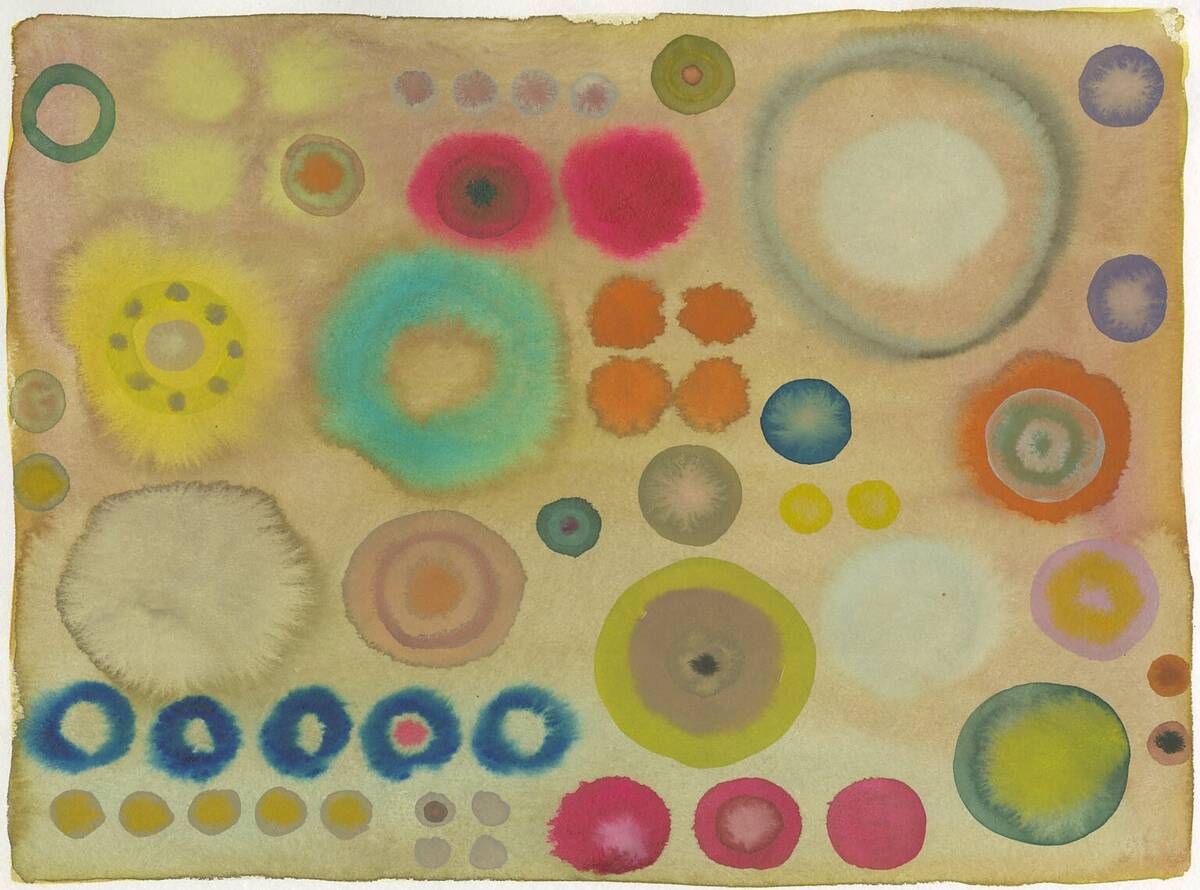
To time, to distance
10 – 5PM
Curated by Tamara Khasanova and Junho Peter Yoon
Artists: Alisa Berger, Daria Kim, Luiza Pârvu, Toma Peiu
Opening Reception: March 26, 5:00–8:00 pm
AHL Foundation is pleased to announce To time, to distance, a group exhibition featuring Alisa Berger, Daria Kim, Luiza Pârvu and Toma Peiu opening on Thursday, March 26, 2026 with a public reception from 5:00 pm to 8:00 pm and closing on Saturday, April 25, 2026. To time, to distance is co-curated by Tamara Khasanova and Junho Peter Yoon, recipients of the 2025 AHL–Andrew & Barbara Choi Family Foundation Project Grant. The exhibition will be accompanied by a series of public programs and held at the AHL Foundation gallery and across partnering venues, with a detailed schedule to be announced soon.
In To time, to distance four artists reflect on their belonging to and relationship with Koryo-saram communities (Корё-сарам, 고려사람) . Within the global Korean diaspora, Koryo-saram occupies a distinct position as an identity formed in the aftermath of the forcible deportation of Koreans living in the Russian Far East to Central Asia in 1937. Following the displacement, Koryo-saram built lives across Central Asia, primarily in Kazakhstan and Uzbekistan, developing idiosyncratic cultural practices within their diasporic contexts. To this day, some half-million Koreans who identify themselves as Koryo-saram (saram meaning “person” in Korean) live across countries that were once part of the Soviet Union and beyond, including South Korea and the United States.
The featured works straddle the personal and the historical in their own ways, opening up the exhibition to enduring conversations around the forced displacement of ethnic Koreans in the early 20th century and how its aftermath continues to shape the narratives of the Korean diaspora. If the self is inextricable from history, then it seems to dwell in the interface between the two that in turn sustains the twin questions of identity and belonging. For Berger and Kim, this tension is manifest in their concern with their Koryo-saram heritage—what is passed down or what persists from the past into their present, even if (or only) in mutated form. The filmmaker duo Pârvu and Peiu extend this further by tracing the dissemination of the Koryo-saram communities following the break-up of the Soviet Union in the 1990s and early 2000s. Together, their practices attend to the inborn paradox of carrying the weight of history and the attempt to break free from it.
The exhibition then is as much an address to a chapter in the history of displacement as it is an attempt to reckon with the pieces of its afterlives. Irreducible as they may be to one another, these fragments cast from particular angles of reflection are held by questions that continue to haunt us and must be posed each time anew. How do we cut across boundaries and borderlines of our fractured histories that have often been treated in isolation? What other senses of community are possible in the wake of recurrent dispossessions? And how do we insist on carving out spaces for political and aesthetic strategies that help us resist capture by ideological narratives? By placing these artists together in the context of the United States, To time, to distance responds to what is at once a need and a desire: a certain sensibility born out of existing in the interstices that can be reconciled neither to the conditions of an unstable present nor to an equally inscrutable future.
About the artists
Alisa Berger was born in 1987 in Makhachkala, Republic of Dagestan, and raised in Lviv, Ukraine and later Essen, Germany. She studied at KHM Academy of Media Arts Cologne, Universidad Nacional de Colombia Bogotá and Le Fresnoy – Studio national des arts contemporains. She was nominated for the Max Ophüls Prize and the Deutsche Filmakademie FIRST STEPS Award. In 2023 she received the Studio Collector Prize at Jeu de Paume. Her work has been shown at institutions such as Eye Filmmuseum, Jeu de Paume, Tokyo Metropolitan Art Museum, Centre-Wallonie-Bruxelles Paris, Kunstpalast Düsseldorf, Smithsonian’s National Museum of Asian Art, and Kindl Berlin, as well as at film festivals including Berlinale, IDFA, CPH:DOX, and Hot Docs, among others. From 2018 to 2022, she lived in Tokyo and studied Butoh performance.
Daria Kim is a multidisciplinary artist born in Tashkent, Uzbekistan, living and working in Berlin. Her practice spans performance, sculpture, video, installation, sound, painting, and drawing, and is grounded in material experimentation, embodied memory, and diasporic histories. Trained initially in painting, she continues to work with charcoal and watercolour, while in sculpture she develops unconventional, concept-driven materials and processes. Daria has exhibited internationally, including at KW Institute for Contemporary Art, documenta fifteen as part of the DAVRA collective, and the Bukhara Biennial. She is currently completing her MFA at Berlin University of the Arts.
Luiza Pârvu and Toma Peiu produce film, installation and scholarship. Their work looks at memory, migrant imaginaries, post-socialist transformation and environmental precarity, centering livelihoods on the fringes of society, and seeking to trace present-day reverberations of histories from the past. Their work has been presented in venues worldwide, including film festivals, galleries, classrooms, and community centers. Pârvu and Peiu have produced several installations informed by ethnographic research and documentary work in Central Asia or Eurasian diasporas in the US, including Caution: Once Upon a Time, a River / Once Upon a Time, a Sea (2025), 7 Scenes from a Neighborhood Cafe (2018), Migrant Water (2018) and The Sea Was Here (2019); and are currently in post-production with their feature documentary film How Come We Ended Up Here?, a 16mm poetic journey across post-pandemic New York City, led by an oral history of the Korean Central Asian diaspora. They make work through the Bucharest-based production company Root Films.
About the curators
Tamara Khasanova is an independent curator, researcher, and writer based in Brooklyn, New York, originally from Ukraine and Uzbekistan. She was a 2024–25 Helena Rubinstein Curatorial Fellow in the Whitney Museum of American Art’s Independent Study Program (ISP) and holds an MA degree in Curatorial Practice from the School of Visual Arts. Her research and curatorial work center emergent aesthetics, pedagogical and discursive practices, and forms of collective knowledge production, oriented toward questions of language, ecology, nuclear legacies, and colonial histories. She has curated exhibitions, organized screenings, lectured, and contributed to projects across cultural, publishing, and educational institutions including e-flux, Protocinema, DAVRA Curatorial Lab, White Columns, Minneapolis College of Art and Design, The Clark Art Institute, the Queens Museum, and TransitoryWhite, among others.
Junho Peter Yoon is a doctoral candidate in East Asian Studies at New York University and the Assistant Director of the Center for Korean Research and the Unson Microcollege Program at Columbia University. He received his B.A. in Comparative Literature from Rutgers University and an M.A. in the Humanities from the University of Chicago. His research spans critical theory, cultural studies, ethics, and ecological thought, with a particular focus on modern and contemporary Korean literature, film, and history. His dissertation, Toward Planetary Ethics, explores the ethical and political impasses of the Anthropocene through a close engagement with Korean cultural texts. He has worked with journals and institutions such as e-flux Journal, Screening Room, the Literature Translation Institute of Korea, and the New York Asian Film Festival. He is currently co-editing two special issues on global Asian photography and the archive, and posthuman visuality in contemporary South Korean art and media.
About AHL Foundation: Founded in 2003, AHL Foundation is a New York City-based nonprofit organization committed to supporting artists of Korean heritage through exhibitions, public programs, archives, and educational initiatives. Their mission is threefold: 1) to seek, identify, and promote talents Korean and Korean-American artists active in the United States; 2) to provide the artists with a platform and resources to further develop their talents; and 3) to host educational, cultural, and artistic events with the goal of building wider public awareness of contemporary artists of Korean heritage. Over the past 20 years, they have hosted more than 140 exhibitions and supported over 400 artists nationwide––including Korean American adoptees, LGBTQ+ artists, recent immigrants, and emerging creators navigating language and cultural barriers. Since their inception, they have also awarded an average of $50,000 annually in grants to more than 150 artists, curators, and researchers. In addition, they offer over 40 art history lectures each year, enriching the public’s understanding of contemporary art and operate the Archive of Korean Artists in America (AKAA), a public digital archive documenting Korean and Korean American artists in the United States.
About Andrew and Barbara Choi Family Foundation: The Andrew & Barbara Choi Family Foundation is a New Jersey-based charity founded by Andrew Choi, founder of Bulbrite Industries, Inc., has been sponsoring organizations active in the Korean community in the New York Tri-State Area since 2014. The AHL-Andrew & Barbara Choi Family Foundation Project Grant was established in 2015 and it is administered by the AHL Foundation Inc. with the full support of the Andrew & Barbara Choi Family Foundation.
Support: This exhibition was made possible through the generous support of the AHL–Andrew & Barbara Choi Family Foundation Project Grant, with additional support from the Jenni Crain Foundation and the Asian/Pacific/American Institute at New York University. Further support was provided, in part, by the New York City Department of Cultural Affairs in partnership with the New York City Council, and by the Asian American Arts Alliance (A4) Arts Fund. Programs of the AHL Foundation are supported by the New York State Council on the Arts, with the support of the Office of the Governor and the New York State Legislature.
Special thanks: Vero Sookyung Chai, Muheb Esmat, Amal Issa, Claire Kim, Sook Nyu Lee Kim, Jiyoung Lee, Sophia Park, Caroline Taylor Shehan, Alexander Si, and 82A.