Ocean Vuong’s Myopic Lens
What I first notice about “Sống”, an exhibition of photographs by Ocean Vuong on view at the Asian/Pacific/American Institute at NYU until December 11, are the poet and novelist’s literary specters: the coalitional love from Emperor of Gladness (2025) manifesting as a series of large black and white portraits of multicultural peers from 2023-25, the scenic Connecticut River snaking its way through Hartford, and of course the maternal care and tenderness of Vuong’s mother, Hồng/Rose, the addressee of On Earth We’re Briefly Gorgeous (2019) and a keystone of the photographic exhibition.
In the corner, a wooden chair displays a stack of the author’s portfolio, with his first publication, Night Sky with Exit Wounds (2016), on top. On the poetry collection’s cover is a photo of Vuong, his mother, and aunt taken at a refugee camp. These self-referential gestures distinguish Vuong as a photographer chronicling the semiautobiographical elements of his writing—a sort of family album that preserves and documents private lives and memories for a public audience. Without the identificatory context afforded by Vuong’s cultural capital, it is unclear how to make meaning of the visibility granted by these illustrative photographs of the working class Vietnamese diaspora it claims to represent.
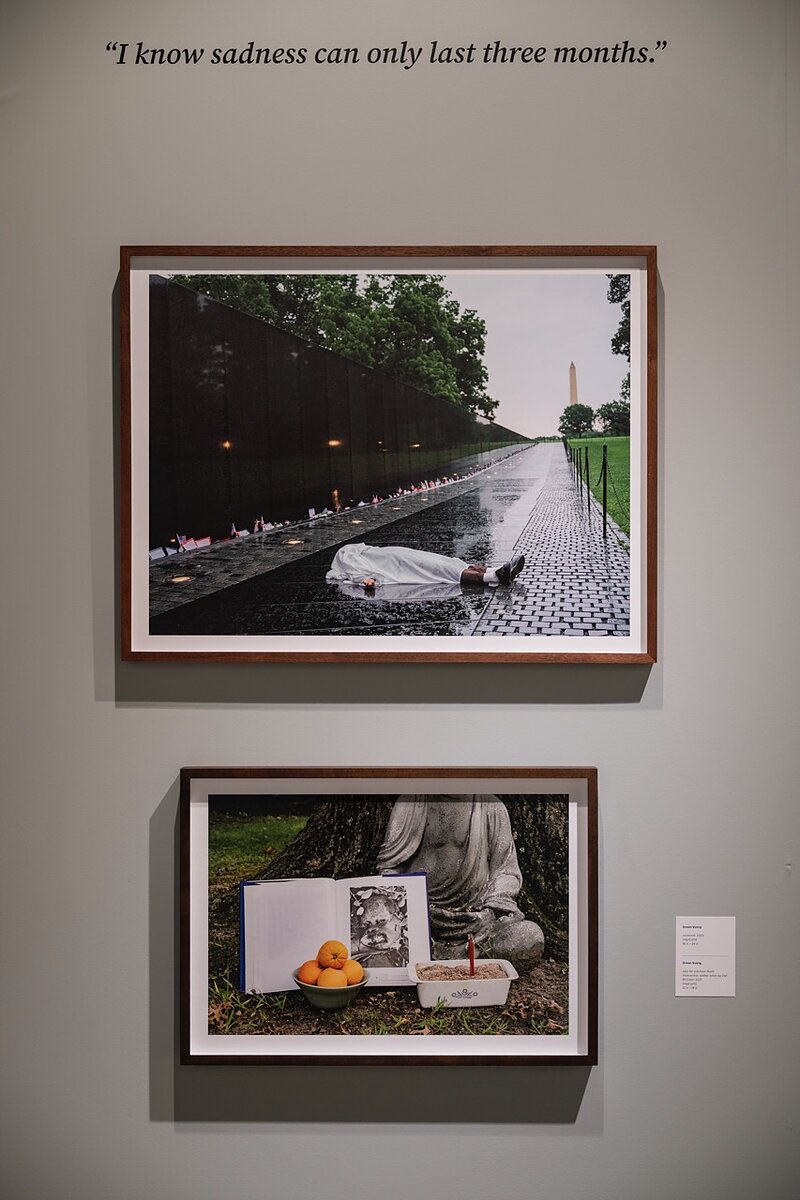
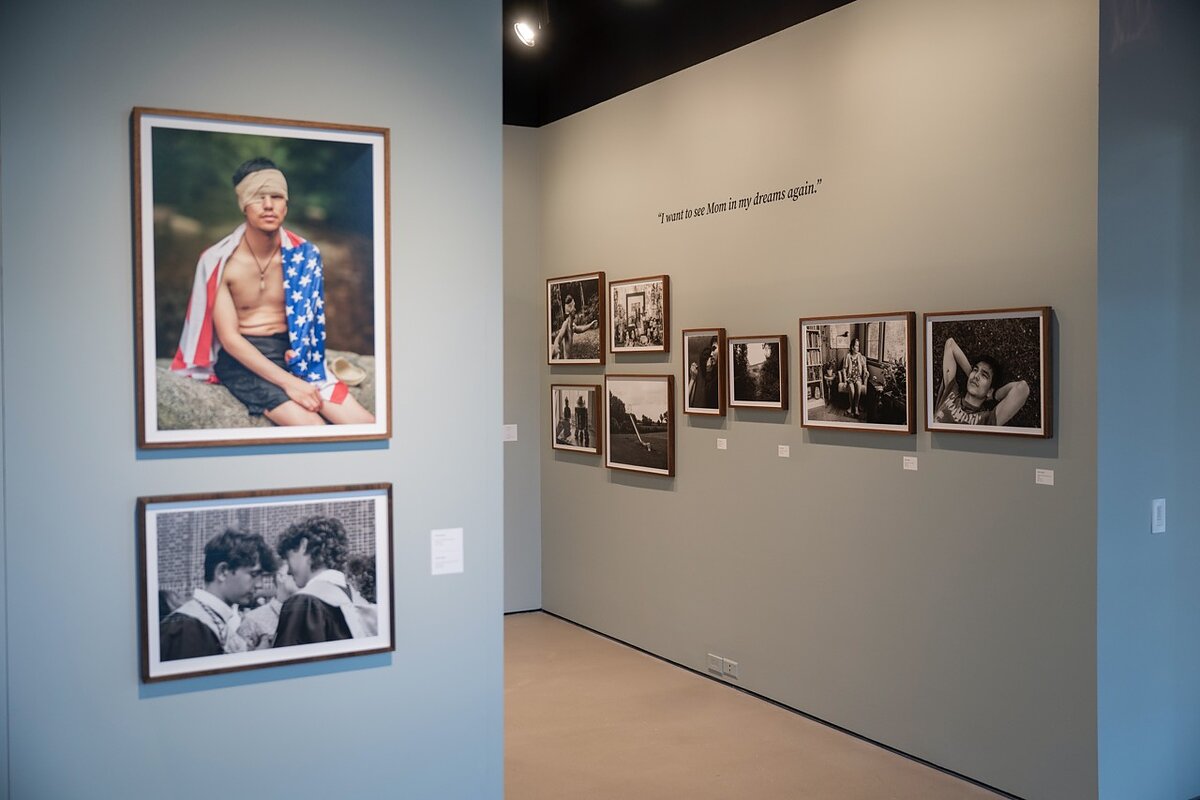
To my surprise, Vuong’s brother Nicky, who is not prominent in his books, stars in nearly half of the exhibition’s photographs. A color photograph of Nicky on Mill River (2024)—topless with a bandaged eye and an American flag draped over his shoulders as if to keep warm—greets viewers entering the first floor gallery while a triptych of Nicky’s Jordans (2022), Nicky’s scars (2023), and Nicky blinking (2023) offers intimate close-ups of his body in black and white. Despite Vuong’s acclaim as a writer, it is Nicky’s words that decorate and organize the exhibition walls, which feature pithy aphorisms such as “I think I’m gonna work at Dick’s my whole life” and “I know sadness can only last three months.” Through Nicky, Vuong is able to access the jilted Americana of the working-class (from which Vuong has since graduated) as well as memories of their late mother who passed away in 2019.


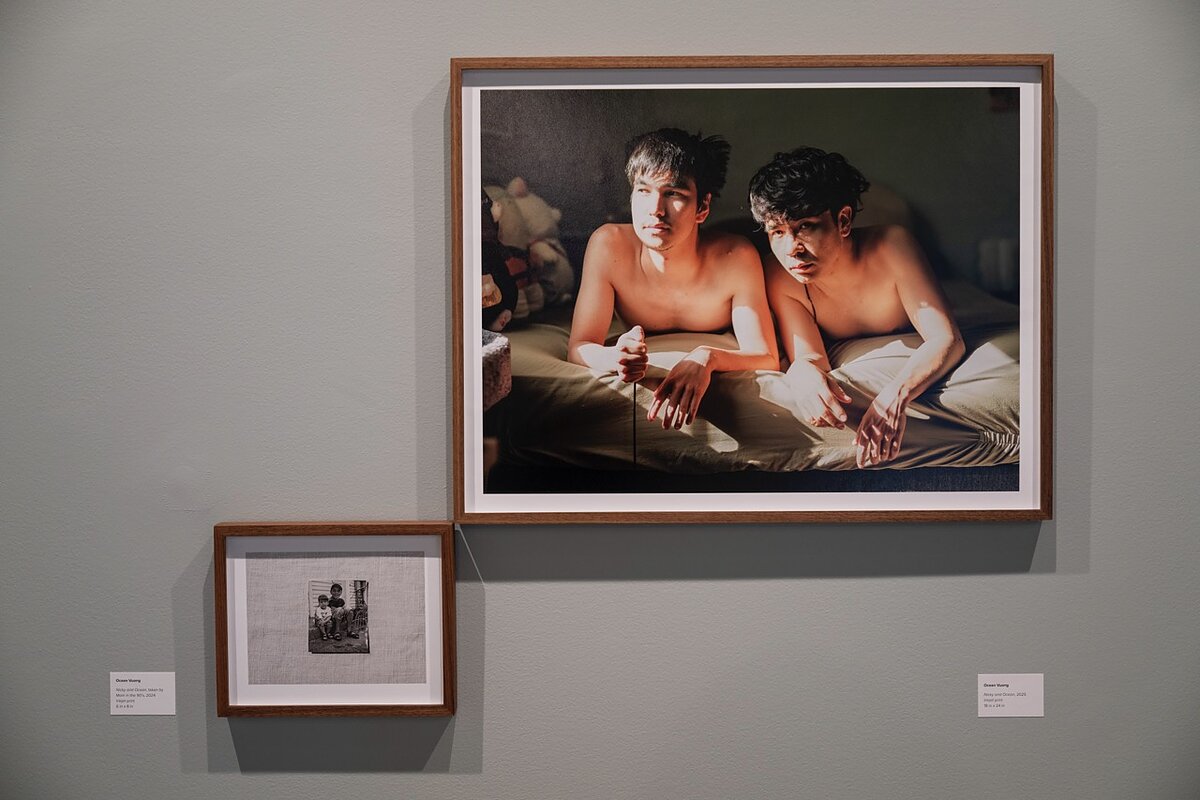
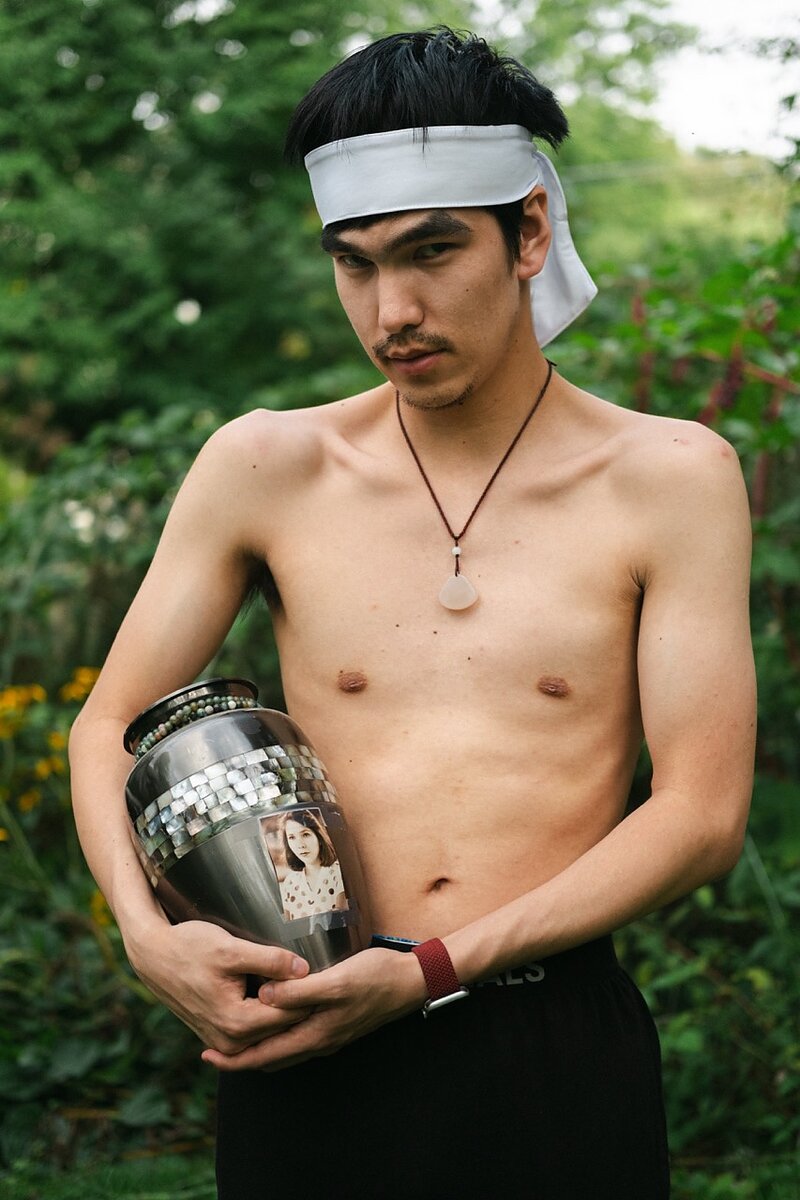
In the wake of their mother’s loss, the brothers’ grief is triangulated through photographed performances and documentation. For instance, Nicky poses with a funereal white headband, no shirt, and black pants cradling an urn turned so the photo of their mother affixed to it is visible in Nicky and Mom (2021). Likewise, Nicky holds up an annotated page of Mom’s citizenship test (2022) for the camera to see. These photos serve not only as testaments of their mother, but also as artifacts for gazing audiences to behold, particularly when presented alongside images from Rose’s own archive. Some of these, like the women who raised me (2024) and Nicky and Ocean, taken by Mom in the 90’s (2024) are reproductions staged and mediated through Vuong’s own camera. The exhibition’s sole collage, Mom’s ER notes (2023) is layered over with two sepia-toned photos of younger Rose.
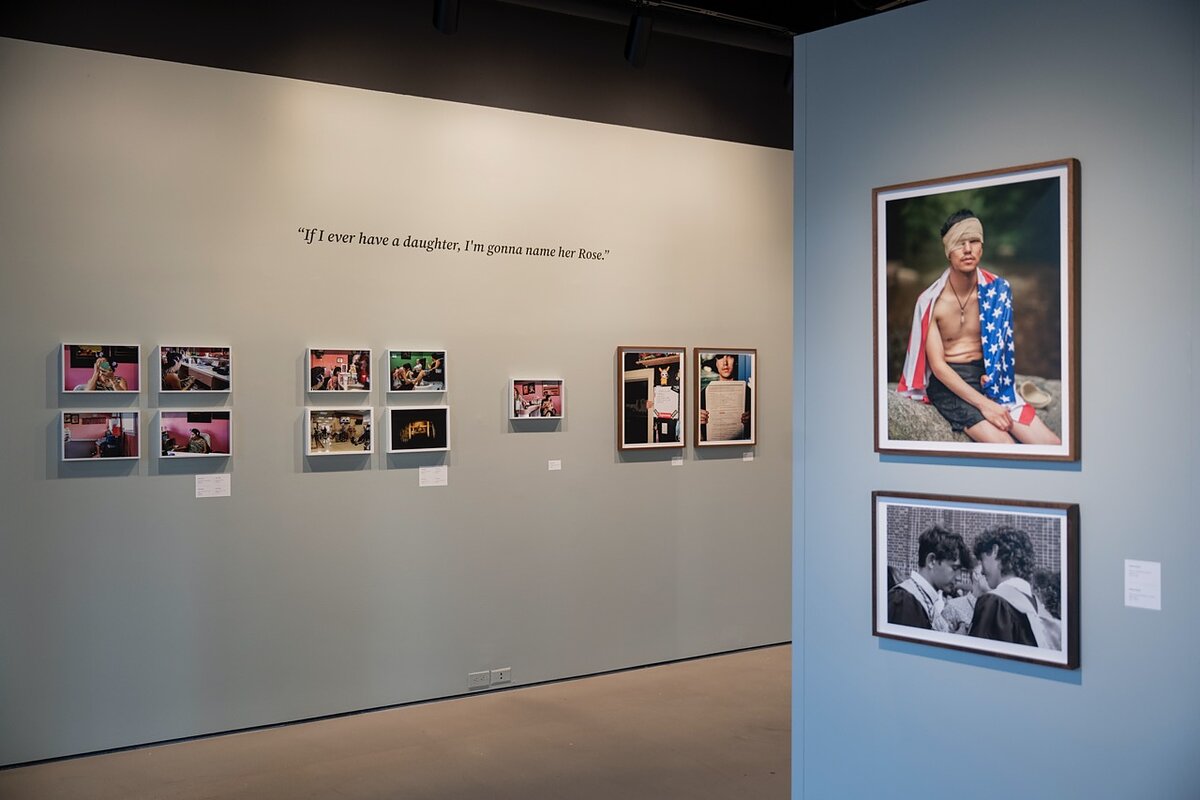
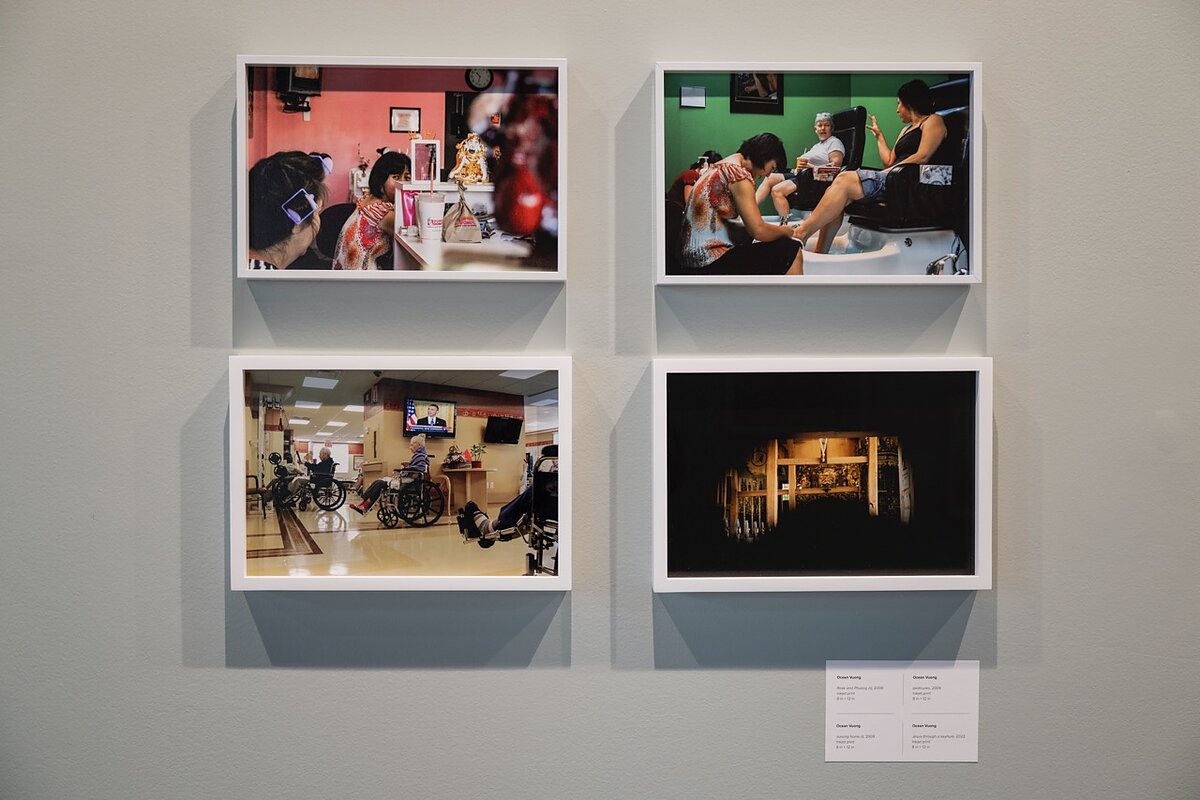
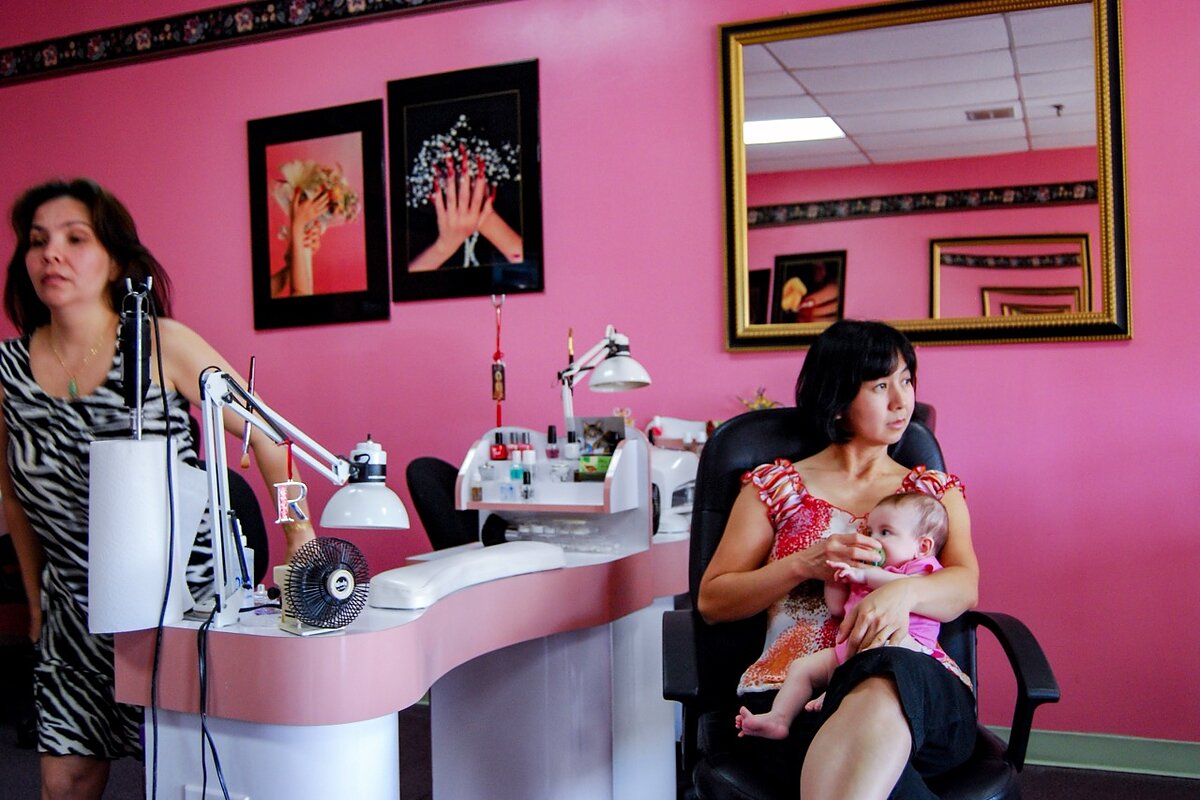
There seems to be a pointed shift in Vuong’s presumed audience between last photo of Mom (2019) and the series he made in 2009 of Rose at the nail salon (as the exhibition lacks any artworks dated during this decadelong gap). The earlier images picture a vivacious woman in lavender hair curlers amid a bright pink backdrop: applying make-up, counting tips, playing music, talking on the phone. Offering a glimpse into the dynamism of working life, these photos animate the nail salon as a space where life is lived and children cared for—conjuring how a young Vuong sees his mom, instead of what he plans to make visible to us. Yet within this series, Vuong has still managed to direct his younger brother, Nicky outside Mom’s salon (2009) to make eye contact with the camera as if a reflection of himself.
On one hand, Nicky serves as a proxy for Vuong’s own identificatory frame in a shared sense of the insular upbringing that only a sibling might understand. On the other, the focus on Nicky distances Vuong as a cultural authority and broker. In the 2025 photo, Nicky and Ocean, both siblings lie on a sunlit bed. While Nicky’s gaze is averted, Vuong makes eye contact with the camera, reminding us that though we seldom see the person behind the lens, he might be posing too, just as Nicky has been spotlighted for an omnipresent gaze.
There is no doubt that the personal is political for the author, who approaches the evidentiary aspects of the photographic medium as an inherently subversive (rather than suspicious) intervention when rendering and capturing minoritarian bodies. While Vuong’s synecdochal approach might be more evocative in literature, its application to figurative photography risks flattening—as the camera tends to do—visual representations of living (sống) into fetishes for consumption. Here, the personal substitutes for the political through the specular self—as seen through, and performed for, the myopic aperture of the camera.
“Sống: Photographs by Ocean Vuong” is on view at the Asian/Pacific/American Institute at NYU until December 11, 2026.
—Jacinda S. Tran is an interdisciplinary scholar of visual culture, race, space, and U.S. militarism. She has taught at Dartmouth College, Harvard University, New York University, and Yale University, where she completed a PhD in American studies. She is currently writing a book on Search and Destroy: Affective Warfare and Refugee Racialization in the Wake of Vietnam.