Between Fantasy and the Everyday: The Films of Utako Koguchi
7PM
Join e-flux on Monday, June 15 at 7pm for Between Fantasy and the Everyday, a program of films by Utako Koguchi, guest-curated and introduced by Cici Peng.
The early 1990s saw a significant surge of women filmmakers entering the Japanese experimental film scene, bringing a shift in focus away from the abstract structuralism of earlier periods and toward the materiality of the body and its relationship to the city, with a renewed attention to lived experience and emerging forms of performance. Trained in theatre at Waseda University before turning to 8mm film, Utako Koguchi became a key figure in this feminist movement and an important figure in queer film history.
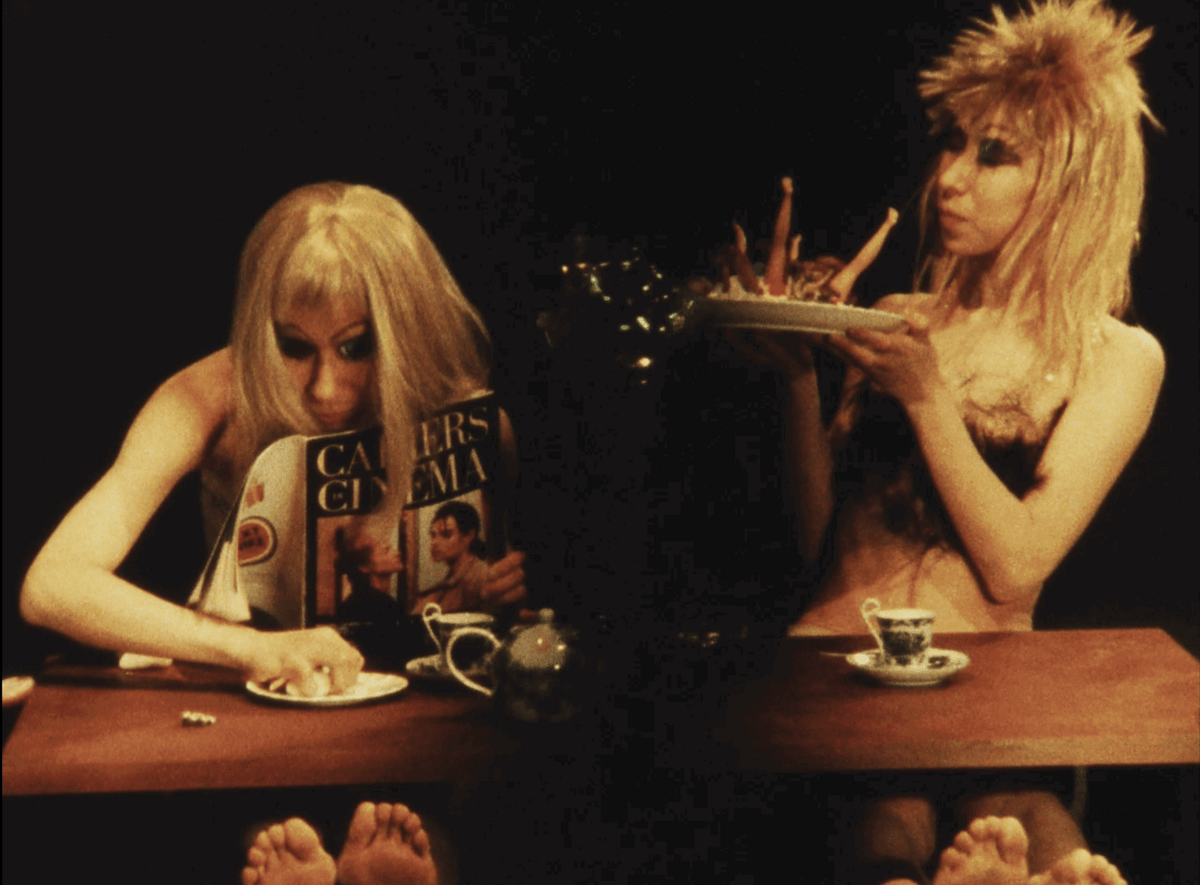
Koguchi has made numerous works that turn toward the personal, including her seminal, diaristic O-DE-KA-KE Diary (1988), which follows a woman on an odyssey through Tokyo’s urban and natural landscapes, and her intimate portrait of her grandmother* in The Sleeping Flower* (1991), which negotiates mortality through performance. The ambiguities and fluidity of queer identities are playfully rendered in her stop-motion film A Dandelion, Rosaceae (1990) and in Ophelia’s Favorite Book 3 (1995), which takes the form of an imaginary girls’ magazine to tease out questions of girlhood and female authorship.
Program
Utako Koguchi, O-DE-KA-KE Diary (1988, 47 minutes)
Shot on 8mm with a handheld camera, Koguchi performs as a wandering figure who traverses the urban and natural landscapes of Tokyo. A diary-film in which the distance between filmmaker, performer, and subject collapses entirely, this film won Koguchi the Grand Prize at Image Forum Festival in 1989.
Utako Koguchi, The Sleeping Flower (1991, 7 minutes)
An intimate portrait of Koguchi’s grandmother and a tender, oblique meditation on mortality through performance, this film won the Special Jury Prize at Image Forum Festival in 1992.
Utako Koguchi, A Dandelion, Rosaceae (1990, 8 minutes)
Using stop-motion animation, what Koguchi called 無理矢理アニメ (forced animation), twin sisters Lulu and Lala go through enchanting bodily transformations. The film is a playful and disorienting exploration of sexuality, gender ambiguity, and the chaos of desire, made in the shadow of the AIDS crisis.
Utako Koguchi, Ophelia’s Favorite Books (1995, 30 minutes)
This three-part series seeks to trace the origin of the imagery evoked by the word shōjo (girl) within the girls’ magazines and novels published in rapid succession at the end of the Meiji era. Each chapter of the film opens onto the literary worlds of three fictional women writers born in 1896: Yoshiya Nobuko, Ozaki Midori, and Sayo Sakurako.
Many thanks to Mia Parnall for the English translations and subtitles for this program.
For more information, contact program@e-flux.com.